
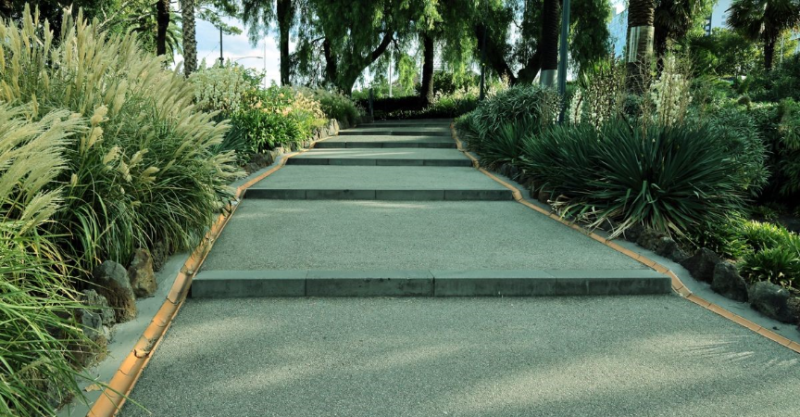
A path, a driveway and a planting bed can all be described as gravel projects, but each requires a different type of material. A walking surface should feel reasonably firm underfoot. A parking pad must withstand vehicle traffic. Stone beside plants may be there mainly for appearance. In the Santa Clarita Valley, slope and the route winter rain takes across a property matter too. Matching the material to the job is a better starting point than choosing by color alone.
Start With the Job, Not the Color
Stone shape and the amount of fine material mixed into it make a practical difference. Angular particles can lock together when properly compacted. Rounded stones tend to remain loose and move underfoot or tires. Clean, uniformly sized rock leaves spaces for water to pass through, while a blend containing fines can form a denser surface. Those qualities point to three distinct jobs: making a usable surface, supporting a loaded area and providing a path for drainage.
Before choosing a finish, identify whether the area will serve foot traffic, support parked cars, or hold plants with only occasional maintenance access. Then look at the ground beneath it. An attractive top layer cannot make up for an unstable subgrade, and a bed of loose stone cannot direct runoff safely just because water can pass between its pieces. The answers may lead to different materials in adjoining parts of the same yard.
Decomposed Granite for Paths, Patios and Water-Wise Yards
Decomposed granite, often called DG, consists of small granite particles with a finer texture than most decorative gravel. For a garden path or an informal patio, it can be graded and compacted into a relatively even walking surface. Edging helps hold the material in place, especially where a path meets a planting bed or crosses a gentle slope. The finished grade should guide rain away from structures rather than let it collect against them.
DG also fits water-wise designs where a broad lawn is being replaced with paths and planted areas. It provides space to move through the yard without creating another area that needs irrigation. It does not, however, replace careful plant selection or watering suited to those plants. Keep the material clear of plant crowns, and consider how irrigation and foot traffic may affect the surface over time. On steeper ground, runoff can carry fine particles downhill, so a sloping path needs more thought than a level one.
Crushed Rock and Road Base for Driveways and Parking Pads
A driveway has a different task from a garden path. Repeated tire loads call for a stable foundation, not simply a layer of attractive stone spread over bare soil. Crushed rock has angular faces that help particles interlock. Road base typically combines larger aggregate with smaller particles and fines, allowing it to compact into a firm supporting layer. The exact mix, total depth and number of layers depend on the soil, intended traffic and site drainage.
Preparation matters as much as the product name. Removing soft material, establishing the intended grade and compacting in suitable lifts can reduce rutting and uneven settlement. The surface also needs somewhere for rainwater to go. A driveway that channels water toward a garage, neighboring property or an erodible slope has a grading problem that extra rock will not solve. For a parking pad, consider where tires will turn or brake, since those spots are more likely to disturb a loose finish. Decorative pea gravel may look appealing in a sample, but its rounded shape makes it a poor substitute for a compactable vehicle base.
Pea Gravel and River Rock for Decorative Beds
Pea gravel and river rock work best where their rounded shape is an asset rather than a drawback. They can define a planting bed, frame a patio edge or give an open area a different texture from a compacted path. Pea gravel is made up of smaller rounded pieces, while river rock generally describes larger, smooth stones. Both remain relatively loose, so a firm edge is useful where they meet pavement, turf or another landscape material.
Think about maintenance before covering a bed. Windblown leaves and other debris can settle between stones, and moving rock later to work on soil or irrigation takes effort. Around plants, keep space at the base of stems and allow for access as they grow. Decorative rock can be part of a water-conscious yard, but it does not make every planting bed low-water by itself. On a walking route, particularly one used by wheeled equipment, a compacted surface will generally be easier to navigate than loose rounded stone.
Clean Drainage Rock for French Drains and Slopes
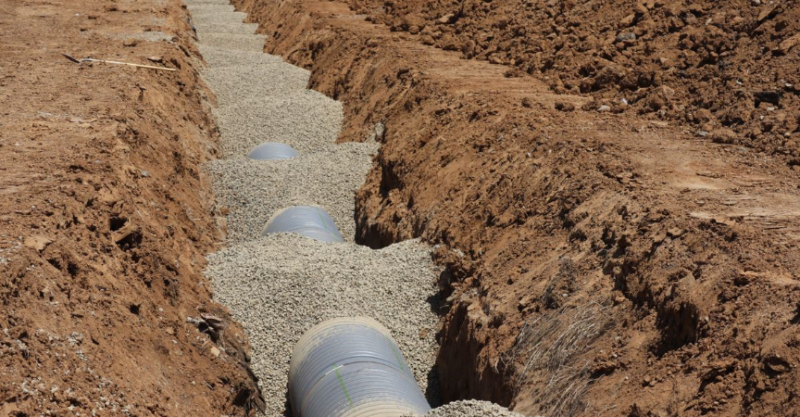
Drainage rock has a job that is easy to confuse with ordinary ground cover. Clean rock has little fine material, leaving open spaces through which water can move within a properly designed drainage system. In a French drain, the stone works alongside a planned trench, appropriate pipe and filter details, and a suitable place for collected water to discharge. Filling a low spot with rock without addressing the water’s destination does not remove the underlying drainage problem.
Slopes need similar care. Stone can protect a selected area from surface disturbance, but runoff may flow beneath it or gather at its lower edge. Watch where water arrives, how fast it crosses the ground and where it leaves the property. The aim is to manage that route without directing flow toward a building or causing trouble downhill. If water repeatedly collects near a foundation or a slope shows signs of movement, the drainage layout deserves site-specific professional attention rather than a thicker surface layer.
Santa Clarita Valley Conditions That Affect the Choice
Hot, dry summers make water-conscious landscaping a familiar goal in the Santa Clarita Valley. The other side of the planning problem arrives when winter storms bring concentrated rain. SCV Water’s Garden Smarter guide describes clay soils and steep slopes as local factors that contribute to runoff. A yard that looks dry for much of the year may still need a clear route for stormwater.
Walk the site before settling on materials. Note low spots, downspout outlets, hillside edges and places where water has left sediment after rain. On clay soil, water may travel across the surface rather than soak in as quickly as expected. A gravel bed or DG path should therefore be considered alongside grading, planted areas and the existing drainage pattern. Water-wise design is about using water thoughtfully and selecting plants suited to the site, not simply covering every open space with stone. Where irrigation rules apply, the current local requirements should inform the planting and watering plan.
Estimating Cubic Yards at a 2 to 4 Inch Depth
Once the area and intended layer are clear, a simple calculation gives a starting quantity. Measure the area in square feet, choose a depth in inches and multiply those numbers. Divide the result by 324 to convert it to cubic yards. For example, a 300-square-foot area covered to a uniform depth of 3 inches calls for 300 × 3 ÷ 324, or about 2.8 cubic yards before allowing for compaction, uneven ground or material lost during placement.
A depth of 2 to 4 inches is a useful starting range for an initial estimate, not a universal construction specification. A driveway base, a drainage trench and a decorative bed can require different depths and construction details. For an irregular shape, break the footprint into smaller rectangles, calculate each one and add the areas together. Measure depth from the prepared ground to the desired finished level. If parts of the site dip or slope, a single average-depth calculation may understate what is needed, so check those areas separately before arranging a delivery.
Planning Delivery and Placement
Bulk material is easier to work with when its drop-off point has been planned in advance. Check the access route, overhead clearance and a safe place for the pile that will not block a sidewalk, garage or drainage path. A spot close to the work area reduces repeated trips with a wheelbarrow, but the truck must also be able to reach it safely. Before arranging gravel delivery in bulk, confirm the destination is served and that the available material matches the intended job.
Keep different materials separate if the project includes a compacted path, a driveway base and decorative beds. Mixing clean drainage stone with soil or road-base fines can undermine the reason it was selected. Plan where material will be staged, how it will move across the property and which area should be prepared first. With the surface’s purpose, water route and measured quantity settled, the choice becomes less about picking one gravel for the whole yard and more about giving each area the material it needs.