Kratom use is increasing throughout Los Angeles County, and local officials and physicians are combating this surge of the newly prevalent opioid.
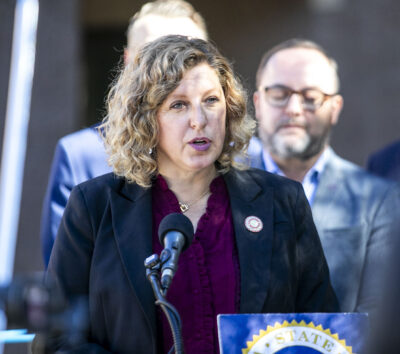
At the Los Angeles County Board of Supervisors meeting on Tuesday, one of the agenda items included a motion by 4th District Supervisor Janice Hahn to find solutions on how the “county should address and prevent deaths and harm related to kratom …but not limited to, creating an ordinance, identifying funding and staffing needs … and identifying the risk of other harmful substitutions.”
According to a news release sent out by Hahn’s office, seven fatal overdoses due to kratom have occurred in the county since January 2025.
“The Los Angeles County Board of Supervisors unanimously approved a motion by Supervisor Janice Hahn directing county experts to develop recommendations to prevent deaths and serious harm linked to kratom,” the Tuesday release read. “The [Los Angeles County Department of Public Health] has begun enforcement actions to remove kratom-related 7-OH products from stores.”
According to the U.S. Food & Drug Administration, kratom is a “tropical tree (mitragyna speciosa) that is native to Southeast Asia, [and is often] used to self-treat conditions such as pain, coughing, diarrhea, anxiety and depression, and opioid withdrawal.”
Although kratom is typically medicinal and an herbal alternative in Asia, less than 2% of the kratom leaves consist of 7-hydroxymitragynine (7-OH), “which demonstrates greater mu-opioid receptor potency than kratom’s primary alkaloid constituent, mitragynine,” according to the FDA’s website.
According to Patrick Moody, public information officer for Henry Mayo Newhall Hospital, there are no specific statistics on kratom in Santa Clarita at the time of this story’s publication. If a patient wastaken in due to a kratom overdose, it would be documented as “substance abuse.”
Henry Mayo physician Dr. Anirudh Rai says that although the plant has been used for medicinal purposes, the 7-OH component is extremely potent.
“Kratom itself is a natural product and herb that has been going on for quite some time in Asia and South Asia. At least over 100 years ago. Kratom itself is quite potent, especially in the 7-OH component, which is essentially 13 times stronger than morphine. So it’s something that’s highly addictive and very potent when it comes to pain control,” Rai said.
Rai encourages anyone who takes kratom to tell their doctors as soon as possible, due to its various functions.
“If you’re on kratom and have to go to surgery, you have to let the anesthesiologist know, because kratom does have some interactions with anesthesia. If you’re receiving pain medication, it’s important that you let your pain management doctor know, because it can interact with pain medication,” Rai said. “I would say in the future, maybe in the next five years, we would see this becoming more mainstream, and will be a new addictive medication that we, as physicians, will be more aware of, even in the emergency room, as well.”
While some may think that kratom is a method of self-regulating pain, among other things, Rai doesn’t favor its usage medicinally.
“Right now, we have no medicinal need for it, because we can’t regulate the amount you’re receiving. If you receive too much, you could potentially die. We can’t regulate the dosage,” Rai said. “People will do their research and say, ‘Hey, it’s medicinal. It’s natural.’ Then we have to educate them and say that it’s natural, but it is something that is quite potentially dangerous.”
According to Cary Quashen, owner of Action Drug Rehab & Mental Health, kratom has been quietly present in the region for at least five years.
“Kratom has been around for quite a while, and it actually hit the recovering community, because a lot of these people who were getting clean … found out that they could use kratom, get the same high as an opiate, and also not be tested for it, because there was no test for it. No one even knew what it was,” Quashen said.
While a lot of tobacco shops are selling the substance under the guise of an “energy booster,” many people often overlook its negative implications.
“It’s been sold in these shops for a long time, for many years. They sell it because it gives you energy, helps with depression. You can use it if you want to stop using drugs. But what they’re not telling you, if you read the fine print, is that it’ll say that it can cause addiction, and even overdose and death,” Quashen said.
The 7-OH component is more concentrated, but even the entire kratom leaf can give the same effects of an opioid the more it becomes heavily consumed.
“Kratom works the same way as any other opioid, meaning it hits the same receptors in your brain as any opioid, and it gets you physically addictive, just like anything else. The withdrawals are the same,” Quashen said. “If you use it for a period of time, you’re going to get a mental addiction, but you’re also going to get a physical addiction and get dopesick.”
While there have been no significant regulations, Quashen warns that people can accidentally get sucked into kratom’s effects.
“We have to detox somebody, just like any opioid. A lot of people don’t know that it’s got these physical, additive things. When they go to a treatment center and get a shot, they go into automatic withdrawals because no one knew they were using them,” Quashen said. “If you continue to use it, you will build up a tolerance, you will get a physical addiction, and you will have to withdraw. It’sserious and can be deadly.”