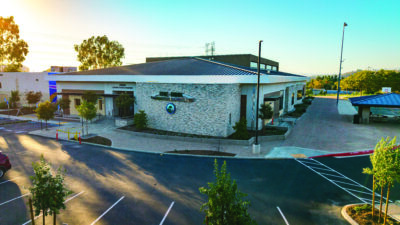
In discussion ranging from interest rates to real estate, the Valley Industry Association hosted its “Real Estate, Rates and the Workforce” event on Tuesday at the Child & Family Center’s Education Center.
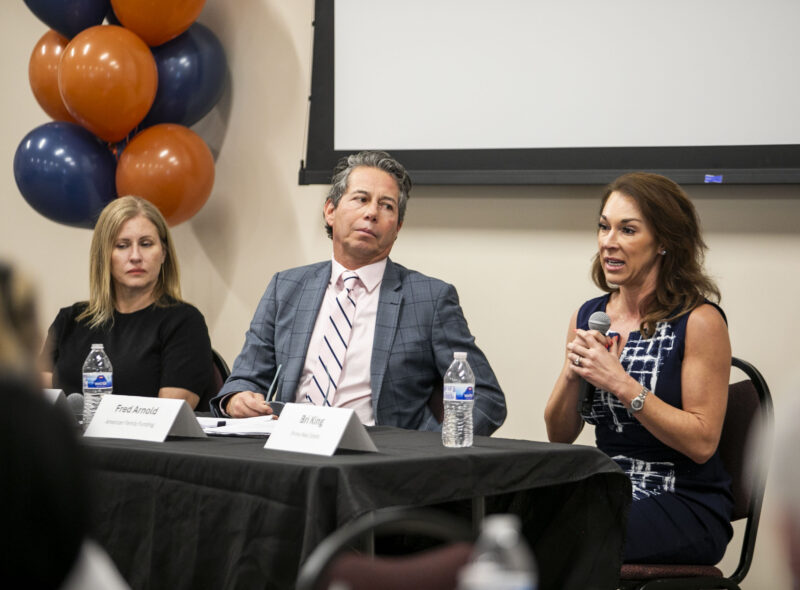
Led by Ed Masterson, the panel for the business group’s monthly luncheon featured Bri King, broker with Prime Real Estate, Fred Arnold, mortgage advisor with American Family Funding, and Pamela Verner, president of SCV Commercial Real Estate Services.
“As you know, the Santa Clarita Valley is a region that continues to evolve, grow and redefine its economic identity. Today, we’re talking about three forces that are deeply connected: commercial real estate, residential real estate and mortgage rates. Also, part of the conversation will be how the workforce is affected by those three components,” Masterson said before asking the panelists the questions.
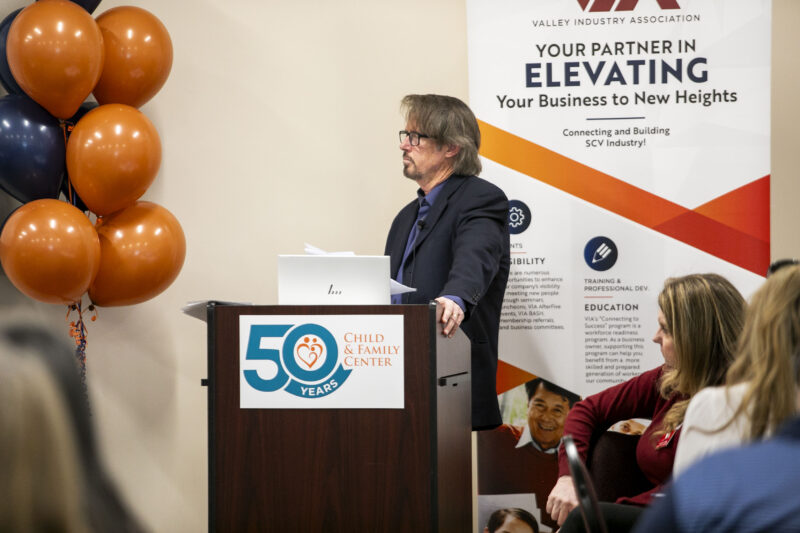
Masterson started off the discussion by asking the panelists how they would describe the current state of the real estate market in Santa Clarita, compared to the pre-pandemic levels.
“We are grading back into a normalized market. Things were a bit more artificial the last several years due to COVID, supply and demand issues, interest rates, things like that. Seasonally speaking, we’re sitting at 536 houses on the market; during COVID, we didn’t see over 400. Last summer, we saw a jump from 450 to 850 in the matter of three months,” King said.
King believes that the remainder of 2026 will entail a neutral market, even with the state of real estate being more of a buyer’s market, depending on the condition of pricing strategy.
“The commercial real estate market, as far as the pre-pandemic market, during 2020, ’21 and ’22, we saw prices, especially in the industrial market, skyrocket. I think before 2019, I had a listing under $1 a square foot. Today, we’re at $1.55 a square foot, and it’s only been six years,” Verner said. “Offices are in the opposite direction, with people working from home. Retail has been pretty stable.”
Verner discussed how the commercial market is typically six months behind the residential market, and also discussed the correlation between interest rates being higher and rent prices coming down a bit, signaling stabilization.
“My realization is money is not flowing. The banks aren’t lending money on commercial real estate. I think there’s going to be a huge opportunity to buy either office or live industrial because none of it’s selling, none of it is moving,” Arnold added. “In L.A. County, there’s 1.5 million individuals between the ages of 27 and 34, and most have not bought a house yet. I think that’s going to drive a freeze market. It’s supply and demand.”

Masterson asked the panelists what they thought of a mortgage rate lock.
“It’s not so much in the commercial real estate market. I think that’s more of a residential thing. I’m in the same boat with my house — I’m locked in at 3% and I’m never moving. We don’t see that in commercial real estate. It’s more of a business strategy, and people go where they need to go to operate their business,” Verner said.
King tackled the question differently, focusing on generational wealth and “forever homes” within families.
“Rate lock is a real syndrome, but I’m starting to see a break. If you look at statistics across the United States, 40% of homes are owned, free and clear. There is a lot of equity money out there, and it’s about to be transferred to the next generation. That’s what the kids are waiting for, always. The desire for generational living is on the rise,” King said. “That’s why you need to get together as a family and combine all the numbers.”
With insurance being one of the biggest challenges in getting a residential or even commercial loan approved, Arnold argued that down payment is the biggest roadblock.
“The cost of insurance is high, and the cost is really high, especially in condos. But water always seeks its level, and I think it’ll eventually come down … Down payment is the biggest issue that we’re running into on a $700,000 house, even though we can get 3%, 3.5% down payment,” Arnold said. “People are coming to me with $250,000 in student loans and a job they can’t really get in a profession that’s not growing, so we’re going to see that as the biggest challenge to qualify for a house.”