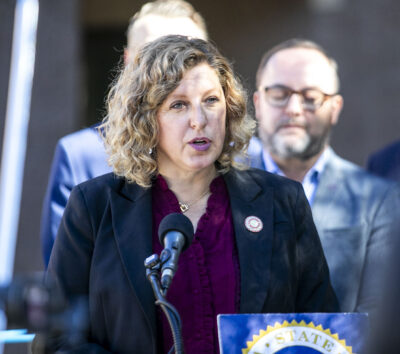
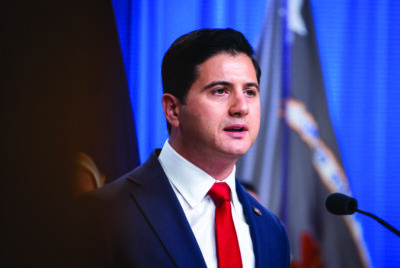
Discussion from the Santa Clarita City Council’s meeting two weeks ago over council members’ pay included the lament of one council member who suggested that the council’s compensation is on par with minimum wage.
Every council member currently receives the same base pay every month, $2,449.69, which is paid out, regardless of whether a meeting is attended. That comes out to $29,396.28 a year, which is below the $35,152 total someone would earn at the state’s $16.90 per hour minimum wage for a 40-hour work week.
While the base meeting stipend is the same for all council members, their total compensation package — an amount that includes health care benefits and additional committee and board meeting stipends — can more than equal that, according to city records obtained by The Signal.
Technically, serving on the council is considered a part-time role — although multiple council members over the years have said they put in a great deal of time in serving the city other than just attending meetings.
The cost to the city for council member benefits comes close to the same for two council members as their base pay, which doesn’t include the occasional $100 meeting stipend a council member might receive.
The Santa Clarita City Council base pay now increases by 5%, with Tuesday’s 4-1 vote after a second reading.
The discussion on council member compensation came up earlier in April, as the council formally approved a raise for next year. The increase — a 2.5% bump each year for 2025 and 2026 — will take place when the next council is seated in 2027, per California law. The pay bump takes the council’s base monthly compensation to $2,566.92, or just under $31,000 annually.
Councilman Bill Miranda voted no, saying sarcastically that he didn’t know how exciting “minimum wage” labor could be, in referencing the state’s minimum wage of $16.90 per hour, or $35,152 annually.
The wage increase passed on a first reading April 14 by a 3-1 vote, which is why the pay bump was back on the agenda Tuesday for a second reading and final approval. Councilman Jason Gibbs was absent from the first meeting and the vote.
A review of the city’s payouts to council members for benefits, such as retirement and health care, showed Mayor Laurene Weste received a total of $15,176.16 in benefits all of last year, and Gibbs’ benefits came out to $28,012.18. Mayor Pro Tem Patsy Ayala received 26,338.43 in benefits. McLean’s benefits cost the city 22,252.56. Miranda’s benefits were the least, at 7,920.78.
That means Gibbs’ total compensation package, health care, retirement and pay, comes to $57,408; Ayala at $55,734; McLean at $51,648; Weste at $42,939; and Miranda at $37,317.
Miranda, who said the raise would not be for him because he was planning to retire after this year, also said his argument was that if the city wanted to attract good leaders for the council, the pay would need to increase.
He added it was a shame that the city couldn’t move more rapidly to pay its council members minimum wage, as 10% is the maximum allowable raise by law.
There are additional ways a council member can raise their pay, slightly, with governing board and committee meetings for certain organizations. Governing board members for the Santa Clarita Valley Sanitation District, the Southern California Association of Governments, the Santa Clara River Watershed Area Steering Committee and the Local Agency Formation Commission for the county of Los Angeles, for example, all have up to a $100 per-meeting stipend in their bylaws.
The pay records for these groups were not immediately available as of this story’s publication, and city officials do not track these activities.
But the role of a council member also includes numerous unpaid committee assignments, too, such as the city’s standing committees, which are unpaid, and appointments with volunteer organizations like the San Fernando Valley Council of Governments and the San Gabriel Mountains Community Collaborative, which does not pay for attendance.
Miranda also mentioned that when an issue comes up, council members are required to spend hours studying an issue and meeting with constituents in order to do the job properly.
McLean’s and Miranda’s terms end after 2026, and both indicated they plan for it to be their last year on the City Council. Weste has indicated she’s running again. Gibbs is currently running for Congress, but his District 3 seat isn’t on the city ballot until 2028, and the same goes for Ayala’s District 1 seat.