The Sulphur Springs Union School District’s governing board approved a preliminary maximum price for the construction of Skyline Ranch Community School earlier this month.
The contract set the ceiling for the project’s construction contractor, Bernards, at about $38.6 million. A final version of the contract will be up for a board vote in the near future, but that date hasn’t yet been scheduled.
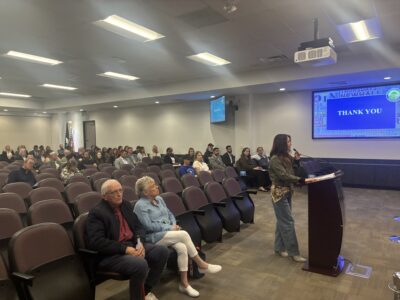
While board members signed off on the preliminary pricing unanimously on May 13, one board member expressed some concern over the district-side contingency money committed to the project, or “owner contingency,” and posed questions about whether it would be enough to meet volatile material costs before the vote.
While plans for the school still have to be approved by the Division of the State Architect, which oversees construction on K-12 schools and community colleges, approving the “guaranteed maximum price” of the project with Bernards would get construction rolling, said Don Fansler, director of Telacu Construction Management.
Telacu was selected in 2024 to manage the project as a go-between with the district and the general contractors working on the school.
“This is the motion that will get the construction started,” Fansler said. “We are waiting on some approval from DSA, but this will get Bernards in gear to actually start the process of building schools. So this is an exciting time.”
The Skyline Ranch contract includes 3% of the maximum cost of the project in contingency funds for Bernards, which amounts to about $950,000, along with $1 million more for adjustments based on comments from the DSA.
Not included in the contract with Bernards is the district’s own 5% contingency fund for the project — which is currently set at 5% of the guaranteed maximum price, or $1,932,517. That money comes from the district’s budget.
Hearing that the district’s contingency was set at 5%, board member Denis DeFigueiredo recalled that the price of the project could change after the DSA returned the plans. Fansler said that Telecu had received and reviewed DSA’s comments, and after reviewing them with Bernards had come up with a $1 million “allowance” for DSA comments adding costs to the project.
Board President Shelley Weinstein echoed that sentiment.
“So the only way it would really go up is if DSA came back and said, ‘You must do this,’ and it’s a big, costly project, otherwise we should be pretty close,” Weinstein said.
Fansler added that the higher overall cost of the project made him more comfortable with 5% contingency.
“Just living in the time that we’re living in right now … in my experience what ends up happening is prices go up, so quality is reduced, things get skimped on a little bit,” DeFigueiredo said. “I don’t argue your expertise, just kind of what to be on the record.”
District Superintendent Catherine Kawaguchi prompted Fansler to talk about how they’d geared their procurement process for construction materials to avoid some of the price volatility that has come with the second Trump administration’s tariffs.
“We’re starting right off the bat with getting those submittals of any items that we kind of (foresaw) … (would be) related to any tariff possibilities with steels and woods,” Fansler said. “All of our wood doesn’t always come from this area, a lot of wood comes from Canada … so we’re forecasting from the start of the project all the way through completion with our procurement process.”
Fansler also assured him that the district wouldn’t be on the hook for storing construction materials, and that they’re “all going to work with us with our timelines,” he said.
DeFigueiredo made a motion to approve the preliminary contract and it was approved unanimously.