Heating a home efficiently is rarely as simple as choosing one temperature and applying it everywhere. Bedrooms, living areas, home offices and open-plan spaces are used at different times and often need different levels of warmth.
That is why a more flexible approach can make the house feel more comfortable without constantly overheating rooms that are empty. Instead of treating the entire property as one thermal zone, homeowners can think about how each part of the house is actually used throughout the day.
The goal is not to add more equipment everywhere. It is to match heating to the function, size and occupancy of each space so comfort becomes easier to maintain.
Open-Plan Areas Need Heat That Works Across Zones
Large connected rooms can be difficult to heat because the living room, dining area and adjoining spaces may all behave differently.
A double sided electric fireplace can make sense in layouts where two areas share a central divider or architectural feature, allowing the same fireplace to contribute visually to both sides rather than serving only one room.
Placement matters as much as appearance. A feature positioned between two frequently used zones can help distribute the sense of warmth more evenly and make the space feel more connected.
The important point is to design around how people actually move through the room rather than choosing the fireplace first and forcing the layout around it.
Smart Thermostats Make Room-by-Room Control Easier
Traditional thermostats often manage large areas from one central point, even when different rooms are being used at completely different times.
A low voltage smart thermostat can support a more responsive setup by allowing compatible heating systems to follow schedules and temperature targets that better reflect how individual spaces are used.
That is especially useful in homes with offices, guest rooms or bedrooms that do not need the same temperature all day.
The advantage is not constant adjustment. A good system should reduce the amount of attention heating requires by allowing the schedule to handle predictable changes automatically.
Bedrooms Usually Need a Different Strategy
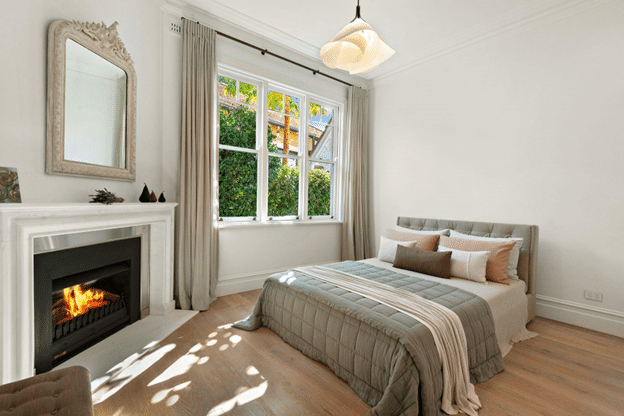
Bedrooms often feel more comfortable at a lower temperature than active daytime spaces.
Heating them to the same level as a busy living room can waste energy and make sleep less comfortable.
The timing matters too.
A bedroom may only need additional warmth shortly before bedtime and again in the morning, while remaining cooler through much of the day.
Curtains, insulation and draught control also influence comfort significantly.
Before increasing the thermostat, it is worth checking whether heat is simply escaping through windows or poorly sealed areas.
Sometimes improving the room itself can reduce the amount of heating required.
Home Offices Benefit From Targeted Comfort
Working from home creates another challenge because one person may occupy a single room while the rest of the house remains mostly empty.
Heating the entire property for one workspace is rarely the most efficient approach.
Targeted heating and better room control can make the office comfortable without treating every surrounding area the same way.
Desk position matters as well.
A workspace beside a cold window or exterior wall can feel uncomfortable even when the room temperature looks reasonable on paper.
Small layout changes, better insulation and controlled heating can often solve the problem together.
Kitchens and Busy Rooms Produce Their Own Heat
Not every room needs as much heating as expected.
Kitchens often warm up naturally through cooking, appliances and regular activity, while crowded living areas can also feel warmer simply because more people are using them.
That makes fixed whole-house temperatures less practical.
Reducing heating in naturally warmer zones can prevent the house from becoming uncomfortable while still maintaining enough warmth elsewhere.
Sunlight matters too.
Rooms with strong daytime sun may need less heating during certain hours than shaded parts of the home.
Paying attention to these patterns can reveal where the system is working harder than necessary.
Better Heating Starts With Understanding the House
The smartest heating setup is usually the one that responds to how the home is actually used.
Open-plan areas may benefit from shared heat sources, bedrooms can follow different schedules and home offices may need more focused control during working hours.
Technology can make that easier, but planning still comes first.
Before adding new equipment, it helps to identify which rooms regularly feel too warm, too cold or unnecessarily heated when empty.
Once those patterns are clear, fireplaces, thermostats, insulation and scheduling can all be used more deliberately.
A comfortable home does not need every room to feel exactly the same. It needs each space to feel right when people are actually using it.