Children’s Hospital Los Angeles has released eye-opening data on injuries from e-bikes and e-scooters, a concern that local officials and state lawmakers are both working to address.
Dr. Bianca Edison, an attending physician at the hospital’s Jackie and Gene Autry Orthopedic Center and a professor at USC’s medical school, presented the data recently at a national conference for pediatric doctors. The impetus came from weekly conferences she has with other doctors where a pattern was developing, she said in a phone interview Thursday.
“And in my own clinic, I had been seeing a fair number of injuries arising from riding those devices, and so I wanted to try and put and see and obtain data and numbers behind anecdotally what we were seeing, and so that’s why we looked into this study,” Edison said.
While these findings have not been formally published yet, the data is part of a larger study expected to be released soon, Edison said. The additional information looks at how safety equipment and vehicle classifications played into the data.
“Some of those criteria that we used involved not wearing a helmet or not abiding by the rules and policies. There’s certain age cutoffs with certain classes of these devices and whatnot,” Edison added. “And so there will be more coming out with another part of this study that goes into more detail about that.”
And she’s hopeful it can be used to start some “very intentional conversations” around the subject of e-vehicle safety, she said.
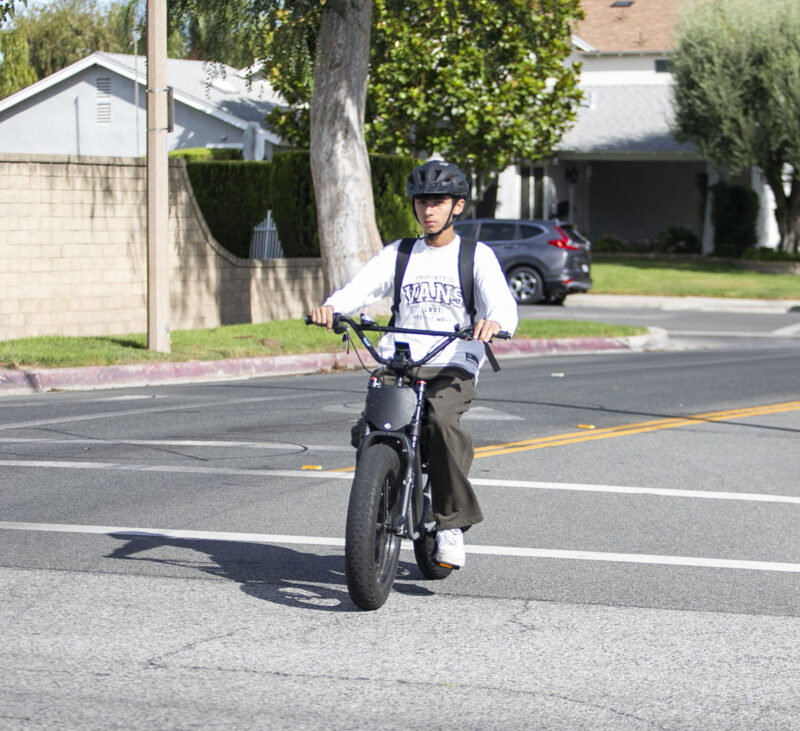
Children injured on e-bikes were significantly more likely than those injured on e-scooters to suffer fractures and concussions, need surgery or hospitalization, and sustain potentially life-threatening injuries, the data showed.
Over the past six years, e-bike and e-scooter injuries seen in CHLA’s emergency department have increased fourfold. The hospital also treats Santa Clarita Valley patients who are airlifted there for specialized care.
Edison likened the situation to when “hoverboards” and Segway-type vehicles first came to market, which was also followed by a rise in injuries. The problem with e-bikes, she said, is the increased danger could be looked at like a basic physics equation: There’s significantly more speed and mass with these newer e-vehicles, she said.
CHLA researchers looked at 379 patients over the six-year period. Nearly half of the injured e-bike riders had fractures, and one in four needed surgery.
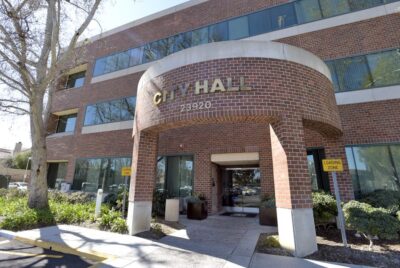
One finding echoes a complaint raised at Santa Clarita City Hall, which the city has also addressed through outreach. More than half of the injured e-bike and e-scooter riders were violating California’s age or helmet laws, the CHLA team found.
Local officials, frustrated residents and even bicycling advocates have raised another recurring concern: the technology is growing faster than the laws and rules meant to govern it.
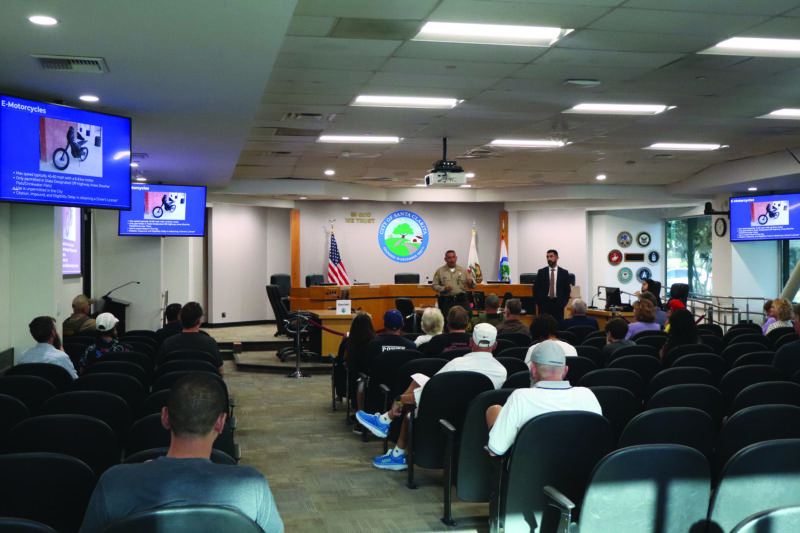
Last month, ahead of the signing deadline, Gov. Gavin Newsom signed Senate Bill 1167, which targets how e-bikes are marketed and sold. The bill passed the Senate unanimously, with a yes vote from Sen. Suzette Martinez Valladares, R-Acton.
State law limits an e-bike to 750 watts of power. Class 2 e-bikes are capped at 20 mph on throttle, and Class 3 at 28 mph with pedal assist. Advocates say many “e-motos,” or electric motorcycles, can go much faster and are treated as motorcycles under the law, but are marketed as e-bikes. During hearings on the bill, law enforcement officers testified that it can be difficult telling the two apart by looks alone.
SB 1167 tightens the definitions of both kinds of vehicles and makes it false advertising, a legally punishable offense, to market an e-moto as an e-bike. Sellers of e-motos and similar vehicles must now include a standard disclosure in all advertising, including online, stating that these are motor vehicles that need registration, a license and insurance to use on public roads. Online buyers must acknowledge the disclosure.
Nina Moskol, a safe-riding advocate who chairs the SCV Bicycle Coalition, called the law a great first step. She also shared information from the California Bicycle Coalition showing that gaps in state law remain.
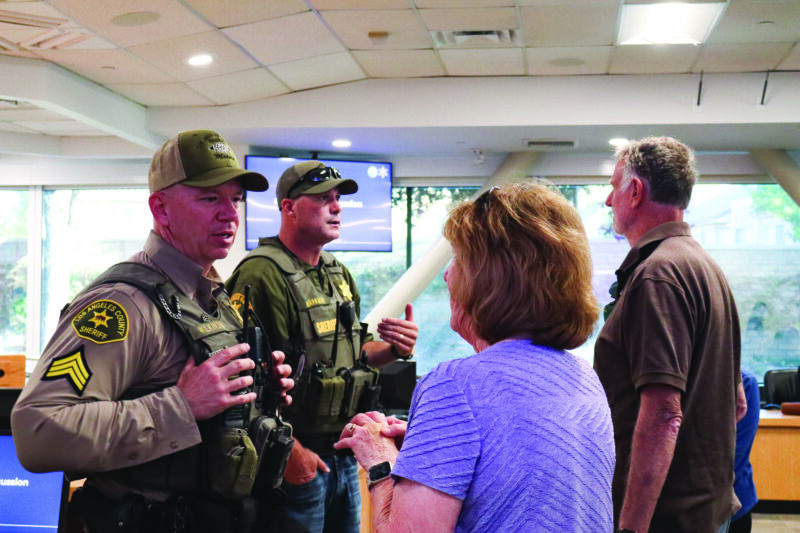
Education will be key to closing those gaps, Moskol said. She praised the city of Santa Clarita for a recent town hall where officials listened to residents’ concerns and held breakout groups to discuss solutions.
Asked about the city’s efforts, Carrie Lujan, the city’s communications manager, replied by text that it was “too soon” to comment. Masis Hagobian, interim assistant to the city manager, did not respond to a request for comment.
“I think the city opened up a really good conversation with the general public,” Moskol said of the town hall. “I felt like that was a very collaborative approach, and I think that’s what’s absolutely necessary to respond to the public’s hunger for some actionable items that really are both timely and attempt to address the deep and severe concerns that the public have.”
Moskol said efforts are moving in the right direction, though enforcement may not be where some residents would like it.
One challenge for a city this size, she noted, is that City Hall has no control over local schools. In some communities, school districts require stickers on e-bikes to identify riders and require safety education, which could be supported by municipal enforcement. Something similar here could be a big help, she said.
She also called for more data. The CHLA report is the first of its kind she has seen. The Los Angeles County Metropolitan Transportation Agency could work with health providers to gather more data, she suggested, which could make effective local regulation more feasible. She expected more legislation to come once more data is available to lawmakers and officials.

During recent Santa Clarita City Council meetings, Santa Clarita resident Keith Lobert has repeatedly raised concerns about scofflaw riders on the city’s paseos and trails.
Lobert also attended the city’s e-vehicle town hall. He said the state’s current class system for e-bikes is part of the problem and echoed concerns that the technology is moving faster than the law. He blamed that on “the e-bike lobby.”
“And my revelation … a couple weeks ago or a month ago, was that the e-bike lobby obviously got this class situation through to sell more e-bikes,” he said. “But I have faith that the insurance industry must have a bigger lobby, too. Somebody’s paying for these emergency room visits.”
In response to Lobert speaking at Tuesday’s City Council meeting, City Manager Ken Striplin told the council that e-bikes are expected to be on the agenda for the next council meeting, which is scheduled for Oct. 27.
Edison said she hopes the data will lead to more productive discussions about the concerns.
“I’m hopeful that this can be used to start conversations,” she said. “You know, there are many players involved in this, and I hope that we can we can all play well in in the sandbox, and that means just from the consumers, so the parents, the riders themselves, the health care providers, the companies who are making and providing these to the public, as well as the community leaders, can all come together and talk about what is going on.”