Santa Clarita Valley Water Agency officials hosted a virtual meeting Monday to share their project update on plans to build a water-treatment facility next to Valencia’s Bridgeport Park.
The facility is the agency’s latest plan to treat PFAS, or per- and polyfluoroalkyl substances, cancer-causing “forever chemicals” found in local drinking wells.
During the opening of the Honby Wells PFAS Groundwater Treatment Facility in Canyon Country in November, SCV Water board President Gary Martin said the use of PFAS has been in manufacturing for decades, which has led to its detection in local water supplies.

“While we did not put the PFAS chemicals in our water supply, it is our responsibility to take immediate steps to address them,” Martin said at the plant’s opening.
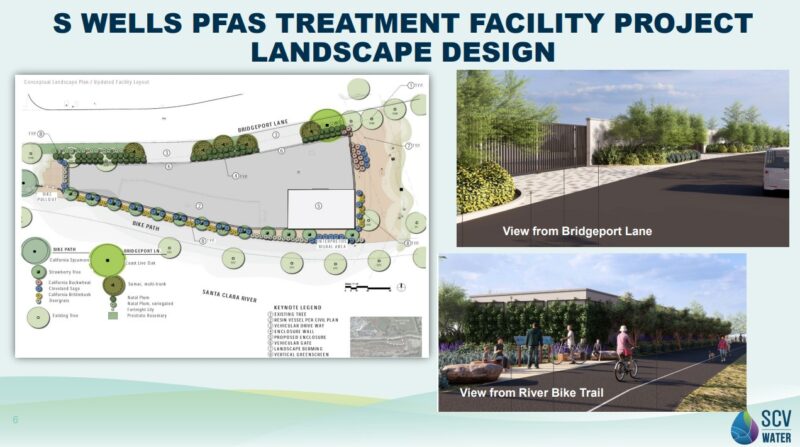
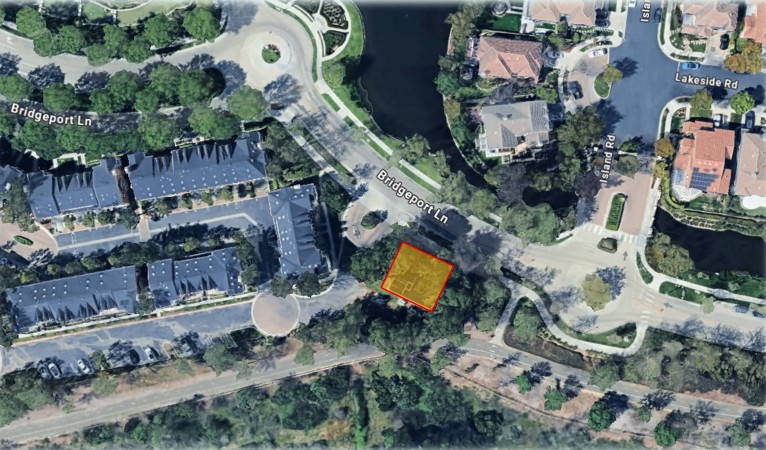
On Monday, an SCV Water engineer shared plans and the outlook for a new treatment facility just south of Bridgeport Lane, north of the trail that runs along the Santa Clara River and south of the parking lot and a soccer field for Bridgeport Park.
The meeting was “to convey construction timelines and expectations, as well as the facility design, purpose of the project and benefits,” according to Kevin Strauss, spokesman for the agency, in an email Tuesday.
“As with any SCV Water project, communication and collaboration with customers are critical elements. For the S Wells project near Bridgeport Park, the process involves not just homeowners who may hear construction activity, but also parkgoers, the school community, trail users and others who have an interest in the project,” Strauss said.
The price tag for the project was put at $23.9 million, Strauss said, with the agency expecting approximately $11 million of that to come back in the form of state and federal grants.
The lead engineer working on outreach for the project said the plans are part of the agency’s strategy to make itself more reliable on its own supply. Part of the agency’s current strategy to address contamination involves blending, but that involves water being readily available for purchase to add to local sources.
“This is a critical water facility that will bring much-needed water supply to our valley, which allows us to reduce our dependency on state-imported water, especially during … periods of extended drought,” according to Orlando Moreno, principal engineer for the project. “So often during these severe drought periods, the state restricts the amount of imported water we receive. So it’s really important that we have the flexibility to tap into our local groundwater as other sources are becoming more and more limited to us.”
The project, which also includes “major offsite improvements,” including pipeline construction, is expected to start Monday, with an 18- to 19-month projected timeline and an April 15, 2027, completion date.
From a design standpoint, Moreno said the facility will be “fully enclosed with a decorative screen wall, two driveways that will be constructed … along Bridgeport Lane to allow for delivery vehicles to enter and exit without having to back in and out of the site.”
Construction hours for the park-adjacent facility are scheduled to take place from 7 a.m. to 4:30 p.m. on weekdays only to minimize impacts, according to the project presentation, with potential impacts to the bike lanes being posted in advance of when they’re expected.
The facility plans are happening alongside another effort by the agency to solicit residents’ feedback on bringing a well offline.
Last week, SCV Water hosted a virtual meeting on a separate well issue as part of a legally prescribed process for a “critical groundwater supply” where water officials have detected increasing levels of perchlorate. The contaminant is identified as a growing problem in the Saugus Formation Aquifer, which underlies much of the Upper Santa Clara River Watershed.
Well NC-13, a water source about 700 feet west of the Wiley Canyon Road bridge over Railroad Avenue, has seen increasing levels of perchlorate over the past several years, according to water officials.
Strauss described the Engineering Evaluation and Cost Analysis for SCV Water well NC-13 as a “very prescriptive, documented, regulated process for evaluating what would be the most environmentally friendly, cost-effective way to treat this well,” and to remove perchlorate from the groundwater, he said in a phone interview regarding the meeting.
The water questions also come as the city also is looking to approve more than 6,500 new homes southeast of the facility for a development called Sunridge.
While the city and the developer have entered into an agreement calling for thousands of homes in the area, SCV Water confirmed recently there’s been no official request from the developer to look at water need for the homes.