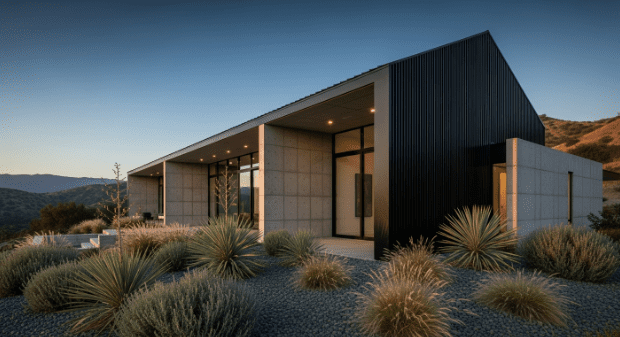
This listicle showcases five innovative and resilient home building styles that are becoming more popular in fire-prone regions like the Santa Clarita Valley, exploring their unique benefits in terms of durability, safety, and aesthetic appeal.
| Style Name | Key Benefit | Potential Drawback | Example |
| Steel Barndominiums | Extremely durable and fire-resistantHighly customizable open floor plans | Industrial aesthetic may not suit all tastesCan require specialized builders | WorldWide Steel Buildings |
| ICCF Concrete Homes | Superior fire and pest resistanceExcellent insulation and energy efficiency | Higher upfront material costConstruction can be more complex than wood framing | Buildcover |
| Architect-Designed Prototypes | Custom-tailored to the specific landscapeIncorporates cutting-edge resilient materials | Highest cost and longest design/build timeline | Vanleer Architecture |
| Prefabricated Resilient Homes | Faster construction timelinePrecision-built in a controlled environment | Limited design flexibility compared to custom buildsTransportation and site prep can be complex | CaseStudy2 |
| Metal-Clad Hardened Homes | Non-combustible exterior is excellent ember defenseLow maintenance and long lifespan | Can be more expensive than traditional vinyl siding | General home hardening |
Living in Southern California offers an unparalleled lifestyle, but it also comes with the responsibility of being prepared for nature’s challenges, especially wildfires. It’s on every homeowner’s mind, and it’s pushing a new wave of innovative, beautiful, and incredibly resilient home design. The great news is that building with safety in mind no longer means sacrificing style. In fact, some of today’s most stunning homes are also the toughest.
This article focuses on five incredible home design styles that are perfect for the Santa Clarita Valley and beyond. These are homes that can withstand the elements while maintaining a stylish aesthetic. The goal isn’t just rebuilding; it’s building smarter for the future. As recent events in communities like Pacific Palisades have shown, neighbors are coming together to create a kind of herd immunity against fire by choosing noncombustible materials. Let’s dive into the designs that are making it happen.
What Makes a Home Truly Resilient?
Before getting into the list, it’s important to clarify what to look for. In a place like Southern California, a resilient home goes beyond appearance. It depends on smart design and even smarter materials. The focus here is on homes that meet the tough standards of California’s building code, which sets the rules for building in Wildland-Urban Interface areas. That means features like non-combustible exteriors, ember-resistant vents, and designs that create defensible space. The goal is a home that can stand its ground when embers start flying.
1. WorldWide Steel Buildings Barndominiums
If you think a metal building is just a simple barn, you might be surprised by its sophistication. Modern barndominiums, or barndos, are one of the most exciting trends in home construction, and for good reason. They blend rustic charm with a modern, industrial-chic aesthetic, featuring wide-open interior spaces that are an interior designer’s dream.
What makes them a perfect fit for our landscape is their incredible durability. Companies like WorldWide Steel Buildings specialize in creating fully customizable, fire-resistant home kits that are engineered to last. Because they use steel framing and siding instead of wood, these homes are non-combustible, giving them an excellent defense against wildfires. Plus, they’re also pest-proof and resistant to water damage, which means less upkeep and more peace of mind for you.
The best part is the design freedom. You can explore a huge variety of barndominium floor plans, from cozy 720-square-foot cottages to sprawling 3,600-square-foot family estates, all backed by a 50-year structural warranty. Because there are no interior load-bearing walls, you can design your perfect layout—whether you want a massive great room with vaulted ceilings, a workshop, or an RV garage. It’s a practical, stylish, and incredibly tough solution for modern California living.
| Best For | Homeowners wanting maximum durability, open-concept living, and design flexibility. |
| Key Features | Steel frame and siding, fully customizable floor plans, 50-year warranty, pest/water-resistant. |
| Aesthetic | Modern Industrial / Rustic Chic. |
| Price Point | Often lower upfront cost than traditional wood construction; varies based on customization. |
2. ICCF Concrete Homes
After recent fires, many Southern California residents are rethinking wood-framed houses, and for good reason. A growing movement, especially in rebuild areas like Malibu, is turning toward Insulated Composite Concrete Forms, or ICCF. It might sound technical, but the concept is simple and brilliant: you build ultra-strong walls by pouring concrete into pre-made forms that double as permanent, high-grade insulation, a rebuilding approach gaining traction from Malibu to the Pacific Palisades.
The result is a home that is exceptionally strong, quiet, and energy-efficient. Most importantly, it’s non-combustible. As one resident rebuilding in Sunset Mesa put it, the goal is to create a community of fireproof homes to protect the entire neighborhood. While the upfront cost can be higher than traditional wood, the long-term benefits are substantial. Many homeowners and even insurance companies are recognizing the value, with some insurers offering lower premiums for these resilient structures. Companies like Buildcover are at the forefront, offering systems to help communities rebuild stronger than before.
| Best For | Those prioritizing ultimate fire safety, energy efficiency, and a quiet living environment. |
| Key Features | Non-combustible concrete walls, superior insulation, high resistance to pests and storms. |
| Aesthetic | Sleek, Modern, Minimalist. |
| Price Point | Higher upfront material cost, offset by long-term savings on insurance and utilities. |
3. Architect-Designed Resilient Prototypes
For those who want a home that is a true work of art and a fortress of resilience, a custom architectural prototype is the ultimate solution. This approach involves working directly with an architect to design a home specifically for your property’s unique landscape, challenges, and advantages. The entire focus is on future-proofing neighborhoods against environmental challenges in high-fire hazard zones.
A fantastic example is the R8-GEN prototype by Vanleer Architecture, conceived as a fire-rebuild solution. This home isn’t just built with fire-resistant materials; its very shape and orientation are strategically designed to deflect wind and embers. This bespoke process often incorporates cutting-edge, non-combustible materials and features like raised foundations to protect against potential floods, truly embodying the future of environmentally resilient design. This is the premium option for creating a one-of-a-kind sanctuary that is perfectly in tune with its surroundings.
| Best For | Homeowners with a significant budget seeking a unique, site-specific architectural statement. |
| Key Features | Custom-designed for the property, uses cutting-edge materials, design is optimized to deflect threats. |
| Aesthetic | Varies by architect, often avant-garde and highly modern. |
| Price Point | The highest cost and longest design/build timeline of all options. |
4. Prefabricated Resilient Homes
If the thought of a long, stressful construction process is holding you back, you are going to love this option. Prefabricated homes are surging in popularity, and the prefabricated construction market is projected to grow significantly for a reason: it’s a faster, smarter way to build.
Companies like Cover and CaseStudy2 specialize in building high-end, modern homes in a factory setting. This controlled environment allows for incredible precision and quality control while dramatically speeding up the on-site construction time. In fact, Cover has already completed its first fire-rebuild home in Pacific Palisades using this exact method. These homes are engineered for resilience from the start, often using steel frames and non-combustible siding to deliver a sleek, modern aesthetic with the strength needed to withstand local environmental threats.
| Best For | Individuals looking for a faster, more predictable construction process with a modern design. |
| Key Features | Factory-built for precision, significantly reduced on-site timeline, often uses steel frames/resilient siding. |
| Aesthetic | Clean, Modern, often Minimalist or Mid-Century inspired. |
| Price Point | Can be competitive with custom builds, but site preparation and transport are additional costs. |
5. Metal-Clad Hardened Homes
You don’t have to start from scratch to build a tougher home. The concept of home hardening is a powerful strategy every Southern Californian should know about. As fire experts recommend, taking steps to make your home’s exterior less vulnerable to flying embers is one of the most effective ways to protect it.
This approach focuses on using non-combustible materials for the most exposed parts of your house. It’s a practical strategy that can be applied to new builds or even retrofitted onto many existing homes. Key elements include:
- Standing Seam Metal Roofs: These roofs are not only stylish and long-lasting but are also completely fireproof.
- Non-Combustible Siding: Materials like metal, fiber cement, and stucco are excellent choices to repel embers and prevent flames from igniting your walls.
- Ember-Proof Vents: Installing fine mesh screens over attic and foundation vents is a critical, low-cost step to block embers from entering your home.
- Zone Zero Landscaping: While there’s some debate, maintaining a 5-foot non-combustible zone around your home’s foundation is a key recommendation from fire officials to prevent direct flame contact.
| Best For | New construction or existing homeowners looking to retrofit their property for fire safety. |
| Key Elements | Focuses on upgrading vulnerable exterior components: roof, siding, vents, and immediate landscaping. |
| Aesthetic | Highly versatile; metal siding and roofing can create looks from modern farmhouse to industrial chic. |
| Price Point | Can be done incrementally; cost varies from hundreds (vents) to tens of thousands of dollars (new roof/siding). |
Building a Safer, More Stylish Future
Choosing a home design in Southern California today is about more than just square footage and curb appeal. It’s about making a smart investment in safety, durability, and peace of mind. Whether it’s the rustic strength of a steel barndominium, the solid security of a concrete home, or the sleek efficiency of a prefab design, there are more options than ever to build a beautiful home that’s ready for anything.
Ready to start planning your resilient dream home? Take a look at these amazing designs and think about what features would bring you and your family the most comfort and security. Now, go build something incredible!