Ever wondered where “waste” goes after it is flushed down the toilet?
On a recent Saturday, the Santa Clarita Valley Sanitation District, part of the Los Angeles County Sanitation Districts, held a tour at the Valencia Water Reclamation Plant to show members of the public what happens to wastewater following its arrival.
The Valencia Water Reclamation Plant serves 200,000 people and is located on The Old Road, not too far from the Six Flags Magic Mountain theme park. A second sewage plant is located in Saugus.
The Valencia plant has the capabilities to treat up to 21.6 million gallons per day and provides primary, secondary and tertiary treatment in an effort to convert wastewater into resources for a new purpose.
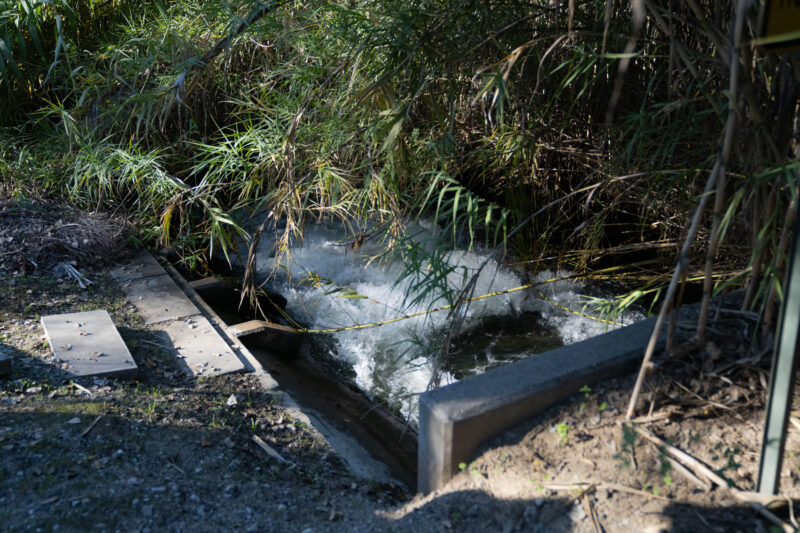
“We’re a wastewater sewage facility so we take any water that is used right at home, whether it be flushing the toilet, washing your hands, washing clothes, dishes,” said Helen Kuan, L.A. County Sanitation District senior public affairs specialist. “We get that water and in turn, we clean that water, we treat it to (then) discharge to Santa Clara River.”
“We want to make sure that doesn’t harm the environment, it doesn’t harm agriculture. That is our goal. We don’t waste resources, even the solids we receive are then turned into methane gas.”
Wastewater begins at the primary stage and has a funky smell due to solid removal. The waste is processed through a set of screens to remove the solids that can possibly damage other components throughout the treatment process, said Zachary Gampe, supervisor for the Valencia plant, who was leading the tour.
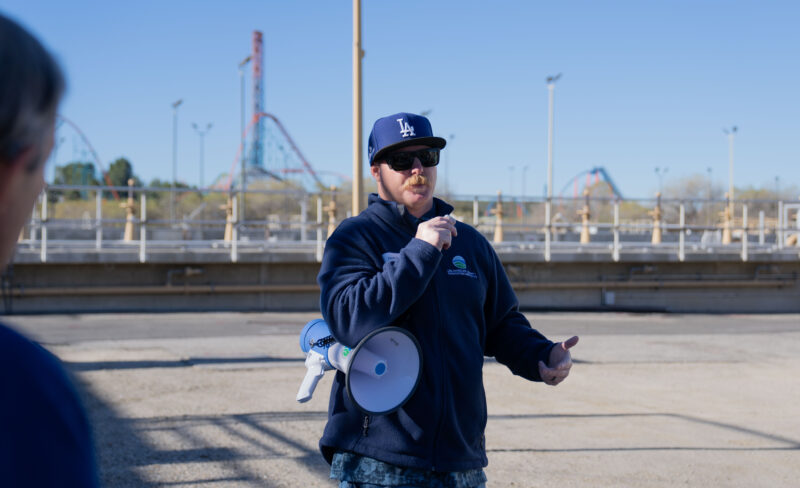
“This is the point at which the sewer actually connects to the plant,” he said, as he pointed down to a large opening so guests could see the screens for themselves. They were located about 30 feet deep.
Gampe noted that rags and flushable wipes are the biggest issue the system faces and “they’re really only flushable because they will go down the toilet,” he said. “They do cause a lot of operational issues.” The wipes are then collected from the screens in a separate process to then be disposed of.
The screens are the only open area within the entire facility. Everything else is covered or underground and that’s because, even as a wastewater treatment plant, they’re required to have contracts and permits with the South Coast Air Quality Management District.
The plant produces a dangerous gas known as hydrogen sulfide, which can be identified as a rotten egg smell, Gampe said, and permits with AQMD do not allow the plant to have more than one part per million.
“So for a million molecules, one is our limit,” Gampe said. “We have neighbors across the street, constantly being built around … We have an obligation to the state to make sure that our air leaving this facility is treated as well.”
The wastewater then passes through the aerated grit chambers, which use diffused air to create a flow and meant to separate heavy inorganic compounds from the rest of the sewage water.
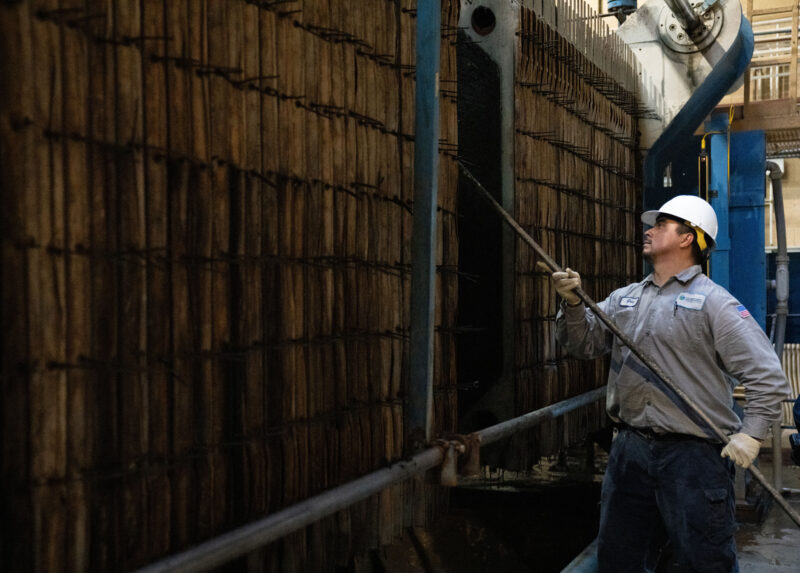
The Valencia plant is one of the only treatment facilities that still has an older model of the dewatering process, Gampe said.
The secondary stage is the biological process where organisms become the workers and, “If you really think about it, a treatment plant is nature on steroids,” Gampe said. The plant has five aeration units and “the purpose of this process is ammonia removal.”
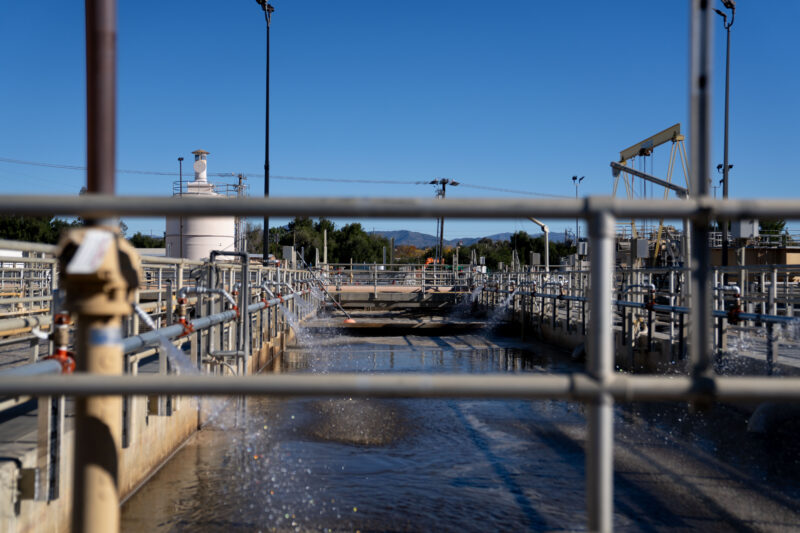
“We want to convert ammonia coming into the plant to what’s nitrite and then nitrate,” Gampe added, which is a very quick process due to nitrite’s instability.
The five aeration units look like large pools of water, about 35 feet deep, with some brown colored foam rising at the top, which Gampe identified as a form of bacteria. Water the plant creates is used to spray the foam down, which isn’t an aesthetically pleasing sight, Gampe said.
The water entering the tank is about a three-hour process before it heads off into the next stage.
The tertiary stage is where operators of the plant add needed chemicals to further disinfect the water as well as filtration before it heads to its last stop: the Santa Clara River. The water aims to keepnearby open spaces green and also act as an additional water source for nearby crops in the Piru area, Gampe said.
Operators use sodium hypochlorite to disinfect the water for about two hours and then it has to be dechlorinated before it’s released into the river.
“You’re looking at probably 14 to 15 million gallons per day,” Gampe said. Although the water may be healthy enough for nature itself, it’s not for human consumption.
The only difference between the water released into the river from the rest is the sodium bisulfite. Sodium bisulfite is added to neutralize any chlorine that “we don’t want going out to the river. We need to protect the downstream wildlife so the chlorine will not harm them,” he said.
The Valencia Water Reclamation Plant has 28 operators over six different shifts, and they oversee the facility through its control room, which allows them to keep an eye on all operations and identifywhen something unusual is happening to different roles among each of the three stages.