The William S. Hart Union High School District has been using new strategies to improve test scores in English, mathematics and science in the California Assessment of Student Performance and Progress tests — and while there have been improvements and the district is outperforming the rest of L.A. County and the state, large percentages of students are still testing below state standards.
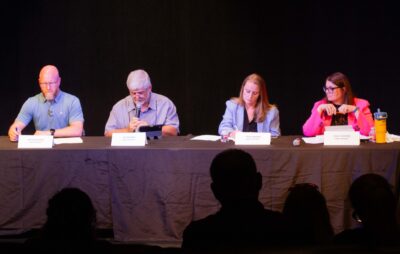
The Hart district governing board in October discussed the scores released that month, and district leaders were brainstorming some ways to bring them up.
The CAASPP test statistics show significant gaps in all three subjects, with English showing the highest level of students exceeding or meeting the state standard, averaging about 70% throughout the district, according to the CAASPP website.
The district is performing marginally better than the rest of L.A. County and California in some areas, like English, but still shows a large gap of underperformance in math and science.
L.A. County’s scores for English show that about 51% of students meet or exceed the standards. All of California is not far behind that, with about 49% exceeding or meeting the standards for English, according to the CAASPP website.
The trend continues to follow with Hart district performing better in some areas, but the math statistics show a much larger gap, with roughly 49% of the district’s students meeting or exceeding standards, according to CAASPP results.
The math statistics for L.A. County show that about 39% of students are exceeding or meeting the standards, which is about 2% more than the California statistics, which are approximately 37%, the CAASPP website shows.
Science statistics for the Hart district show that students only have about 48% exceeding or meeting standards throughout the district, according to the CAASPP website.
L.A. County shows that about 32% of students have met or exceeded the standards for science and California is only 1% more at about 33%, the CAASPP website shows.
The Hart district board is aiming to provide help to those students who are struggling academically, and continue elevating the scores.
District Superintendent Michael Vierra described some of the measures being taken to help students who are not meeting the standards.
Vierra said that they are creating “building-thinking classrooms,” a model that is frequently used during math classes at campuses including Canyon High School.
“And it’s really getting students to discuss and work through problems and teachers more being a facilitator,” Vierra said.
He added that the district is in its second year of a new model that brings in a group of professional learning teams and forming a professional learning community.
“We get people together to look at what we want students to learn and monitor it and how we’re going to move forward,” Vierra said. “So, each of our schools have what’s called a guiding coalition, and it’s really getting teachers together along with the principal to figure out what’s best for their school site and what kids need to do. And so, and then the professional learning teams, we have that within each of our departments.”
Vince Ferry, assistant superintendent of educational services in the district, said the schools have also implemented different strategies to help students during school hours.
“All of our high schools right now have student health days or what I need time built into their bell schedules, or that’s an opportunity for students to receive extra assistance. And I know our teachers do an outstanding job again, really inviting and targeting those students that need extra help,” Ferry said.
Board President Joe Messina said in the October meeting that test scores have been a long-time concern for him.
“Give me a breakdown about why those kids that are not able to meet the standards, why aren’t they able to put standards, if we can help? We need to help. If it’s an issue with, maybe be frank about it,” Messina said. “Some parents don’t hold education to high esteem. It’s OK to know how to read and write, but I want you to become this or that or what have you. And it’s not as important to them. I’ve been doing it for 15 years and I’m surprised at that mindset sometimes.”
Messina said that maybe students need tutoring or parents need help with their children to succeed.
He added that the board has certain responsibilities to help the students throughout the schools.
“My mindset for the board, our job is to be fiscally responsible and to watch the curriculum. And as I always say, we need to remove the, what I want to say, the roadblocks, so that teachers can have the resources they need to be teaching the kids,” Messina said.