Spring riding is appealing—but it can also be the most challenging time of year. Roads are just recovering from winter, and common conditions include post-rain mud, loose gravel, slick surfaces left by melting snow, potholes, and unpredictable crosswinds. This is when many riders start considering a fat tire electric bike, because it looks more stable and less sensitive to rough road conditions.
Do You Need a Fat Tire Electric Bike?
The simplest way to decide whether you need a fat tire electric bike is to look at your road conditions and riding needs. If you frequently ride on gravel roads, dirt paths, river trails, or your commute includes potholes and regularly wet spring pavement, the advantages of fat tires will be very noticeable. If you mostly ride on smooth, paved roads and care more about light weight, easy portability, and longer range, then a commuter or hybrid-style e-bike may be more suitable.
The most immediate benefit of fat tires in spring is stronger traction and greater stability. The wider tire contact patch helps you feel more secure on slick surfaces, especially when starting at low speed, riding through shallow water, or rolling over fine gravel. A tire width of around 4.0″ is usually well-balanced, offering a clear boost in stability without excessively increasing rolling resistance. If your area experiences particularly muddy spring conditions, or if you prioritize off-road capability, 4.0″–4.8″ tires will feel more confident.
How to Properly Use a Fat Tire Electric Bike
Tire pressure is the single parameter you can adjust immediately to change your riding experience. Too much pressure can make the ride bouncy and slippery; too little can feel sluggish and reduce efficiency. Most fat tires operate within a range of 8–20 PSI. A practical approach is to start at 12–18 PSI for mainly paved roads, and 8–14 PSI for gravel or muddy conditions. Your electric bike tire sidewall will indicate the recommended pressure range. From there, fine-tune based on whether the bike feels “floaty” or “too draggy.” Because spring temperatures fluctuate, checking tire pressure before early morning or evening rides is especially helpful.
Another important spring parameter is motor output and speed limits. For commuting and daily riding, a common legal upper limit is 32 km/h (20 mph). If your riding is primarily commuting and includes shared-use paths, choosing a model limited to 25–32 km/h makes it easier to stay compliant in most situations and improves safety. If you require faster commuting speeds, consider higher classifications and permitted roadways—but in wet spring conditions, a more conservative speed is strongly recommended.
Battery capacity should also be considered based on real-world spring power consumption. Fat tires create more rolling resistance, and spring headwinds are common, meaning actual range is often lower than advertised. For most commuters and weekend riders, 500–750 Wh is a practical range. If your round-trip commute is 5–10 miles, 500 Wh is typically sufficient. If you frequently ride into headwinds, carry cargo, or plan 15–30 mile weekend rides, 600–750 Wh will provide a more comfortable experience.
A large part of spring riding comfort comes down to control and smooth power delivery. Fat tire electric bikes are usually heavier, so gradual assistance is important. For beginners or commuters, start in low assist levels: use Level 1–2 to get moving, shift to Level 2–3 for cruising once speed stabilizes, and temporarily increase to Level 4–5 for hills or strong headwinds. This gradual power engagement reduces the risk of wheel slip and improves efficiency compared to immediately using high assist.
If you frequently encounter stop-and-go traffic, traffic lights, or uphill starts, a throttle can be important. If you prefer a more traditional cycling feel with less effort, pedal assist is more natural. If you want a more relaxed ride—especially for starting, carrying cargo, or when your legs feel tired—a throttle-equipped bike can be more convenient. Regardless of which system you use, avoid sudden throttle input or aggressive pedaling on wet spring surfaces, and allow the controller to deliver power smoothly.
Final Tips
Before your first major spring ride, perform a “10-minute bike check.” This often has a greater impact on your riding experience than any configuration choice.
- Check for tire cracks or bulges and confirm proper tire pressure.
- Squeeze the brakes to ensure they feel firm and verify the brake pads are not excessively worn.
- Inspect the chain and cassette to make sure they are not overly dry or dirty.
- Confirm the battery is securely locked, the charging port seal is intact, and both front and rear lights are functioning.
Spring fog and rain make visibility and lighting more important than you might expect.
As for cleaning, electric bikes can certainly be washed, but extra care is needed during muddy spring conditions. Do not use a high-pressure washer directly on the motor, battery connections, or wiring harness areas. Instead, use a damp cloth and soft brush to remove mud, focusing on the downtube, rear triangle, and drivetrain area. Reapply light chain lubrication afterward. If you ride in rain or heavy mist, briefly drying the battery area and connection points can help prevent long-term issues.
If you want a low-stress spring setup recommendation, choose a 4.0″ fat tire, run 12–18 PSI for pavement or 8–14 PSI for gravel and mud, limit top assist speed to 25–32 km/h, and select a battery capacity of 600–750 Wh. This combination typically covers commuting, light trail riding, and variable spring weather without becoming overly heavy or excessively inefficient.
A Possible Option to Consider
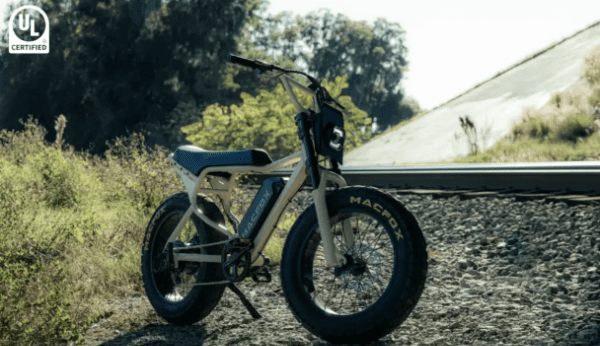
Spring road conditions often include mud, gravel, and slick surfaces, so the key with a fat tire electric bike is stability and control. The Macfox M16 electric bike features 16×4.0 fat tires, a thumb throttle, front suspension, front and rear mechanical disc brakes, a top speed of about 20 mph, approximately 5–6 hours of charging time, and a single-charge range of up to 25 miles. Start with light throttle input to avoid sudden acceleration, follow the principle of “slow down in a straight line before turning,” keep cruising speeds conservative at 25–32 km/h (16–20 mph) on wet roads, and quickly check brake feel, brake pad wear, battery locking and port seals, and light visibility before riding. When riding into headwinds or in frequent stop-and-go situations, allow extra range margin. This approach maximizes safety, comfort, and stability during spring riding.