By Jack Phillips
Contributing Writer
Secretary of War Pete Hegseth said Friday that there is no evidence that Iran is laying mines in the Strait of Hormuz.
When asked in a press conference if the Iranian regime is laying mines in the strategically important Strait of Hormuz, Hegseth said, “We’ve heard them talk about it just like you’ve reported recklessly and wildly about it.”
“But … we have no clear evidence” of the mines being laid in the waterway, he added. “We have no clear evidence of that.”
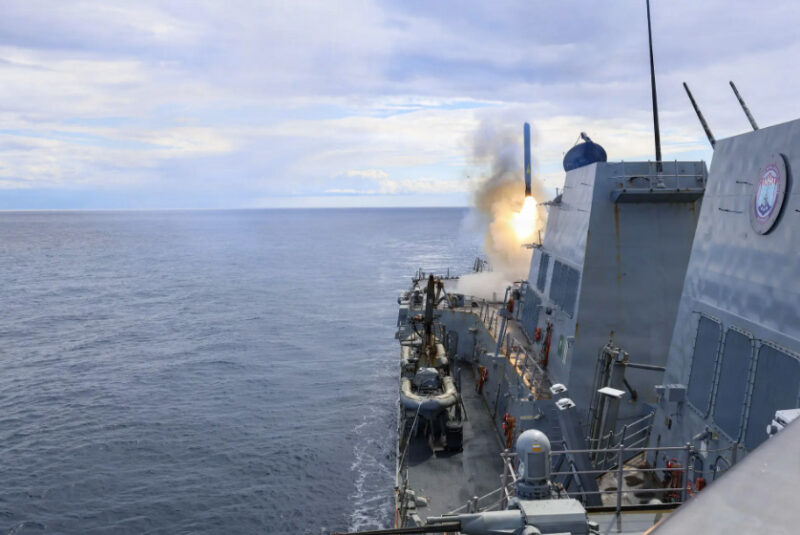
On Thursday, the U.S. Central Command said in an X post that the military has struck more than 30 Iranian minelayer ships as well as other naval vessels since the start of the operation on Feb. 28.
Iran’s new leader, Mojtaba Khamenei, has said that Iran would block commercial shipping traffic, including oil tankers, from traveling through the strait as the war continues.
The war and the drop in traffic in the strait, which links oil-rich nations bordering the Persian Gulf to the broader ocean, have led to a surge in oil prices in recent days. Prices have surpassed $100 this week, although Brent crude futures fell slightly to around $99 per barrel earlier Friday.
Iranian officials, meanwhile, have taunted the United States by warning that oil prices could top $200 a barrel as the war continues. Energy Secretary Chris Wright downplayed those claims on Thursday in an interview with CNN, saying it’s unlikely to happen.
“I would say unlikely, but we are focused on the military operation and solving a problem,” Wright told CNN.
Hegseth said that, regarding opening up the strait, “we have been dealing with it, and don’t need to worry about it.”
It comes as Khamenei issued his first comments in a statement read out by a television presenter on Thursday and via state-run media outlets, including PressTV. In the statement, he vowed to keep the Strait of Hormuz shut and called on neighboring countries to close U.S. bases on their territory or risk Iran targeting them.
Since he was named as the supreme leader over the past weekend, Khamenei has not been seen in public. President Donald Trump signaled on Thursday evening that he believes Khamenei, the son of former supreme leader Ali Khamenei, is alive but “damaged.”
“I think he probably is [alive]. I think he is damaged, but I think he’s probably alive in some form, you know,” Trump said in an interview on Fox News’ “The Brian Kilmeade Show.” The president’s remarks were published by Fox News on Thursday.
The United States has carried out strikes against more than 6,000 targets in Iran over the past 14 days, CENTCOM officials said Thursday. During the initial strikes, the U.S. and Israeli militaries killed Ali Khamenei and a number of Iran’s leaders.
Since the U.S. and Israel started carrying out strikes against Iran on Feb. 28, 13 American service members have been killed.
Reuters contributed to this report.