By Jack Phillips
Contributing Writer
The White House on Wednesday sought to apply more pressure on NATO allies to help secure the Strait of Hormuz as the U.S. military dropped bunker-busting bombs on Iranian military sites.
In a post on Truth Social, President Donald Trump publicly mused about what may happen to NATO allies if the United States can remove the Iranian regime.
“I wonder what would happen if we ‘finished off’ what’s left of the Iranian terror state, and let the countries that use it, we don’t, be responsible for the so called ‘Strait?’ That would get some of our non-responsive ‘allies’ in gear, and fast,” he wrote on Wednesday morning.
White House press secretary Karoline Leavitt on Wednesday also ramped up the pressure on NATO in a Fox News interview by saying, “NATO allies benefit far more from the reopening of the Strait of Hormuz than the United States does.”
“The strait opening is obviously good for America because it will stabilize the global oil industry. It will bring prices down again, but it greatly benefits Europe and our allies in NATO. And the president wants to see them do more,” Leavitt said.
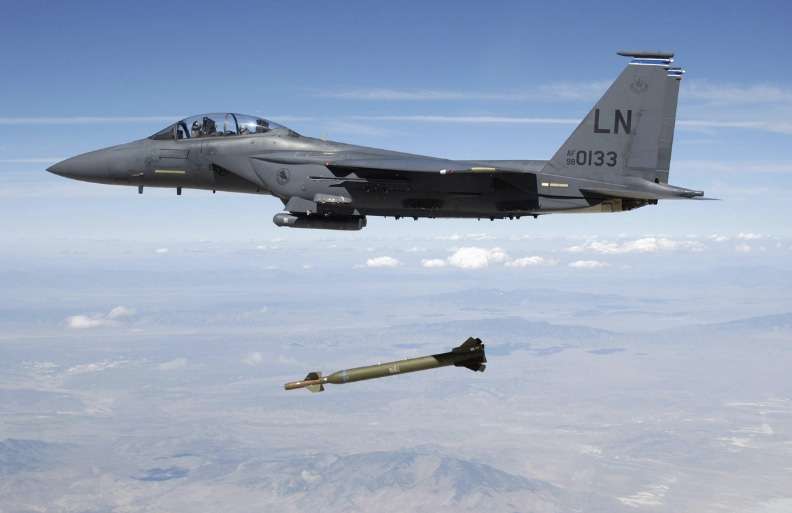
In a statement posted on X late on Tuesday, U.S. Central Command wrote that the military “employed multiple 5,000-pound deep penetrator munitions on hardened Iranian missile sites along Iran’s coastline near the Strait of Hormuz.”
The Iranian anti-ship cruise missiles in sites that were bombed had “posed a risk to international shipping in the strait,” it added in an announcement just hours after Trump said that NATO and several other allies rejected calls to join a U.S.-led coalition to secure the critical waterway.
Since the conflict started on Feb. 28, tanker traffic through the Strait of Hormuz has significantly slowed, prompting concerns about tightening energy supplies and unnerving the world economy. Iranian officials have said they would attempt to block traffic, while U.S. officials have said they have allowed Iranian oil ships to traverse the passage.
About 20% of the global oil supply flows through the strait, or around 20 million barrels of oil per day, according to the U.S. Energy Information Administration. This week, the price for a barrel of Brent crude oil was about $108.
The national U.S. average price of regular gasoline reached around $3.842 a gallon on Wednesday, or up more than 90 cents from a month ago, according to the American Automobile Association. The price for a gallon of diesel, meanwhile, is now over $5, which is up roughly $1.40 from a month ago.
U.S. Treasury Secretary Scott Bessent told CNBC on Monday that the United States is allowing Iranian oil tankers to pass through the strait so as not to disrupt world markets too much.
The new leader of Iran, Mojtaba Khamenei, had released a statement through state-run media this past week vowing to keep the Strait of Hormuz closed and to continue to launch attacks against Middle Eastern nations. He is the son of former Iranian leader Ali Khamenei, who was killed on Feb. 28 by U.S.-Israeli strikes.
The Associated Press contributed to this report.