When Santa Clarita settles into its triple-digit summer stretch, most residents feel the heat immediately — on the steering wheel, on the sidewalk, and especially in the parks and trails where families gather to cool off under shade trees or splash in one of the city’s pools. But long before anyone arrives with a picnic blanket or hiking shoes, a dedicated team of Parks Maintenance staff has already been out for hours, working behind the scenes to keep these public spaces safe, green, and usable through the hottest months of the year.
For the city’s Parks Planning and Open Space Manager Susan Nelson, summer is both the busiest and most delicate season. “During peak summer heat, staff safety is of the utmost importance,” she said. “Triple-digit temperatures add an additional strain on staff maintaining City parks and open spaces.”
Her crews are responsible for everything from irrigation checks and shade-structure upkeep to wildfire fuel reduction and trail safety. And while the public may only see the end result — a clean park, a green field, a shady playground — Nelson says the work behind it is far more complex, especially when temperatures soar.
A Day in the Life of Parks Maintenance
The day begins early — 6:30 a.m., before the sun has fully taken hold. Crews split into specialized teams, each with a list of tasks prioritized around heat, safety and park needs.
“Tending to park cleanliness and removing trash is prioritized each morning, along with maintenance of the grass,” Nelson explained. “Work that requires high amounts of manual labor is also prioritized in the morning hours, such as renovations, mulch spreading, and weeding.”
By midday, the schedule shifts. High-exertion work pauses, replaced with lower-impact tasks or assignments in shaded areas. Afternoon hours are often reserved for indoor trainings or meetings, giving staff a reprieve from the heat.
“When temperatures are at their highest, the maintenance teams are instructed not to overexert themselves, take multiple breaks, drink water, and seek shade or air-conditioned areas as needed,” Nelson said. “Staff’s wellbeing is prioritized over maintenance tasks.”
It’s a culture of care that extends beyond policy. Crews look out for one another, watching for signs of heat stress or dehydration. Each year, staff receive specialized training on recognizing heat-related symptoms and responding quickly if a coworker is in distress.
“The team does a great job of working together and making sure they are not jeopardizing their safety,” Nelson added.
Balancing Water Conservation With Green, Usable Parks
Keeping parks green in August is no small feat — especially in a city that has prioritized water conservation for decades. Nelson describes the approach as “multifaceted,” combining technology, plant selection, and soil management to reduce water use without sacrificing quality.
One of the most important tools is smart irrigation. “The centralized irrigation computer systems automatically adjust irrigation run times based on real-time weather,” she said. “The systems detect irrigation breaks and shut down within two minutes of a break being detected.”
Maintenance staff also conduct routine inspections to ensure water is being distributed properly — an essential step during heat waves when turf and plants can dry out quickly.
Another strategy is choosing low-water use landscaping. Most sports fields in Santa Clarita are planted with Bermuda grass, which tolerates heavy athletic use while requiring significantly less water than traditional turf. Planter areas throughout parks feature drought-tolerant plants selected specifically for their ability to thrive with minimal irrigation.
“When installing new planter areas or renovating existing planters, special consideration is given to the amount of water needed for plants to thrive,” Nelson said. “Plants that require lower amounts of irrigation are selected, and once established can survive with once or twice a week watering.”
Mulch also plays a major role. Crews spread two to three inches of mulch in planter beds and bare soil areas to retain moisture, reduce evaporation, suppress weeds, and lower soil temperatures — small steps that collectively make a big difference.
Building Shade and Heat-Resilient Spaces
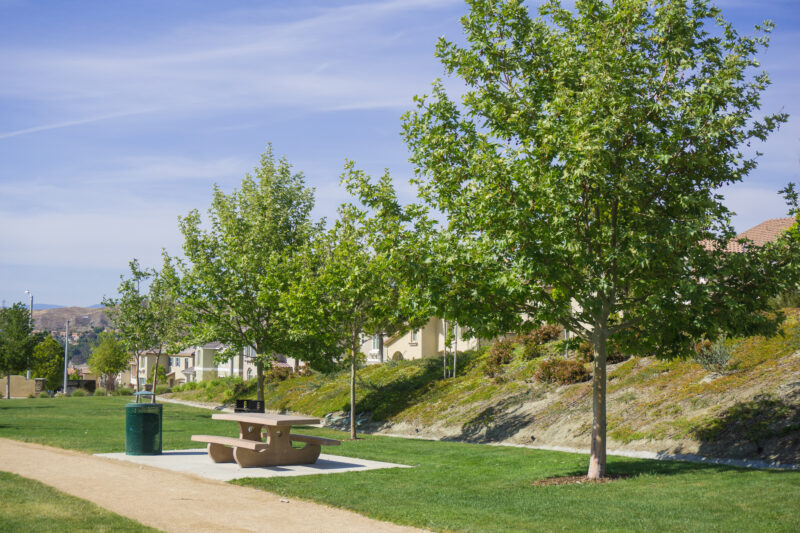
As summers grow hotter, shade has become one of the city’s most valuable park amenities. Nelson says Santa Clarita has invested heavily in shade structures and tree plantings across parks and trails.
“Fortifying park spaces with shade structures has been an ongoing focus for many years,” she said. Recent installations include new shade over playgrounds at Valencia Heritage Park, Bouquet Canyon Park, and Valencia Glen Park.
At David March Park, a major renovation brought expanded playground shade, a new picnic pavilion and shade added to baseball dugouts and seating areas — improvements that make the park more comfortable for families and athletes during peak heat.
Tree planting is another longterm strategy. Crews prioritize species with large canopies and place them strategically to shade high-use areas such as playgrounds, pathways, and seating zones.

Wildfire Prevention is a Yearly Battle
With wildfire risk increasing each summer, maintenance crews take proactive steps to reduce hazards along trails, open spaces, and park perimeters.
In May, the city used hundreds of goats to remove 60 acres of wildfire fuels in Rivendale Open Space — a natural, effective method of clearing dry vegetation. “Additionally, staff and contractors clear dry grasses, weeds, and brush 200 feet from structures and as requested by Los Angeles County Fire officials,” Nelson said.
Fuel modification is ongoing throughout the season, especially in areas bordering neighborhoods or high-traffic trails.
Monitoring Conditions and Keeping Spaces Open
Despite the challenges of heat, air quality, and fire risk, Santa Clarita’s parks and trails generally remain open to the public. Nelson says the city closely monitors environmental conditions and adjusts recreation programming when necessary.
“Parks are an area where residents can find reprieve from the heat under the shade of a tree or at one of the City’s nine pools,” she said. “If conditions are extreme, recreation programming may be modified.”
The goal is to keep public spaces accessible while ensuring safety for both visitors and staff.
The Work You Don’t See
Most residents will never witness the early morning inspections, the careful irrigation checks, or the quiet teamwork that keeps parks running smoothly. They may not know about the specialized heat-safety training, the mulch-spreading strategies, or the goat herds clearing brush in the hills.
But Nelson hopes people understand the dedication behind the scenes.
“Our teams work incredibly hard,” she said. “They look out for one another, they care deeply about our parks, and they take pride in making sure these spaces are safe and enjoyable for everyone.”