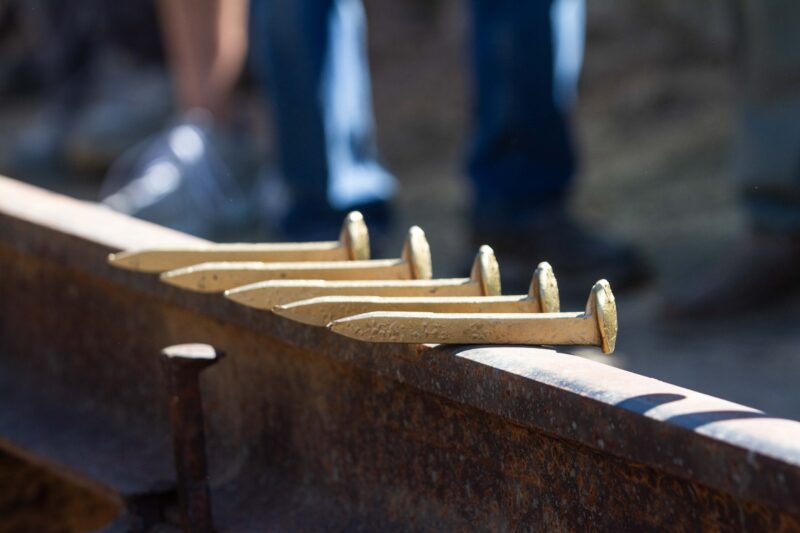
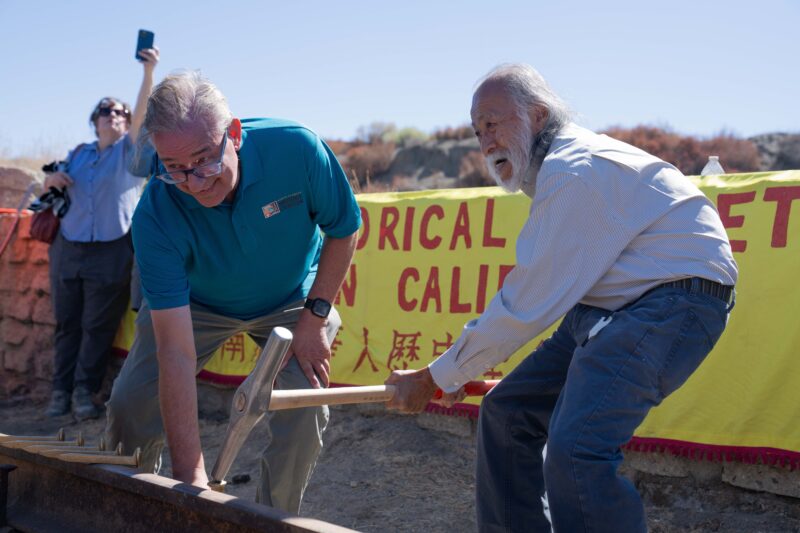
The Lang Station golden spike ceremony was held on Sept. 5, 1876, commemorating a momentous occasion in railroad history: On that day, 150 years ago, a gold spike was driven into the rails at the Lang Southern Pacific Station on Soledad Canyon Road on the outskirts of present-day Canyon Country, officially connecting Los Angeles to San Francisco by railroad.
On Saturday morning, local leaders alongside history and railroad enthusiasts gathered where the Lang station once stood, to celebrate the 150th anniversary and re-enact that historic moment.
Hosted by the Santa Clarita Valley Historical Society, the reenactment featured speeches from elected local officials, and was followed by a fundraiser at River’s End Pub and BBQ aimed to support the Historical Society.
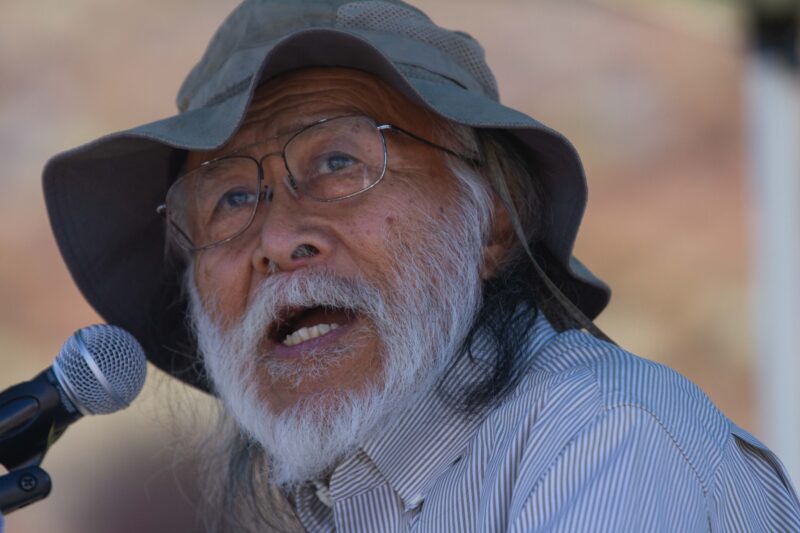
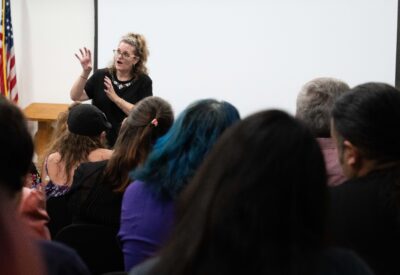
But before those eager to reenact the moment could do so, the Historical Society had Eugene Moy, past president of the Chinese Historical Society of Southern California, to speak and acknowledge the Chinese workers who made up most of the labor force that made the railroad a reality.
“Chinese workers made 80% of the Central Pacific Railroad, the western leg of the Transcontinental Railroad, along with many others. Chinese were not the exclusive workers,” he said, and mentioned the 1882 Chinese Exclusion Act, which banned Chinese laborers from entering the country for 10 years.
“Today, we are having many discussions about immigration, such as the men and women and children who are confined at Adelanto just a few miles from here. My hope, though as a third and fourth generation Chinese American, my hope is that for the future of our nation, we acknowledge and accept the role of all those who came here to work.”
City of Santa Clarita Mayor Laurene Weste also made remarks during the ceremony, and she acknowledged the sacrifices of the labor workers who not only built the railroad, but also the San Fernando Tunnel, which connects the Santa Clarita Valley to the San Fernando Valley and the rest of Los Angeles.
“It’s very important that the Historical Society keep this history alive for future generations. The kids need to know what people went through to get this. It didn’t just happen, and it wasn’t easy,” she said.

Assemblywoman Pilar Schiavo, D- Chatsworth, also gave remarks during the ceremony.
“It preserves such an important part of our history, our Southern California history and making sure that we recognize the people who work so hard to make this history possible,” she said. “One hundred and 50 years ago, the driving of the gold spike here at Lang Station connected these rail lines between San Francisco and Los Angeles and truly, our community would not be what it is today without that piece of our history. It was a major moment in transportation in California. We connected communities and businesses and people in the ways that would shape our region for generations and make it what it is today.”
All speakers were gifted a golden spike replica by the SCV Historical Society before those present walked over to witness the reenactment of the golden spike ceremony.