By Tom Gantert
Contributing Writer
The Department of Justice announced Thursday it charged 15 people with health care fraud in California over a combined $2 billion in alleged fraudulent claims submitted to government and private health care programs.
The allegations include unnecessary medical procedures, illicit kickbacks and hospice fraud, authorities said.
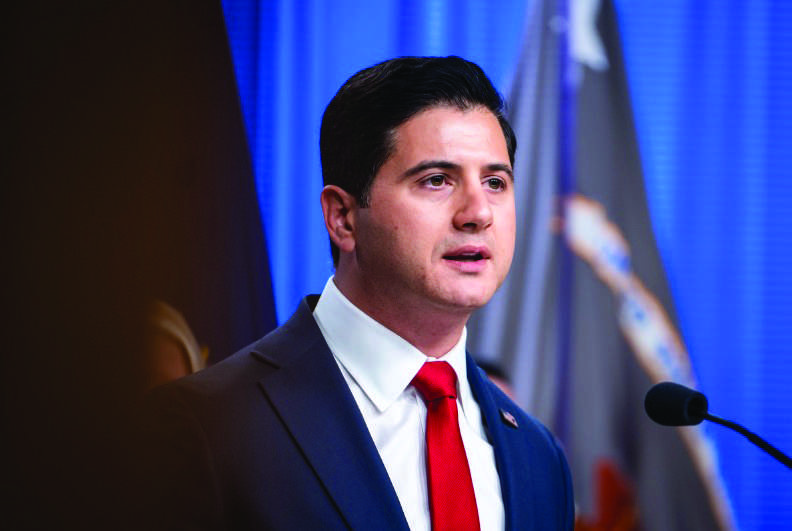
“California has a fraud problem,” Bill Essayli, U.S. attorney for the Central District of California, said. “I dubbed California the kingdom of fraud. Whether it’s hospice fraud or health care fraud or election fraud, California does fraud best … California does nothing — nothing — to prevent fraudsters from getting money.”
California Gov. Gavin Newsom’s office didn’t respond to an email seeking comment.
One major charge highlighted Thursday involved more than $1.6 billion billed in an alleged scheme to lure vulnerable individuals to California for sham substance abuse treatments that were never given to the patients. The DOJ said it was the largest case of its type that the department ever prosecuted.
Prosecutors allege that David Young, 71, and his son Nathan Young, 39, controlled dozens of treatment companies and used recruiters to lure vulnerable people with offers of free travel, housing, money and drugs.
The operation allegedly favored patients with lucrative insurance policies, while others lived in crowded, unsanitary housing. Prosecutors say the Youngs recruited patients with free flights, money, apartments, hotel stays, cars, gift cards, marijuana, cigarettes and illegal drugs.
Prosecutors allege the Youngs cycled patients through facilities regardless of medical need, and encouraged some to use drugs to qualify for detox.
Purported therapy sometimes consisted of Zoom sessions with more than 100 attendees who were not required to participate beyond turning on their cameras, prosecutors allege.
The Youngs offered drugs to their patients, stopped them from communicating with family members, drugged patients who tried to leave, and physically blocked others from leaving, the DOJ said in a statement.
Attorneys for the Youngs did not respond to an email seeking comment.