One thought quickly comes into focus quickly after talking about DUI investigations with Santa Clarita Valley Sheriff’s Station Deputy Samuel Curameng for any amount of time.
He’s the last person a drunken driver would want to see in the rear-view mirror.
Sheriff’s Department Sgt. Mike Lennig shared praise for the entire Traffic Unit for the Santa Clarita Valley Sheriff’s Station, in a phone interview last week.
But Lennig said even among a great team, Curameng’s numbers consistently stand out: Curameng led the Sheriff’s Department for all of Los Angeles County in the number of DUI arrests made last year, after coming in second the previous year.
The arrests can often be more difficult than people might think and often can take hours to complete, Lennig said, which is why Mothers Against Drunk Driving honors any law enforcement officer who makes more than 25 arrests for driving under the influence.
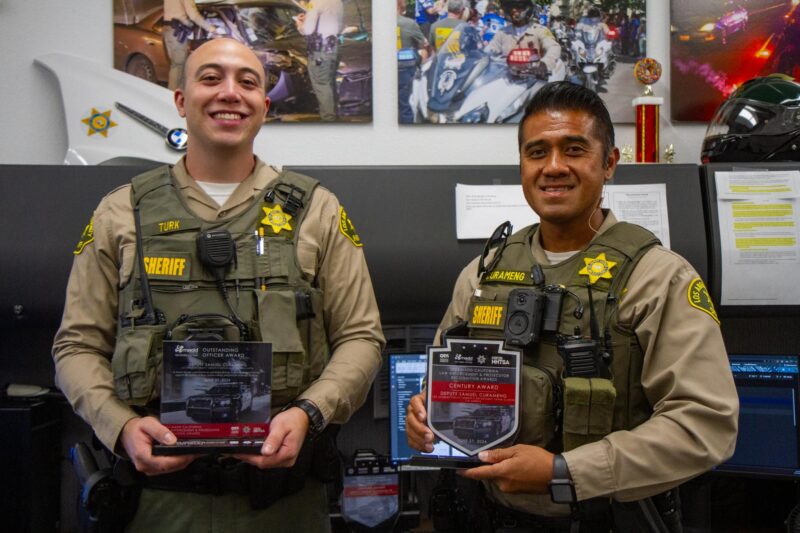
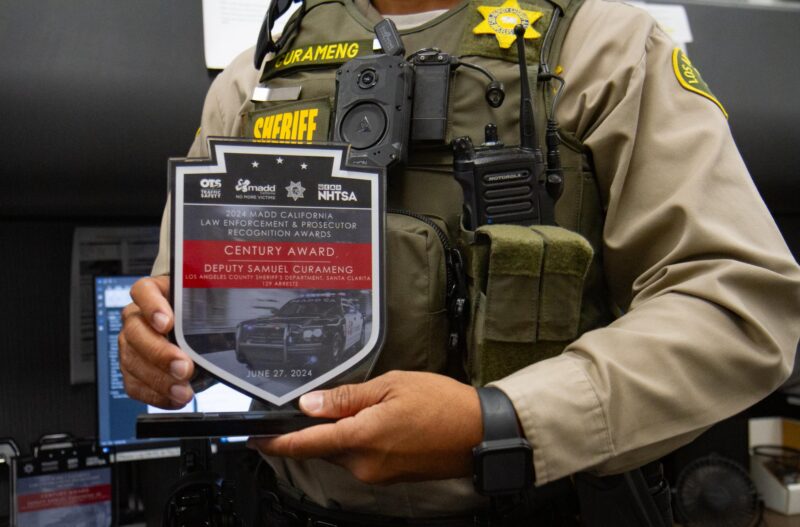
Curameng has arrested more than 100 for the offense in each of the past two years, putting him in a fairly elite “Centurion” club for the anti-DUI advocacy organization.
The leaders countywide at the last MADD awards were in the 200s from a pair of Los Angeles Police Department officers, according to Deputy Seth Klindworth, another DUI detector in the SCV on pace to accomplish that feat this year.
“There’s only a handful of us,” Curameng said, but then downplaying the feat, he added, “Well that’s my sole job. My sole duty is to do that. Every day I come to work, I’m looking for impaired drivers.”
He’s done so well at finding them over the past few years that he’s also started to train others, as well.
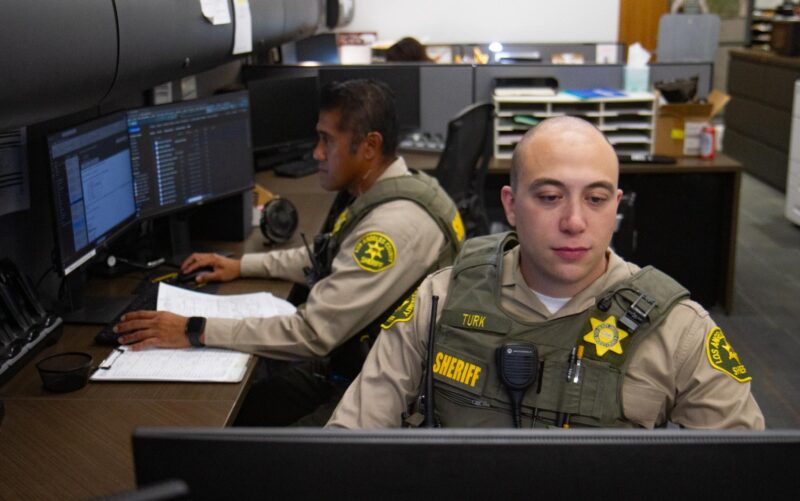
Klindworth and Deputy Brett Turk are two of those deputies, along with Curameng, who are set to be regular honorees at the MADD banquets based on their DUI arrests.
Finding a niche
All three shared similar reasons for their choice assignment: long, late hours and arrests that require discipline, training and meticulous procedure.
“I do it because I know people in the city, I have friends, I have family that live out here, and I don’t want to be the one to come back to work and find out that a friend, a partner, a friend’s wife, whatever it might be,” Curameng said in a phone interview Wednesday, “a life has changed because of a drunk driver.”
Curameng and Klindworth said they always wanted to work in law enforcement, with Curameng, a Lancaster resident, able to recall watching reruns of “Adam-12” and “CHiPs” as a boy with his grandfather in Hawaii, where he was born and raised.
Klindworth, 41, previously worked in disaster restoration, but had friends and family who worked in law enforcement.
“It was something I wanted to do when I was younger, and finally, I decided to say, ‘You know what, let’s make a run at it and see what can happen,’” Klindworth said, of the decision he made about eight years ago. “And I think ultimately, it’s being a part of something bigger than me, you know, trying to make some kind of change and help people out.”
Similarly, Turk, a 29-year-old with six years in the department and three in Santa Clarita, showed an interest at an early age, and started going on ride-alongs with the Explorers Program from the age of 14, before he eventually attended the Sheriff’s Academy.
While Curameng’s mission is more single-minded in purpose on DUIs, both Klindworth and Turk take more general traffic calls and crash incidents, in addition to emergency responses when needed. That makes their numbers more impressive, Curameng said.
“The true recognition is for the guys that I train — they’re working the line, who are responding to traffic collisions and writing reports,” Curameng said.
Curameng described his professional background prior to the Sheriff’s Academy, as eclectic — two tours in Iraq as a tank soldier with the Army and then the National Guard, as well as years spent as a pediatric nurse, where he met his wife.
But Lennig said that’s created a skillset very useful to impaired drivers. The military discipline for following procedure. The medical training for identifying impairment.
“And then on top of that, he just has a drive to do it,” Lennig said. “The guy’s a hard worker, so put all those together, and that makes a very effective DUI officer.”
Understanding the challenge
It wasn’t always that way, Curameng says.
Curameng described the skills it takes to catch an impaired driver as “perishable.” They’re taught in the academy, but if those skills are not studied and brushed up on, they aren’t as helpful.
And that’s not a station issue or even a department issue, both Curameng and Lennig both said — it’s something law enforcement officers face around the country.
While officers train to detect drivers for the various impairments, which can change with substance-abuse trends, they also have to prepare themselves against an industry that collects billions of dollars in attorney fees, including networks like the National College of DUI Defense.
To demonstrate the importance of training, Curameng mentioned how one attorney brags about how the alcohol in soy sauce can trigger a false positive, which is just one example the attorney gave of how he knows how to fight for his clients.
That’s where Curameng demonstrates how his understanding of medicine and the National Highway Traffic Safety methods for sobriety testing come in handy, he says.
“But the standard is, you have to wait 15 minutes prior to giving that breathalyzer test — there’s a standard,” Curameng said, “so, you can get yourself in trouble if you don’t understand that why we’re doing things like that, because the mouth metabolizes a lot of things a lot faster.”
Finding the niche
The difficulty in DUI arrests hit home for Curameng during a stop about six years ago, when he first started patrol duties in Santa Clarita.
“We were at the old station over there (on Magic Mountain Parkway), and then, literally, I did not know what I was going to get into. I just wanted to be good at something. I wanted to be a good cop, be a good partner, right?” he said of starting out in a traffic car.
“Well, I am one of those guys who doesn’t like to be uninformed,” he said.
And then he responded to a 911 call, which happened to have been made by a reporter, meaning Curameng’s response likely would be filmed. The driver was going in circles erratically near a Newhall 7-Eleven.
“We all know what an intoxicated person looks like. It’s very obvious,” Curameng said, but everyone’s innocent until proven guilty.
“It may seem as simple as that, but we have to be able to articulate the fact that if that person was driving earlier or was driving, period; he’s a danger to others; and he can’t operate his motor vehicle safely,” he said.
Curameng realized then he didn’t know enough about DUI investigations and had to call in some of his mentors. Ultimately, that suspect ended up being arrested on suspicion of possession of a stolen vehicle, but it taught Curameng a lesson.
“So all the elements lined up right for me to get him off the road so he couldn’t drive around and kill somebody,” Curameng said. “After that, I realized that I needed more training. I needed to be more diverse in all types of crime.”
Both Curameng and Klindworth, who each have about 80 DUI arrests so far this year, mentioned the real need for more self-awareness in many of the drivers they stop — especially with so many alternatives available for ride-sharing.
It still surprises Klindworth how often people are surprised that they’re over the limit at all when he shows them the results of a Breathalyzer test.
“People think that they’re good to drive and they don’t understand that they’re getting behind this giant weapon that’s going to, you know, potentially injure or kill themselves and other people,” Klindworth said. “The way that they’re so nonchalant or not understanding about how badly they’re impairing themselves when they’re operating a vehicle. They just don’t understand the consequences until they’re handcuffed and going to jail.”