The L.A. County Board of Supervisors passed a proclamation Tuesday for a local state of emergency as a result of recent federal immigration enforcement action, with a 4-1 vote.
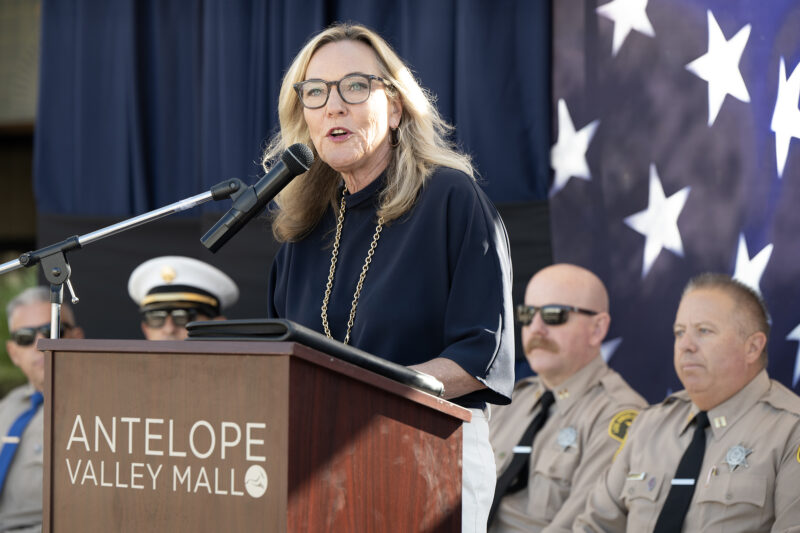
Fifth District L.A. County Supervisor Kathryn Barger, the lone no vote and chair of the board, issued a statement shortly after it passed, stating her objection was over “good governance, not immigration status,” in an email from Helen Chavez Garcia, her director of communications.
“Families across Los Angeles County are afraid, and that fear is real. I’ve spoken with members of our Latino community who live with the daily anxiety that immigration actions could separate families and destabilize neighborhoods,” wrote Barger, whose district includes the Santa Clarita Valley. “That fear deserves to be acknowledged with honesty and compassion. Declaring a local emergency is not the right or responsible way to respond to that.”
Supporters felt it necessary to protect residents from what Supervisor Holly Mitchell called federally sanctioned kidnappings, while opponents called the reasoning an excuse to support another eviction moratorium that would disproportionately hurt “mom-and-pop” property owners.
“Declaring a local emergency allows the county to promulgate orders and regulations to provide for the protection of life and property,” said Thomas J Faughnan, senior assistant county counsel, answering a question from the proclamation’s co-author, Supervisor Lindsay Horvath. “It allows the county to request assistance from the state. It permits mutual aid to any affected area. It provides the county with certain legal immunities for emergency actions taken, and it permits the county to obtain vital supplies and equipment needed for the protection of life and property, and the ability to require emergency services of county personnel.”
In response to a different question from Horvath, Faughnan said the program could allow for a countywide expansion of the county’s “sensitive sites” program, which bars immigration enforcement in certain areas, “if it is in response to the emergency and for the protection of life and property.”
He added that it’s already in effect countywide on county property, but he didn’t think it would be possible for the county to enforce such a program on private property.
Horvath said she wanted to be clear on what the supervisors can and can’t do, and while they’re speaking to the sensitive sites, there’s more the county can do “to further protect our residents.”
Many of the commenters for and against — associations for both property owners and tenant groups — focused discussion on the emergency proclamation around the potential for an eviction moratorium. Tuesday’s discussion was prompted by a request from Horvath for a “report-back” Tuesday on “Options For An Eviction Moratorium,” which detailed how the county might continue to fund the program amid a budget crisis. Supervisor Janice Hahn claimed credit as co-author.
After more than two hours of the concerns and discussion on what policies could be implemented with an emergency proclamation, Barger asked Faughnan to clarify “what does today’s action do,” adding that they’re “not voting on an eviction moratorium today.”
“It declares an emergency based on the federal enforcement actions,” he said.
Barger then pressed Faughnan about “maintaining expectations” and asked what difference the county resident would see “tomorrow.”
“The county has access to the emergency powers that we discussed earlier, and so, we would need further direction from your board, to implement specific actions,” he said.
“So, today’s action doesn’t really change anything tomorrow?” she replied.
“Correct,” he said.
Barger, who described the move as a “symbolic gesture” in her statement, then called for the vote.