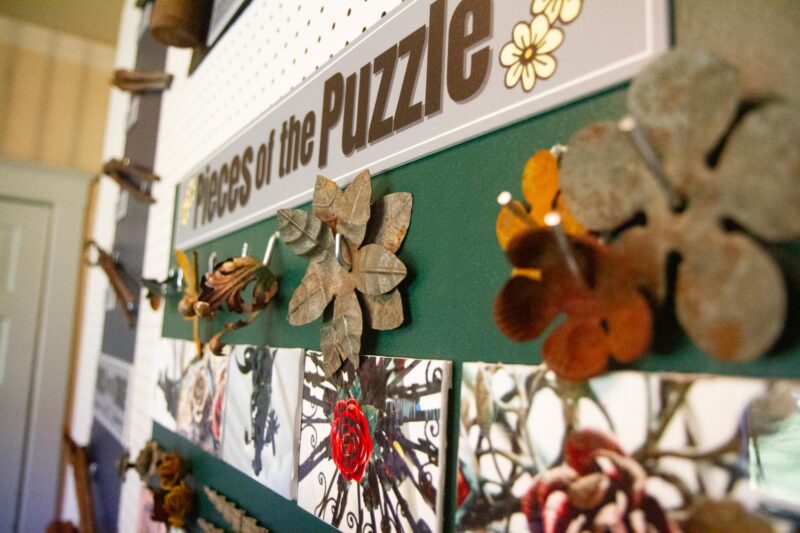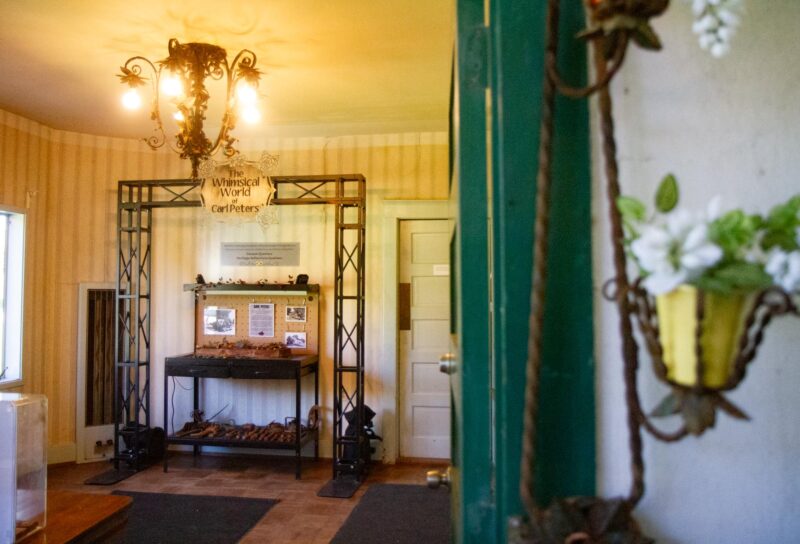
The Rancho Camulos Museum recently debuted “The Whimsical World of Carl Peters” exhibit, and community members had a chance to look through authentic artifacts and art pieces created by Carl Peters, an immigrant blacksmith who lived and worked on the property from 1920 to 1943.
When Barbara De Hart came across a bunch of random tools when cleaning out areas of the Camulos Museum, she was curious to discover where they came from. After some research, she found that they all belonged to Peters, who was described as an eccentric man who just “created stuff” she said.
But instead of throwing out the tools, De Hart thought it would be great to highlight Peters after she learned he was the person who created many different artifacts and decorative accents throughout the property.
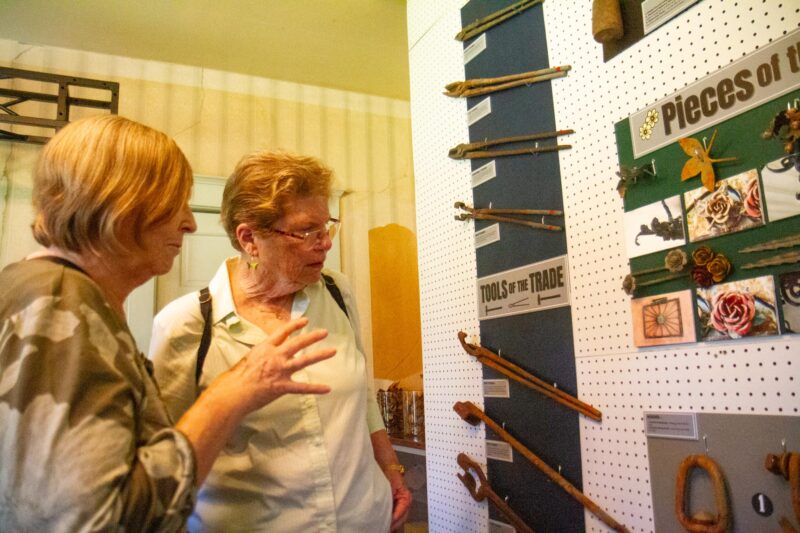
“Back in the day, he created these door pieces for every single solo door. You can see other lighting fixtures, that’s him,” she said as she walked through the building and pointed at different decorative accents made of steel. “You kind of see him everywhere.”
With the help of the Canyon Questers and Heritage Reflections Questers, local chapters of a nonprofit organization focused on historic preservation and education, the exhibit came to fruition.
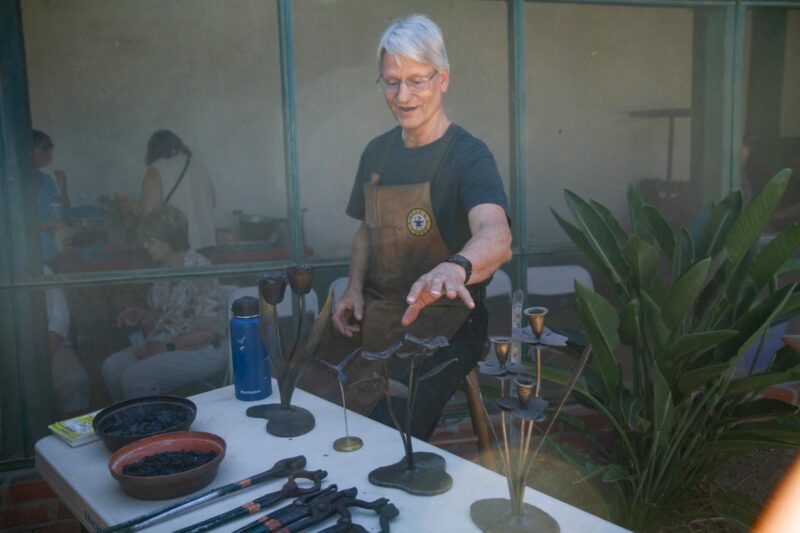
During a special grand opening at the national historic landmark, guests had a chance to look through an assortment of tools, stamp sets, and artifacts so they could learn more about the technicalities of how blacksmiths shaped metal and turned it into sculptures and other objects.
California Blacksmith Association instructor Gary Standke was also present and answered questions from guests curious to learn more about blacksmithing.
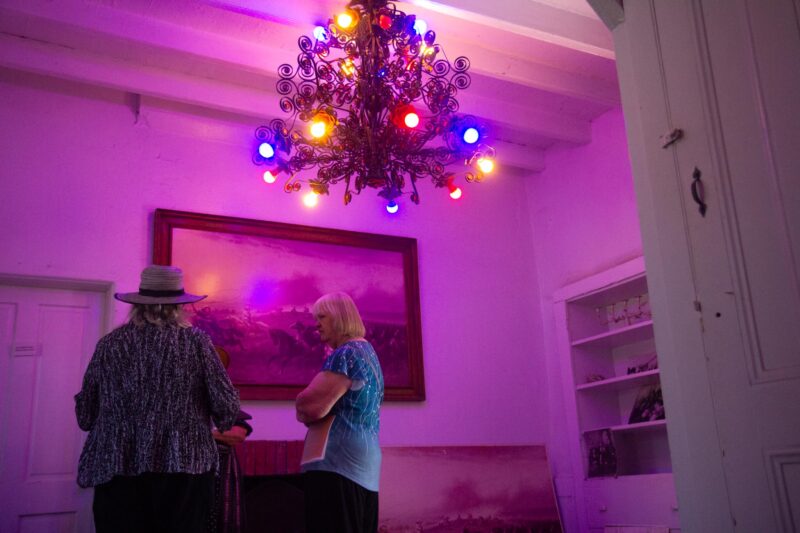
Questers Libby Hinze and Deborah Harris were both happy to see the exhibit come to life and ready to be shared with the surrounding communities.
“It’s very important for the public, the students in the area to have a perspective of what people built the country, what they went through, and what they enjoyed. This exhibit shows the beautiful things, the practical things that they had to do as far as maintaining their home and their lives,” Hinze said.
“They can come and actually see and put hands on some of that stuff instead of reading (about it) in a book,” Harris added.
The exhibit “pays homage to him,” De Hart said, referencing Peters and a way to “memorialize him through his creativity … It’s so unique because you don’t see this kind of stuff anymore.”
Rancho Camulos is located at 5164 E. Telegraph Road, Piru, about 12 miles west of Interstate 5 on State Route 126. For information on the exhibit, tours, and volunteer opportunities at the Rancho Camulos Museum, visit www.ranchocamulos.org.