By Zachary Stieber
Contributing Writer
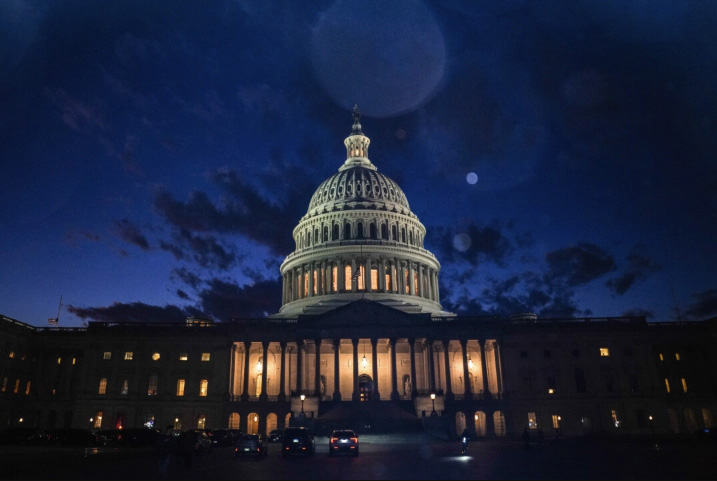
The government is set to reopen after President Donald Trump signed a funding bill approved by both chambers of Congress on Wednesday.
Eight members of the Senate Democratic caucus and six Democratic representatives joined Republicans to pass the legislation.
“Our troops, air traffic controllers and federal employees will be back to receiving their regular paychecks,” White House press secretary Karoline Leavitt told a briefing ahead of the signing.
“Families in need will get back to receiving their food purchasing assistance, and the people’s government will soon be back open for business.”
Here’s what you need to know about how the government will reopen under this measure.
Food Stamps
The approximately 42 million people enrolled in the Supplemental Nutrition Assistance Program stopped receiving all or some benefits after October, as the Trump administration resisted tapping tariff revenue to fully fund food stamps for November.
The federal government spends approximately $9 billion per month on SNAP.
Contingency money previously set aside by Congress was used by the administration to partially fund November benefits, under orders from a federal judge. The Supreme Court blocked a different order that would have required the administration to use tariff revenue to fully fund the program.
The package signed by Trump appropriates $107.4 billion for SNAP, including $6 billion that will be placed in a contingency fund and only used “in such amounts and at such times as may become necessary to carry out program operations.”
Under the new package, most SNAP participants will receive food stamps within 24 hours, a spokesperson for the U.S. Department of Agriculture said in a statement.
Some states had already issued full benefits, following a memorandum from the department. When the agency attempted to order those states to reverse steps they had taken to issue full benefits, a federal judge blocked the directive.
“Now that the shutdown has come to an end, USDA must provide the necessary guidance to states to ensure every eligible family receives their full November SNAP benefits as quickly as possible,” Share Our Strength, an advocacy group, wrote on LinkedIn.
Flight Restrictions
The Federal Aviation Administration ordered flight restrictions earlier in November, as some air traffic controllers did not report to work. Controllers are government employees, so they were working without pay.
National Air Traffic Controllers Association President Nick Daniels said on Tuesday that he was unsure what the pay schedules would look like when the government reopens.
“All I can reference is what happened in 2019,” he said.
“It took air traffic controllers approximately two to two and a half months to be able to be made whole from all their compensation.”
On the same day, Transportation Secretary Sean Duffy said that controllers will receive 70% of their back pay within 24 to 48 hours after the shutdown ends.
In another briefing on Tuesday, he said that controllers might not immediately return to work.
“We are at the cost of hopefully having the government reopen. I’m concerned we are not going to have day one controllers come back into the towers right away. I’m asking them to do that. President Trump has asked them to do that. It is their job and they will be paid, but it might not be immediate when they come back in,” Duffy said.
“And so we’re going to watch, analyze, encourage them to come back. We will start to alleviate the restrictions … only when the data says we should.”
The Department of Transportation did not respond to a request for comment.
Back Pay
A large number of government employees have not been receiving paychecks amid the shutdown, with some, including air traffic controllers and Department of Justice lawyers, working without pay as lawmakers negotiated.
The Government Employee Fair Treatment Act of 2019 requires the government to provide back pay to furloughed employees, as well as workers excepted from furlough who worked during the shutdown.
The employees shall be paid “at the earliest date possible after the lapse in appropriations ends, regardless of scheduled pay dates,” the act states.
The White House referred a request for comment to the Office of Management and Budget, which did not respond.
The package signed by Trump also reverses all mass terminations, or reductions in force, implemented after the shutdown started.
“Any employee who received notice of being subject to such a Reduction in Force shall have that notice rescinded and be returned to employment status as of Sept. 30, 2025, without interruption,” it states.
Another Shutdown?
The package fully funds the USDA, the Department of Veterans Affairs, the Legislative Branch, and military construction for fiscal year 2025.
Other agencies were only provided with funding through Jan. 30, 2026.
House Appropriations Committee Chairwoman Rosa DeLauro, D-Conn., said that another shutdown is a possibility.
“I’m concerned,” she said. “On Jan. 30, we could find ourselves in the same position.”
Sen. Jeanne Shaheen, D-N.H., told reporters in Washington, after voting for the reopening package, that reopening the government would give Democrats time to negotiate extended tax credits for health insurance.
“The Republicans were providing any commitment or willingness to vote or discuss extending the tax credits,” she said. “We have an opportunity to do that, and we will hold their feet to the fire.”