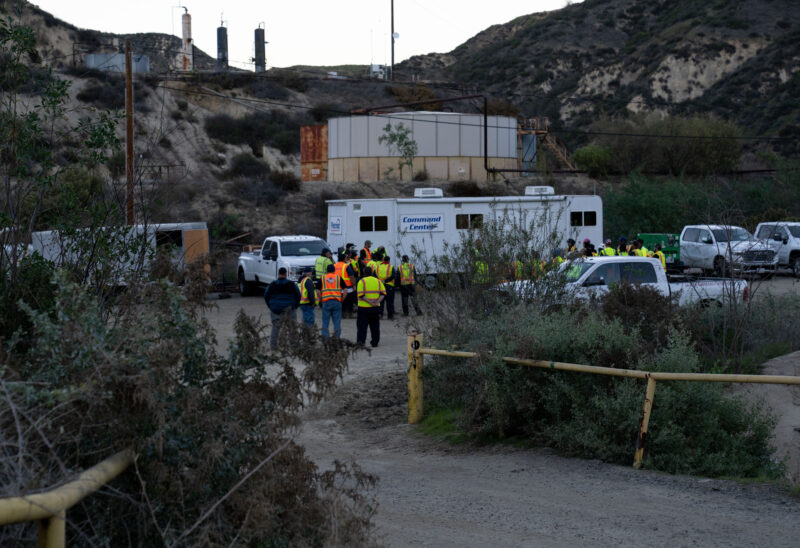
A California Department of Fish and Wildlife official confirmed Friday a dayslong cleanup from an oil spill that reached the Santa Clara River is expected to continue into next week.
Eric Laughlin, a DFW spokesman, said the total leak was estimated at eight to 10 barrels, at 42 gallons per barrel, adding the incident has been part of an active and ongoing investigation.
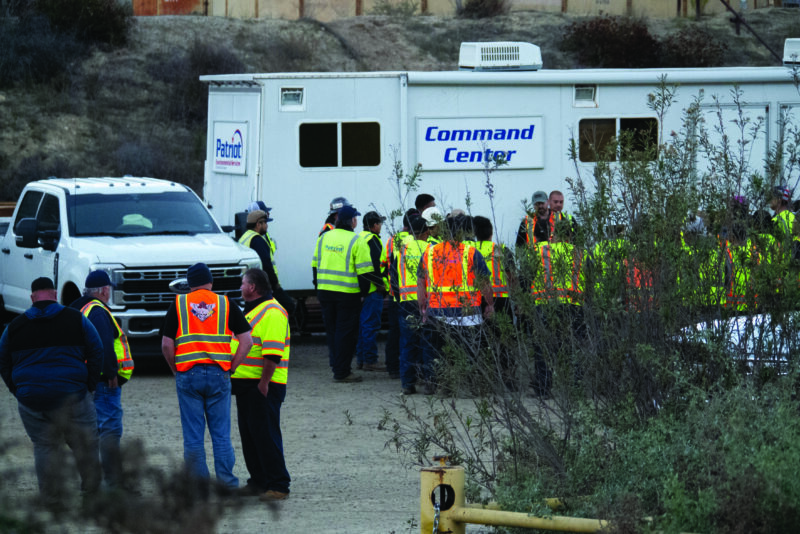
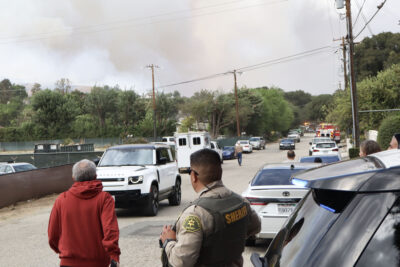
The incident’s command center is set up east of San Martinez Grande Canyon Road, north of Henry Mayo Drive, in Castaic.
Laughlin said the bulk of the spill is suspected to have taken place nearby in a dry creek bed north of the Santa Clara River, and petroleum from the Del Valle Oil Field later was reported downstream in the river.
The degree to which the nearby waterway was impacted is going to be under investigation by several agencies, which is likely to take longer than the cleanup, Laughlin said.
He said that, as of Friday, the incident response indicated there have been no observable impacts to nearby wildlife, and the cleanup of the oil that had reached specifically in the river was estimated to be 95% to 98% complete. He also said the total amount of oil that leaked would be studied through soil excavation by the cleanup team.
Laughlin’s division of the DFW, the Office of Spill Prevention and Response, first posted about the spill through the agency’s X account, @CalSPillWatch, on Nov. 28.
“OSPR crew responding to pipeline spill near Santa Clarita in Los Angeles County,” the post read. “A yet-to-be-determined amount of crude oil entered a dry creek leading to the Santa Clara River. Oil was observed in the river this morning. Cleanup is underway.”
In California, spill cleanups are handled by a “unified command” of local, state and federal agencies, he said, with the responsible party, in this case, West Energy Operating, having a “seat at the table,” with the response managed by the agencies.
A Patriot Environmental Services official confirmed Friday the company had been on site contracted to perform the cleanup for the past eight days, since Nov. 28, referring any questions to Laughlin as the public information officer for the response.
West Energy Operating was made aware of an issue downstream of the dry creek bed where the bulk of the oil was spilled, and in response, “we began searching,” said Josh Kendrick, who identified himself as the manager of operations for the active oil field. He said it produces about 350 barrels a month, which he described as a relatively small operation.
Activity was shut down until the problem was isolated, and the line could be clamped to prevent any further leak, he said in a phone interview Friday evening.
Laughlin identified the issue as corrosion that had caused a hole in a 3-inch underground pipe.
“We put a clamp on the line to secure the line and make sure there’s no further spill from the source. And then as a preventative maintenance measure, we just went through and isolated everything in the field. So, we shut down all of our wells, shut down the system,” Kendrick said. “And so, we’ve been in response mode since then. We’ve been working to deploy our oil spill response organization and get the cleanup underway.”