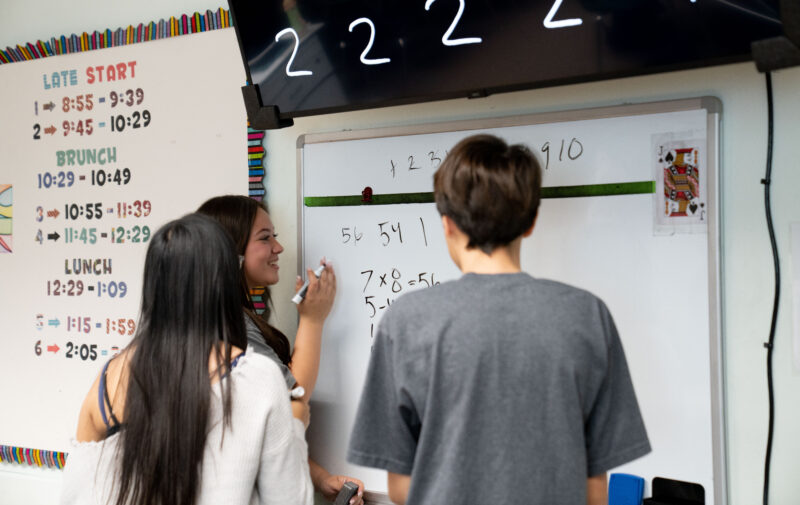
The William S. Hart Union High School District saw a gain in mathematics for the 2025 California Assessment of Student Performance and Progress where student performance improved at every grade level tested.
Canyon High School and Academy of the Canyons saw a double-digit increase in math scores at the high school level, according to a news release from October.
One academic approach that was credited for the increase in math scores is “Building Thinking Classrooms in Mathematics,” a book written by author Peter Leljedahl. It is a research-based guide that provides teaching practices to increase engagement among students.
Canyon High math teacher Victoria Robinson is one of a few teachers who have implemented the strategy in classrooms.
“It’s a brand-new philosophy for how you run your classroom,” she said during a lunch break last week, as she waited for her Honors Algebra 1 class. “It gets students out of their chairs, and it’s not giving them a bunch of information. It has them practice, it has them learn and discover and develop.”
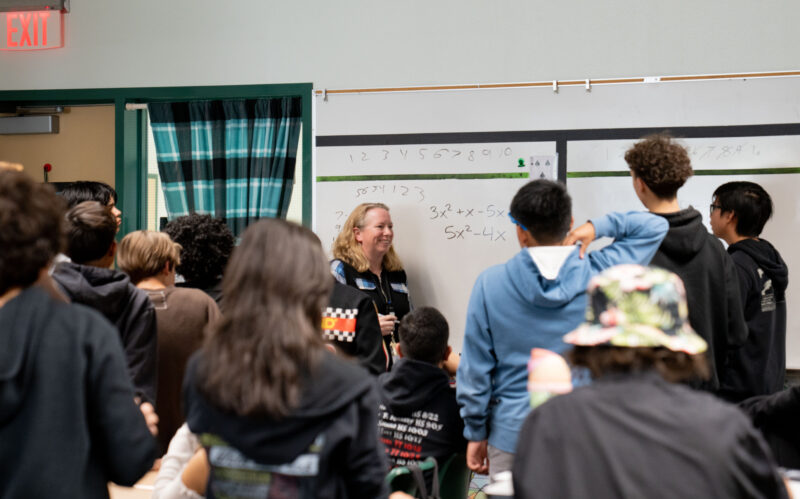
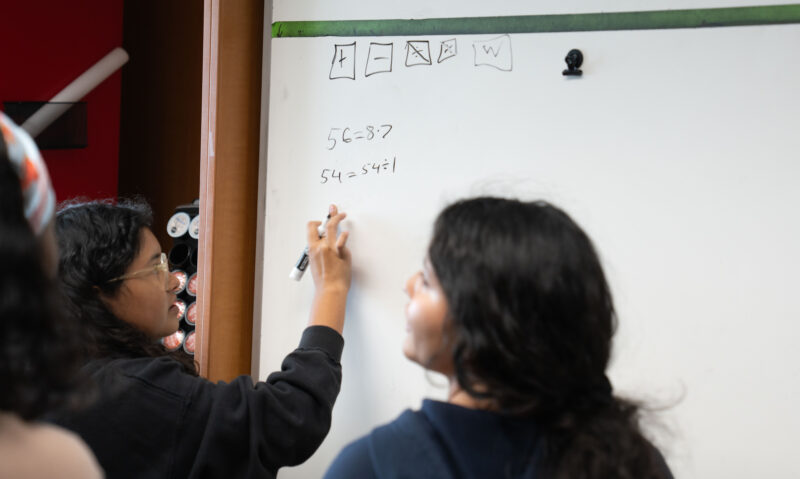
Once students settled in, Robinson began the class with a multiplying polynomials warmup. The students stood up and were divided into groups, then walked toward one of the many whiteboards around the classroom’s perimeter.
Almost instantly, the students began to work together to solve problems and engage in conversation, which isn’t only essential in the classroom but outside of it as well.
“Collaboration is one of the big things that we try to instill and explain the difference between turn taking and collaboration. Making sure that everybody is involved in the discussions,” Robinson said. “Main things that we were looking at, too, when we started to implement this was life skills. Can they communicate? Can they talk to each other, especially coming out of COVID that was really lacking.”
But keeping students engaged can be a challenge at times, no matter what the subject is.
Robinson noted that it’s important to keep a flow with the material, which she described as a balance from being too difficult to too easy or else students will just “check out,” or “get too bored,” she said.
What makes the teaching approach helpful for students is collaboration, communication and engagement.
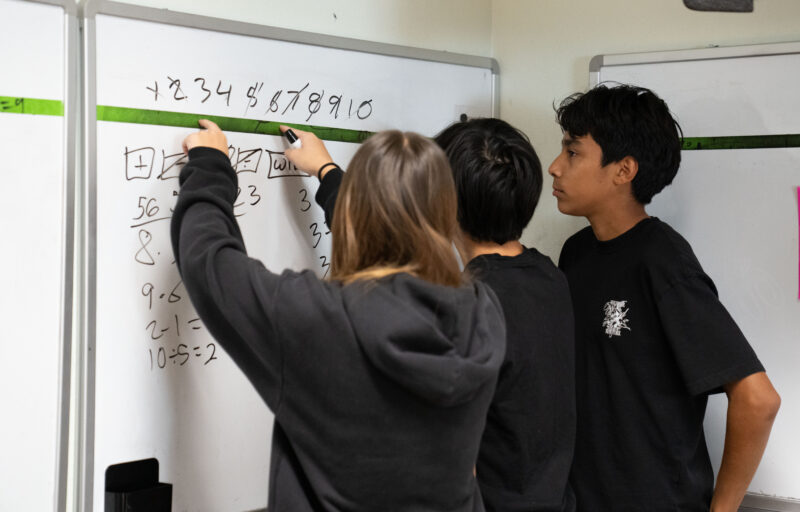
“If one of them gets stuck or stumped, they have other partners that they’re bouncing ideas off of. And it’s not all the pressure on one person. If they’re in their seats, they’re just like, ‘Pencil down, I’ll just wait for the teacher,” Robinson said.
In order to avoid one student doing all the work, while the others watch or don’t engage, Robinson switches the groups frequently. This also allows the students to meet other classmates, possibly form friendships, or at least learn to socialize with different people, which is something that they struggle with post-pandemic.
Robinson acknowledged that with this approach she’s a little more hands-off, which isn’t traditional for a teacher, but she walks around observing each group and gives guiding questions when the students come across a challenge.
“I’m so thankful and super happy that my teachers are willing to take this on. I appreciate that greatly, because it’s a lot of work, and they’ve really had to structure their classrooms very differently, to embed this type of thinking and practice and to better support our students,” said Canyon High Principal Shellie Holcombe. “We’ve been able to see great results from it. We have the highest growth in math CAASPP in the district. But alsothey see it in their common assessments that they have throughout their benchmarks and they’re seeing a lot of improvement.”
“When you’re looking into common assessments, it isn’t just about the scores, it’s about those tests relate to critical thinking skills, and I feel like such a win for our kids to be able to practice that and practice it in a lot of math classes,” she added.