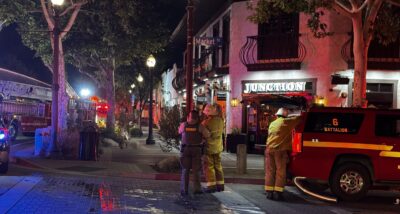
Santa Clarita residents do not need reminders that wildfire season is not an abstract policy discussion. It is the smell of smoke on the wind, evacuation alerts flashing on cell phones late at night, and the uneasy question that lingers on dry, gusty afternoons: Will the system work when it matters most?
Wildfires do not respect city boundaries, council districts, or jurisdictional lines. They move according to wind, terrain and preparedness or the lack of it. That reality makes emergency readiness a shared regional responsibility, dependent not only on firefighters and first responders, but also on leadership, planning, coordination and public trust long before the first spark appears.
Santa Clarita sits adjacent to some of Southern California’s most fire-prone terrain. Its safety is directly tied to regional coordination: mutual aid agreements, shared evacuation routes, interoperable communications, and emergency management systems that must operate seamlessly under extreme pressure. When any part of that system breaks down — through poor planning, unclear command structures, or delayed decision-making — the consequences extend far beyond one city’s borders.
Recent wildfire seasons across Los Angeles County have exposed uncomfortable truths about emergency preparedness. After-action reports frequently point to gaps in coordination, confusion in public messaging, and delays in mobilization. Too often, these findings are acknowledged briefly and then set aside, rather than driving sustained reform. For communities like Santa Clarita, that pattern should be deeply concerning. Emergency management failures elsewhere in the region inevitably affect response capacity, resource availability and public confidence everywhere else.
Public trust is not a secondary issue during emergencies — it is foundational. Residents must believe evacuation orders are timely and credible. They must trust that alerts are accurate, that evacuation routes have been planned and maintained, and that leaders will communicate clearly and honestly, even when the information is difficult. When trust erodes, hesitation increases, compliance falters, and risks rise for residents and first responders alike.
Preparedness also requires confronting hard questions before disaster strikes. Are evacuation plans regularly updated to reflect new development and evolving traffic patterns? Are emergency communication systems tested under real-world conditions, not just tabletop exercises? Are agencies transparent about what went wrong after major incidents and more importantly, about what has been corrected since? These are not criticisms; they are responsibilities.
Santa Clarita has demonstrated the value of proactive planning, public safety investment, and community engagement. But no city operates in isolation during a regional emergency. Mutual aid is only as effective as its weakest link. When leadership failures or unresolved planning gaps persist elsewhere, they place added strain on neighboring jurisdictions, even those that have done much to prepare.
As fire season approaches once again, this is the moment to demand more than reassurance. Regional leaders must treat after-action reports as mandates for improvement, not public relations exercises. Emergency management agencies must prioritize clarity, coordination and accountability. Residents, in turn, should insist on transparency not to assign blame, but to ensure readiness.
Wildfires will remain part of life in Southern California. The question is not whether the next fire will come, but whether the systems designed to protect us will be worthy of the public’s trust when it does. City limits offer no protection from smoke, flames, or failure. Preparation, leadership and accountability do.
Mihran Kalaydjian
Santa Clarita