“Taxes that are too high are not paid.” – Calvin Coolidge
California Democrats want to impose a “one-time” billionaire’s tax on California’s billionaire residents. If it comes to pass, it will fail because those with that much money already aren’t sticking around to find out if the tax is imposed.
As they do, California’s ever-increasing tax burden will fall on its middle class, resulting in even more unaffordability for them.
California is once again running a deficit. According to CalMatters, “California faces a nearly $18 billion budget deficit due to higher spending and federal cuts, potentially ballooning to $35 billion by 2028.”
“Higher spending” is an understatement. In his six years as governor, spending under Gavin Newsom has risen from $200 billion a year to $325 billion a year. At that pace, spending will double to $400 billion by the end of his eight-year term.
Those spending increases do not include California’s $20 billion default on its federal government loan used to cover California’s unemployment fund shortfall during the COVID pandemic.
That default is now being shouldered by California businesses — and, in turn, their customers in the form of higher prices — because the federal government raised the unemployment insurance tax immediately by 0.3% on each business within the state, and an additional 0.3% each year after that until the loan is fully repaid.
So, what’s a California legislative Democrat to do?
Well, California Democrats have no interest in cutting spending, so they came up with idea of taxing California’s approximately 200 billionaires a whopping 5% of their assets.
They claim, of course, that it would only be a one-time tax. By the way, that’s a $50 million tax on each billion.
Obviously, California Democrats cannot be trusted on that one-time claim.
Consider their so-called “millionaires” tax of 2012. That year, at the behest of the Democrats, voters approved an additional 1% surcharge (starting at $250,000) up to a 3% surcharge (on those making $1 million) to the state’s standard income tax rates, bringing the top marginal rate to 13.3%.
Those “temporary” rates were supposed to expire in 2018.
In 2016, however, those higher income tax rates were extended to 2030!
Those policies, and others, induced billionaires (and tens of thousands of others) to leave California for greener, less taxed pastures. In 2022, this headline ran: “California is leaking vital high-income taxpayers.” In 2018 alone, San Francisco lost residents who made $10.6 billion in income.
Now, billionaires are not waiting around to see if that billionaire tax actually is enacted.
According to the San Francisco Chronicle, “Bay Area billionaires flee to Texas, Florida amid new tax proposal.”
Wait. It gets much worse. According to smart man and venture capitalist Chamath Palihapitiya on X, “Collectively, the amount of billionaire wealth that has left California in the last month (!) is now in excess of $700B.”
In other words, tax revenue from the rich is leaving the state in response to higher tax rates.
That is consistent with the most fundamental law of economics, the Law of Demand, which law demonstrates that human beings are price sensitive. The more something costs, the less of it you get. That includes consumer items AND income, jobs and, in this case, residents willing to pay the tax increase.
If you don’t think raising tax rates influences human behavior, then you do not believe in the laws of economics. Many Democrats do not.
Further, why would the billionaires stick around? It is not as if they are getting a lot for their money.
California has its deficits. For over a decade it has been 50th as a place to start a business (billionaires tend to do that), it is 50th in opportunity according to U.S. News and World Report, No. 1 in homelessness, very high crime, poor education stats, energy problems, ground zero for the insurance crisis, and on and on.
Residents and tax revenue are not all that California will lose.
According to leading economist Tomas Philipson in the Wall Street Journal:
“In the private sector you can only sell things if you help others — that is, if customers benefit more than they pay. If you’d cough up $100 for being able to brush your teeth but a toothbrush costs $5, you benefit 20 times as much as the sticker price. That sum, what economists call ‘consumer surplus,’ averaged across industries is about 95% of the social value created by a business.
“But this is only part of how company owners help others. On average 60% of sales are wages, the best welfare program invented. Put differently, 98% of the value of starting a risky business benefits others, presumably more than the ‘fair share’ of the rich’s labor than even communists dare propose.”
So, in addition to tax revenue, California will lose the jobs that go along with the businesses those billionaires will now create in other states.
In short, the billionaire’s tax will fail because a tax that is too high is not paid.
The higher spending and deficits, however, will still be there.
All of this means that someone else is going to get that California tax bill. In this case it will be California’s middle class – making California even more unaffordable to them and driving them out of the state too — if they can afford to move.
PS: Don’t believe Gavin Newsom’s public opposition to this proposal. He’s running for president and wants to appear rational.
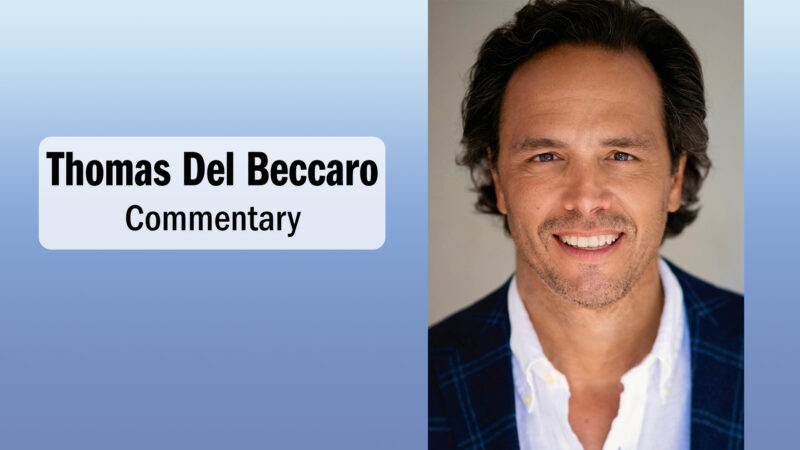
Thomas G. Del Beccaro is a historian and author of “The Divided Era” and “The Lessons of the American Civilization.”