By Naveen Athrappully
Contributing Writer
Around 17,600 pounds of cocaine were taken into custody from a drug smuggling vessel, with the quantity large enough to make more than 6 million potentially lethal doses, the United States Coast Guard said in a post Friday on X.
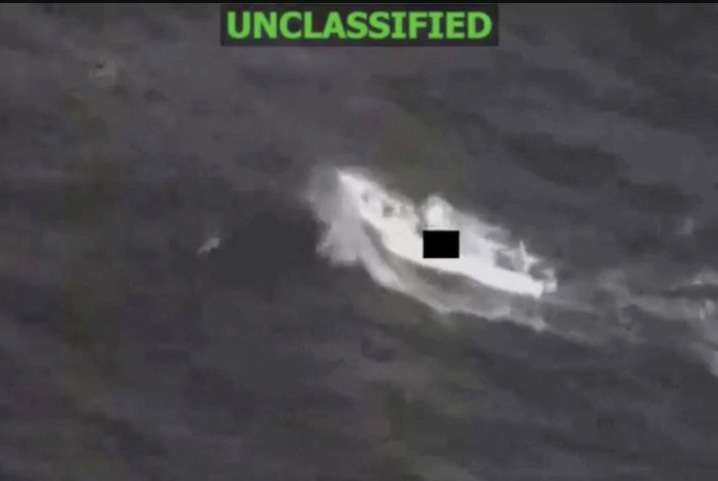
“The crew of #USCG Cutter Forward, with an embarked Helicopter Interdiction Tactical Squadron (HITRON) team, interdicted a drug-smuggling self-propelled semi-submersible (SPSS) in the Eastern Pacific,” the post said. “The SPSS sank after its four crew were apprehended.”
The interception was conducted by Cutter Forward on Feb. 24 in the Eastern Pacific Ocean while on routine patrol, the USCG said in a March 11 statement.
“SPSS vessels are commonly used by maritime criminal networks to transport large quantities of drugs in the Eastern Pacific. The Coast Guard routinely interdicts these vessels as part of ongoing counterdrug operations in the region,” the Coast Guard said.
The drug vessel was initially detected by a maritime patrol, and the Forward crew deployed its pursuit boat and an MH-65 aircraft from HITRON to intercept it.
The boarding team issued several orders to the individuals navigating the drug vessel. When the commands were dismissed, the team entered the vessel and apprehended the suspected narco-terrorists, with the SPSS sinking after becoming flooded.
“Stopping this vessel demonstrates the exceptional skill and dedication of the Forward crew, the HITRON, Joint Interagency Task Force South, and Coast Guard District Southwest at imposing significant costs on transnational crime organizations,” said Commander Andrew Grantham, commanding officer of the Forward.
In its post, USCG said that the interdiction was linked to Operation Pacific Viper. The operation directs U.S. forces to the Eastern Pacific Region to counter criminal and cartel groups, aiming to essentially cut off drug and human smuggling activities before they reach American shores.
In August 2025, Kristi Noem, then-Homeland Security Secretary, said that 80% of illegal drug seizures occur at sea, highlighting the importance of Coast Guard operations in preventing drugs from flowing into the United States.
In a March 11 post on X, USCG reported that its Cutter Tampa had interdicted a vessel in the Eastern Pacific as part of Operation Pacific Viper, seizing 1,925 kilograms of cocaine valued at an estimated $31.9 million.
“Since launching Operation Pacific Viper in early August, we’ve interdicted over 200K (pounds) of cocaine. As significant transport of illicit narcotics continues from South and Central America, our maritime fighting force remains focused on countering narco-terrorism and protecting the homeland,” the Coast Guard said.
Meanwhile, the United States has carried out military strikes against several suspected drug vessels. Most recently, the military said it struck a drug trafficking vessel in the Eastern Pacific on March 8, killing six individuals.
The strike was part of Operation Southern Spear, launched last September. Around mid-February, a spokesperson for the U.S. Southern Command said that U.S. forces had struck 42 drug vessels as part of the operation, which has killed 144 individuals.
The United States’ drug vessel strikes have faced legal challenges. On Jan. 27, family members of two Trinidadian nationals sued the United States over a lethal strike on a boat in the Caribbean Sea on Oct. 14 that killed the individuals. The families of Chad Joseph and Rishi Samaroo claim they were innocent travelers.
“These killings were wrongful because they took place outside of armed conflict and in circumstances in which Mr. Joseph and Mr. Samaroo were not engaged in activities that presented a concrete, specific and imminent threat of death or serious physical injury, and where there were means other than lethal force that could have reasonably been employed to neutralize any such threat,” the lawsuit said.
White House spokeswoman Anna Kelly defended the Oct. 14 strike in a prepared statement. The strike “was conducted against designated narcoterrorists bringing deadly poison to our shores,” she said.
“President Trump used his lawful authority to take decisive action against the scourge of illicit narcotics that has resulted in the needless deaths of innocent Americans.”
Secretary of State Marco Rubio met with leaders of Caribbean nations on Feb. 25 and called for deeper cooperation to tackle cartels and gangs in the region.
“We are interested in rebuilding and constructing a new dynamic in this Western Hemisphere in which we partner with all of you on the issues we share in common,” Rubio said.
Ryan Morgan contributed to this report.