The L.A. County Board of Supervisors approved Northlake at an appeal, after hearing from the developer about the “environmentally superior” revise of the decades-old plan, despite the concerns of several environmentalist groups and Castaic residents.
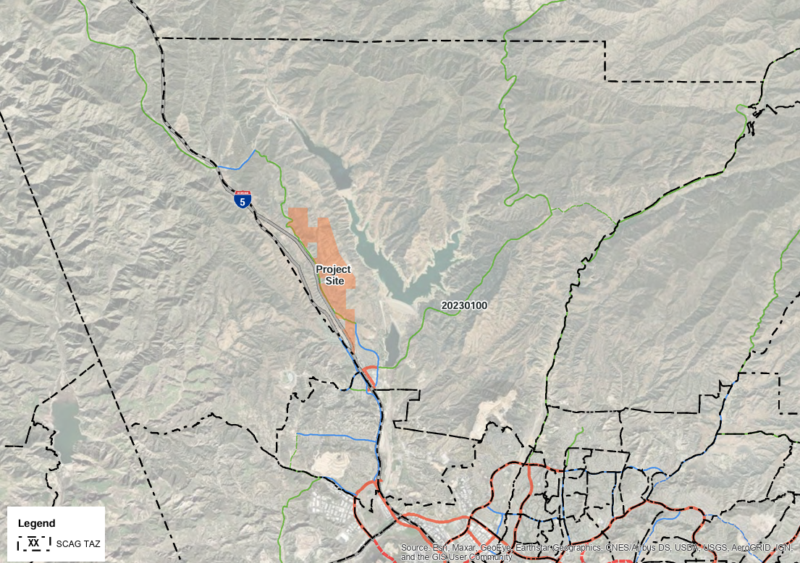
The plans by Woodbridge Capital are ultimately to construct 3,150, including 315 affordable-housing units, 95 of them exclusively for seniors, west of Castaic Lake and east of Interstate 5, on nearly 800 acres north of Castaic.
At the March 24 appeal in front of the board, a representative for Woodbridge told the board of its changes to the first phase: 2,295 homes, 720 acres of open space; a fire station; and a tract map to create 21 large-lot parcels for development on 1,307 acres.
The developer touted the housing and additional environmental protection, after the court sided with environmentalists in a 2019 lawsuit that ordered a recirculation of the plan.
“We analyzed the partial creek-avoidance alternative that preserves 20% of Grasshopper Creek on the project site and reduces impacts to biological resources. It also provides additional wildlife crossing opportunities in the north,” according to Damon P. Mamalakis of Armbruster Goldsmith & Delvac.
“The project achieves a thoughtful balance that creates badly needed housing opportunities targeted at the missing middle, along with temporary and permanent jobs, permanently protects hundreds of acres of open space and supports biological resources and fire safety,” he said.
There were several local business interests that spoke in favor of the need for housing and development in the area, including members of the SCV Chamber of Commerce.
For the appellants, including Evan Levy, an associate attorney for the Center for Biological Diversity, the plans failed to address many of the concerns brought forth in lawsuit on behalf of the riparian habitats, and also directly disputed some of the developer’s claims.
“The center has engaged with the Northlake project since 2018 because it epitomizes the perils of outdated sprawl development. Northlake would ruin an irreplaceable wildlife habitat to build low density housing in a high fire area far away from existing services,” Levy said, adding these shortcomings render it “inadequate” under environmental law.
The territory for mountain lions, a toad on the state’s threatened-species list and the connectivity of the area’s wildlife would all be threatened by building in the flammable wildlands, he said.
“In particular, this project would destroy Grasshopper Creek and the special status species that depend on it, such as the Western spadefoot toad, the misleadingly named partial Creek avoidance alternative, is anything but. The vast majority of the creek will be physically erased from the landscape by filling in the channel or creating debris basins.”
Mitchell van Bekkum, representing the SCV Chamber, said he was there to talk about what the decades of delays have meant to local businesses, which were built on the promise of the planned Northlake investment.
“Those businesses have been waiting ever since — without enough rooftops, Castaic lacks the density to support restaurants, neighborhood services and small retailers,” van Bekkum said.
Chris Dittes, a Castaic Area Town Council member who represents the area, had a few concerns about the problems, but first and foremost was the recent gas-main explosion nearby, which forced the evacuation of his home and thousands of others. He said the plan should be sent back to the drawing board for another review due to those concerns.
The Golden State Gateway Coalition, a business-advocacy group, said the plan would “address the key driver of congestion — the growing disconnect between where our people work and where they can afford and live,” by providing housing near jobs.
Paul Edelman, deputy director of the Santa Monica Mountains Conservancy, said the board was not forced to approve everything in its entirety — it could approve the first phase of about 2,300 homes and hold off on phase 2, which could give more time to address their environmental concerns.
After public comment, 5th District L.A. County Supervisor Kathryn Barger immediately moved to approve the project without any discussion with the supervisors. It was seconded by 2nd District Supervisor Holly Mitchell and passed unanimously.
Levy described the appeal process Tuesday as a “rubber stamp” for the project, saying his organization now had 30 days as of last week to determine whether it would file a further challenge to the project.