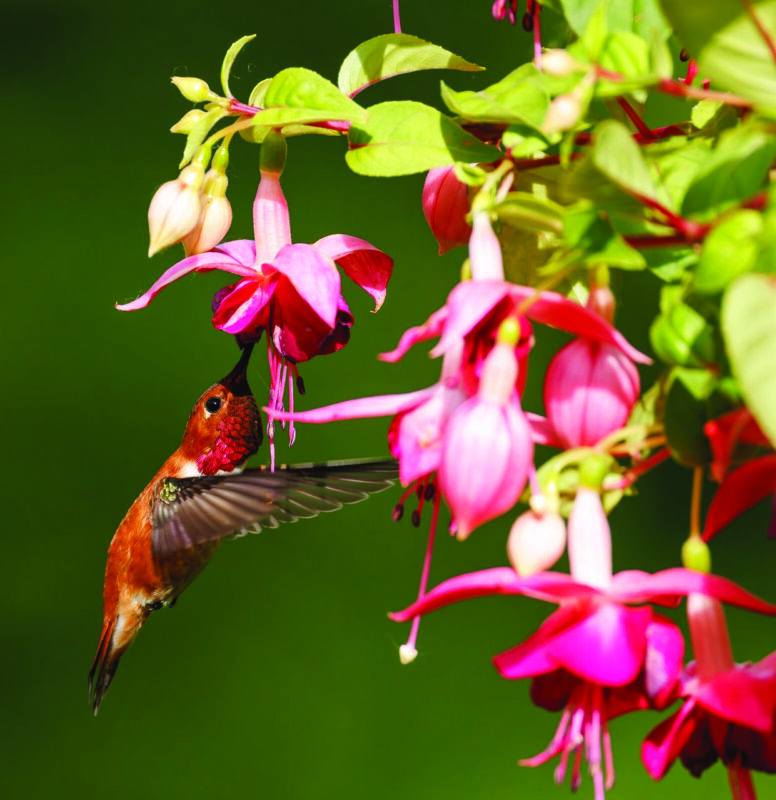
Yes, there are hummingbirds in the Santa Clarita Valley. However, when temperatures exceed 95° F most hummingbirds may flee to slightly cooler climates. The one hummingbird you might continue to see in your backyard throughout the summer is Costa’s Hummingbird. It is adapted to the heat and is a desert and chaparral dweller common to the inland and desert areas of Southern California.
There are several hummingbird species that make Southern California home. Which is wonderful for those who enjoy watching the antics of these beautiful gems of color flitting about in the backyard throughout the year.
Types of SoCal Hummingbirds
Southern California is a year-round paradise for hummingbirds, among the most common species spotted in SoCal are:
Anna’s Hummingbird The most common year-round resident. Males have a striking, iridescent magenta head and throat. They can be found in almost any habitat, including suburban gardens.
Allen’s Hummingbird A coastal specialist. Some populations in Los Angeles and the Channel Islands stay year-round, while others migrate through. Males flash a brilliant coppery-orange gorget, which is an iridescent, colorful patch of feathers located on the throat or upper chest.
Costa’s Hummingbird A desert and chaparral dweller common to the inland and desert areas of Southern California. Males have a shimmery violet mask and throat that extends to the sides.
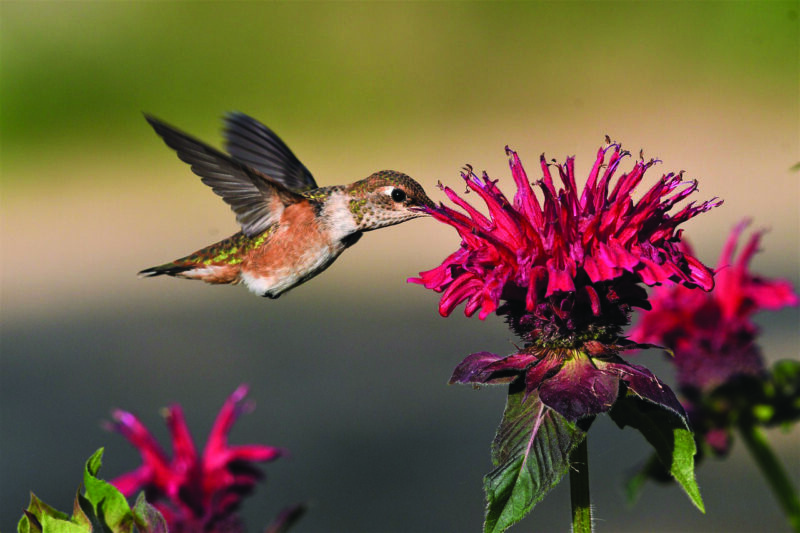
Rufous Hummingbird A feisty, rust-colored spring migrant. They travel north through California between January and mid-May on their way to Alaska and Canada.
A Hummingbird Haven
Natural habitats are the most sustainable way to attract hummingbirds to your home.
Plant native, tubular flowers, which naturally hold the highest quality nectar. Top choices for Southern California include California Fuchsia (Epilobium canum), Cleveland Sage (Salvia clevelandii) and Penstemon.
Provide a water source. Hummingbirds love to bathe and preen and they are incredibly attracted to moving water. Adding a mister or a dripper to a shallow birdbath is highly effective.
Leave dead twigs or thin, exposed branches nearby, as males use these as singing and territory-guarding perches.
California fuchsia, Cleveland sage and heartleaf keckiella are top native plants for hummingbird gardens in the Santa Clarita Valley. These plants thrive in the hot, dry climate of Castaic, Val Verde, Valencia, Newhall, Saugus and Canyon Country, providing the nectar needed to fuel these fast-moving pollinators.
What to Plant in the SCV
California Fuchsia (Epilobium canum) Features bright red, tubular flowers that bloom in late summer and fall when other nectar sources are scarce.
Cleveland Sage (Salvia clevelandii) Produces highly aromatic, vibrant purple flower whorls that hummingbirds frequent all spring and summer.
Heartleaf Keckiella (Keckiella cordifolia) A chaparral shrub with climbing stems and long red flowers tailored perfectly for a hummingbird’s beak.
Bladderpod (Peritoma arborea) Displays yellow flowers nearly year-round, offering a steady, dependable food supply in dry soil.
Black Sage (Salvia mellifera) A hardy local native that produces pale blue-to-white flowers loved by both hummingbirds and native bees.
Woolly Bluecurls (Trichostema lanatum) Striking, fuzzy blue-purple flower spikes are very attractive to the local birds.
Plant these species in full sun to partial shade to mimic the natural foothill and chaparral habitats. But, avoid heavily amended soil. These plants are adapted to the sandy loam and clay-loam mixes native to the Santa Clarita Valley.
Water regularly during their first winter and spring to establish roots. Once established, they require minimal summer water.
Backyard Hummingbird Feeders
Support these beautiful, tiny pollinators in your backyard by hanging a feeder using a 4:1 water-to-sugar ratio. Proper hygiene and maintenance are absolutely critical to keep them healthy.
While feeders are great supplements to feed the hummingbirds, you have to monitor the feeders carefully because they can often do more harm than good.
Nectar Recipe Mix one part regular white granulated sugar to four parts water. Never use honey, artificial sweeteners or red dye.
Cleaning Wash your feeders every 3 to 4 days with a 1:10 bleach and water solution, rinsing thoroughly, to prevent dangerous mold growth. Mold growth in the feeder will quickly kill a hummingbird.
Placement Hang feeders in partially shaded areas to keep the sugar water from fermenting too quickly in the California sun.
Extreme Heat and Hummingbirds
Extreme heat becomes a severe hazard to SCV hummingbirds when temperatures exceed 95° F to 100° F. Hummingbirds may pant with open beaks, droop their wings, or seek refuge low in bushes.
In high heat, sugar water ferments quickly. Fermented nectar turns to toxic alcohol, which can be lethal to the birds. In addition, mold growth in the hummingbird feeder can quickly kill by causing candidiasis, a severe fungal infection in the digestive tract.
To help humming birds beat the summer heat change nectar daily. Empty and thoroughly wash feeders with hot water daily when temperatures exceed 85° F.
Move feeders to areas with natural or artificial shade to keep the sugar water from baking in the direct sun.
Hummingbirds love to bathe in fine mists. Set up a misting system or place a shallow, clean birdbath with a dripper near your feeders.
Encourage Nesting
Now that you have hummingbirds coming into your yard you’ll want to encourage the birds to nest. Hummingbirds rely on very specific, natural elements to build and camouflage their nests.
Spiderwebs are the most crucial nesting material. Avoid knocking down or clearing out spiderwebs in your garden during the spring and summer.
Female hummingbirds line the inside of their nests with soft plant fibers so provide raw, untreated cotton in a suet cage or dedicated hanger.
Hummingbirds do not use birdhouses, instead, they build nests on horizontal or forked branches, usually 5 to 20 feet above the ground.
Female hummingbirds need to eat up to 2,000 insects and spiders during the breeding season. Avoid using insecticides to keep a natural, healthy food source available.