As winter rains taper off and days stretch a little longer, March quietly flips the switch on gardening season in the Santa Clarita Valley. Local experts say this is the month to get your hands in the soil, scout for trouble early and set up your garden for a productive spring and summer.
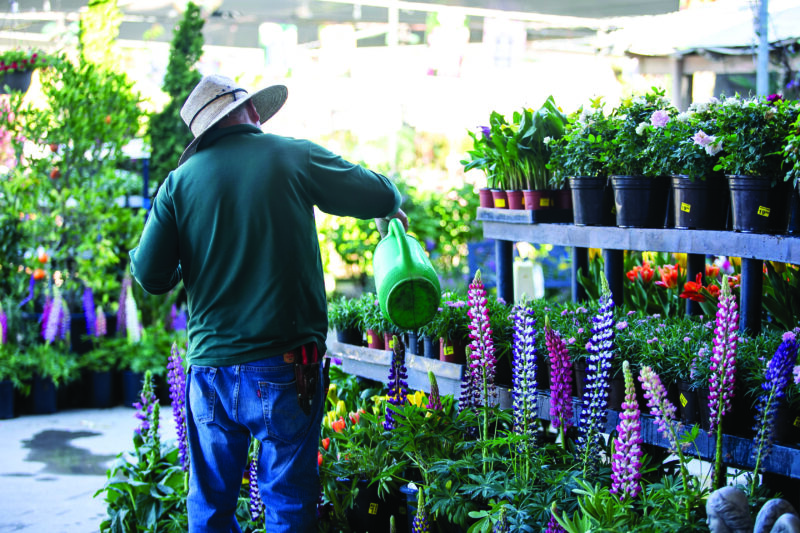
John Windsor, a certified California nursery professional at Green Thumb in Santa Clarita, said March is all about groundwork — literally. “We generally recommend planting directly into the ground,” Windsor said. “The appropriate time for planting is any time after March 21.”
Before a single seed goes in, Windsor advises home gardeners to treat their soil like a clean canvas. “The following steps will insure a successful start for a new vegetable garden,” he noted. “The addition of fertilizer and organic material may be all that is necessary for an existing garden.”
His nine-step checklist is simple but thorough:
Weed removal (cutting, pulling, or spraying)
Remove rocks and debris
Rototill or dig with shovels (to loosen soil)
Rake and remove rocks and debris
Add fertilizer and organic material (As needed)
Rototill or turn with shovels (To mix all ingredients)
Rake smooth and level
Check irrigation
Plant or sow seeds
That attention to preparation doesn’t just benefit big backyard beds. For gardeners tucking in a single tomato or pepper start, Windsor shared a specific planting recipe.
“The following recipe is useful when planting an individual plant,” he said.
1 cup pelletized gypsum
tablespoon of granulized soil sulphur
1 tablespoon chelated iron
1 tablespoon of magnesium sulfate (Epsom salts)
½ cup all purpose natural fertilizer with beneficial bacteria, mycorrhizae fungus and Humic acid. Mixed into the planting hole, this blend gives young roots a nutrient-rich boost right from the start.
Container or Small Spaces
Container gardeners and those working with small spaces aren’t left out of the March momentum. Windsor recommends a homemade potting mix designed for raised beds or square-foot plots.
“The following is a homemade organic potting soil for use with square foot gardening or container gardening,” he said. “It is a mixture of 50% organic material and 50% of mineral material. This mixture will make approximately 15 cubic feet of soil and will fill an area 4 feet by 4 feet by 1 foot deep.”
His ingredient list reads like a recipe card for healthy soil life:
One large bale of peat moss or Coconut Coir = 3 cubic feet
Two bags of organic compost = 3 cubic feet
One large bag of vermiculite = 3 cubic feet
Three bags of sand = 3 cubic feet
Three bags of pumice = 3 cubic feet.
To that, Windsor layers in minerals and long-lasting nutrients.
“To this mixture the following nutrients should be added:
5 pounds pelletized gypsum
5 pounds of sul-po-mag
5 pounds of dolomite lime
5 pounds of soft rock phosphate or Azomite
5 pounds of organic fertilizer
He added an important footnote: “For the organic fertilizer, choose one that contains beneficial bacteria and mycorrhizae fungus, and humic acids.”
Focusing on Above Ground Issues
While Windsor focuses on building the soil, Steven Fulton, founder of the Santa Clarita Native Plant Nursery, turns his eye to what’s happening above ground once storms move on.
“After the rains we should do a quick scan for any weeds that may be popping up before they’re able to take root and spread,” Fulton said. “With most of the rain behind us we should consider application of an organic fertilizer. Also as the weather starts to warm, be on the look-out for pest and disease.” A slow walk through the yard in March, he suggested, can prevent bigger problems later in the season.
When it comes to timing, Fulton said locals still have a window to get plants established before the heat sets in, even though the ideal planting season has already passed.
“Early fall is the best time to plant most things in our area, however, you still have a few months to get things established before summer,” he said. That makes March a kind of second chance for gardeners who missed the fall planting season but still want to tuck perennials, shrubs or edibles into the ground.
Seeds
For those starting from seed, Fulton urges gardeners to weigh the pros and cons of sowing indoors versus direct seeding outside. “Planting things from seed can be a little tricky,” he said.
“Starting indoors allow you to control conditions a little easier and get plants to a good start. But it has its drawbacks … You’ll need to harden them off before planting outside and it can be a little more time consuming.” Some species simply don’t like being moved once they get going. “Also, plants with fast growing deep roots will want to go into the ground sooner than later and some plants have more sensitive roots so they may be a little more finicky when transplanting,” Fulton added.
Direct seeding into outdoor beds brings its own challenges. “Outdoors is pretty straight forward but success will vary,” Fulton said. “Some seedcoats are thicker than others and a pretreatment — scarification, cold stratification, etc. — is recommended. Birds and bugs may also consider your seeds a meal.” For new gardeners, that might mean starting a few seeds in trays under controlled conditions while also experimenting with a small patch of direct-sown seed in the garden.
Pruning and Plant Health
Pruning and plant health are also high on Fulton’s March checklist. “Now is a good time to prune any diseased branches,” he said. “Thinning will also help with airflow to prevent any disease.” Opening up crowded plants allows spring sunshine and breezes to reach the interior, cutting down on fungal problems as temperatures rise.
In water-conscious Southern California, choosing what to plant is as important as when. Fulton said many resilient species can go in the ground this time of year, with some caveats.
“Most drought tolerant plants are fine especially Desert and Riparian plants,” he explained. “Assuming the weather is starting to warm some plants such as Manzanitas, Ceanothus and Flannelbush should not be planted as the warm moist soil makes them susceptible to bacterial/fungal infection. There can be success with these but best chance will be fall.” For gardeners eager to add natives, he suggested focusing on species that tolerate spring planting well and saving more sensitive shrubs for the cooler months.
Not every March project has to be a full-yard makeover. Fulton encourages residents to treat this season as an invitation to explore. “A lot of things are coming into season get out and see what plants catch your eye,” he said. “Visit local gardens and nature centers — Placerita Canyon Nature Center and the Demonstration Garden at Bridgeport Park a couple local places.” For those short on space or time, containers can offer a satisfying, small-scale start. “There’s also a lot of native plants that do well in containers so if you’re not quite ready for a large scale project, there are options for containers that will attract hummingbirds and butterflies which I always find rewarding,” Fulton said.
Whether you are refreshing a long-established yard or planting your very first raised bed, Windsor and Fulton agree that March rewards those who are willing to prepare, observe and experiment. With a bit of weed pulling, soil building and thoughtful planting now, local gardeners can set the stage for a colorful, productive season that will last well beyond spring.