By Steve Arklin
For The Signal
The story of the Armenian people stretches back thousands of years, rooted in the lands surrounding Mount Ararat. In the Book of Genesis, it is written that Noah’s Ark came to rest upon those mountains, and from that valley life began again — families farming, raising animals, and building a culture that would endure through centuries. In 301 AD, Armenia became the first nation in the world to adopt Christianity, a faith that would become both its strength and, at times, its burden.
Over the centuries, Armenians lived through the rise and fall of empires — Roman, Mongol, and Ottoman — yet they held onto their churches, their schools, and their identity. They lived side by side with neighbors of different backgrounds, including Turks and Kurds, building lives in towns and villages across the region.
My grandmother, Lucy, was born in the small town of Çemişgezek, in what is now modern-day Turkey. Before World War I, her world was a quiet one — family, home, and community. But that world was shattered.
When the war began, Armenian men were drafted into the army. Soon after, they were separated and killed. My grandmother witnessed her father’s murder — her childhood ending in a moment of unimaginable loss. Not long after, soldiers came for the rest, forcing families from their homes and into the streets with nothing but what they could carry.
Her mother gathered her three children, and they were driven from their village. Under armed guard — beaten and whipped — the long line of people was forced from town to town and then into the desert. Hunger, thirst, and exhaustion followed them.
At the end of the caravan were the fallen — the weak, the sick, and the dying. Wolves circled in the distance. Buzzards gathered overhead, waiting. Those who could not continue were left behind, and the caravan moved on.
Weeks passed. Her mother grew weak and fell. Knowing she could go no further, she told her children to keep moving — to survive. My grandmother was just 11 years old.
With her younger sister, 9, and her brother, 5, she continued walking.
They stayed with the caravan for days before escaping under the cover of darkness. From that moment on, three children were alone in a vast and unforgiving land.
They walked for months — more than 350 miles — from the desert marches to safety in Syria. They searched desperately for anything that could keep them alive, even finding undigested seeds and grains left behind by the soldiers’ horses. By day, they moved carefully. By night, they followed the darkness and the distant outline of the mountains. Step by step, mile by mile, they endured.
At last, they reached Syria.
In Aleppo, they found refuge in an orphanage established by the Red Cross and other relief workers. There, after losing everything, they began again. The children were taught trades — sewing, weaving, carpentry — skills that would help them survive and rebuild their lives.
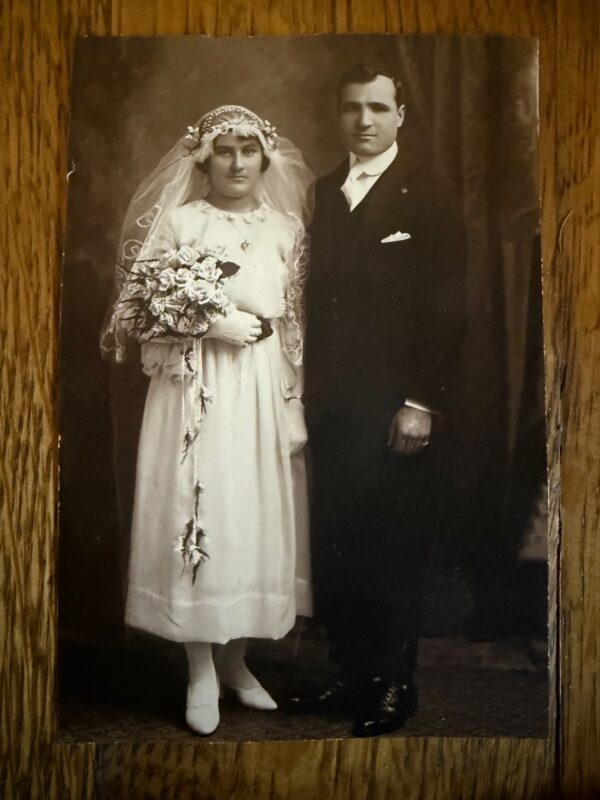
Years later, when my grandmother was 16, a young Armenian man in America learned of her. They were from the same village. Letters were exchanged, and eventually he asked her to come to the United States.
She boarded a steamship, crossing the ocean for weeks, until she arrived at Ellis Island. There, she entered a new world. She married, worked in Boston’s garment district, and later moved to Southern California, where she built a life and a family. She would eventually bring her sister and brother to America as well.
My grandparents were married for over 50 years.
My grandmother rarely spoke of what she endured. It was only in the final years of her life that she shared her story — a story of loss, survival, and quiet strength.
On April 24, we remember the Armenian Genocide and the 1.5 million lives lost. The survivors are now gone, but their stories remain.
God bless them. And God bless my grandmother, Lucy.
Steve Arklin is a Santa Clarita Valley resident and the owner of the Rancho Deluxe Filming Location.