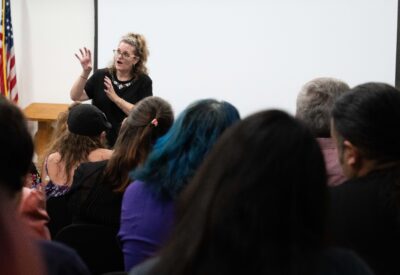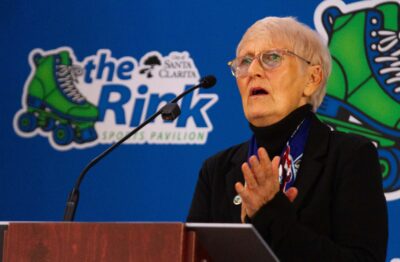
Congregation Beth Shalom held a screening, live music concert, and Q&A for attendees at the synagogue on Sunday morning to commemorate Yom HaShoah, which is Holocaust and Heroism Remembrance Day.
The film, “The Symphony of the Holocaust,” tells the story of Shony Alex Braun, a composer who wrote about his experiences surviving four different concentration camps.
Mark Oknyansky, an organizer of the event, said films like “The Symphony of the Holocaust” are an effective way to showcase stories like Braun’s, especially because survivors are now older.
“So, we try to bring meaningful opportunity for people to learn about different aspects of the Holocaust, different survivor stories. It’s getting harder and harder because you used to have an actual survivor coming to us, right,” Oknyansky said. “People age and nature happens. Those opportunities are a lot more limited. So, films like this help us bring that to life.”
He added that Braun, at the time he was taken, was around the age of some of the children, specifically the sixth graders, who were at the screening, and the film could help them understand the situation and put themselves in Braun’s shoes.
When asked the importance of showing films that discuss the Holocaust and remembering what happened, Oknyansky simply said, “When you forget history, you are doomed to repeat it.”
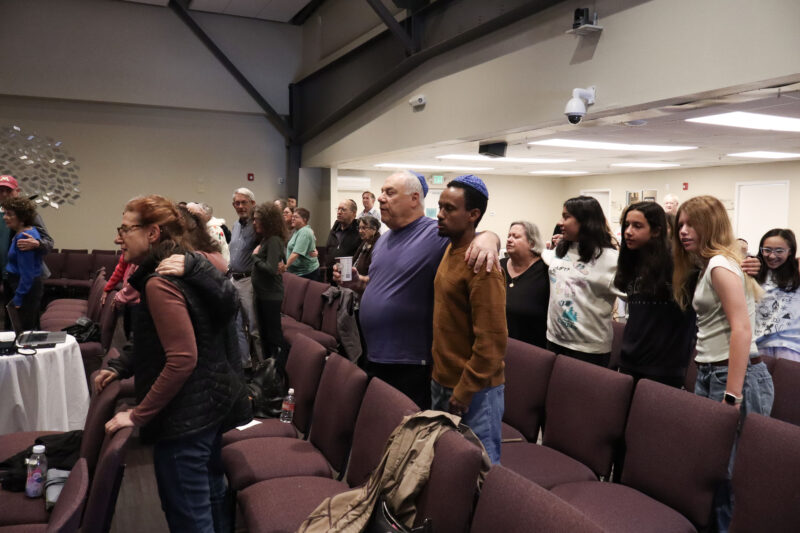
“And so, we remember it every year to keep aware and keep our eyes open and make sure it doesn’t happen again. But also, to recognize that even after this darkness, beautiful things have come,” he said.
Rabbi Jay Siegel said it was his first time seeing the film and thought it was nice to see the community come together for a film that shows a personal story.
“And understand, understand that most of the stories end in death when it comes to the Holocaust. So, whenever you hear a survivor story, that is the unique story, not one that the average story ended in death,” Siegel said. “And so, you’ll hear the stories of people … who have, just amazing stories of survival.”
Siegel said the film served as a reminder that different people react to such a traumatic experience in different ways.
“Some people never really found a way to live after the Holocaust. And in his case, he found a way … the only way he could move forward was forgiveness. And so, you hope that people will take a tragedy and find some kind of resolution with it,” Siegel said.
Braun’s granddaughter, Sierra Griffin Rechnitz, was in attendance and said it was hard to put into words the gratitude she felt knowing someone like Greg DeHart, director of “The Symphony of the Holocaust,” wanted to make a film about her grandfather.
“He’s not the only one in my family who is a survivor. My grandmother’s also a survivor. As were some of their siblings. And so I grew up surrounded, fortunately, surrounded by people who have these amazing stories of survival and had gone on to live such fulfilling, rich and special lives where they really exemplified the type of humanity that I, I think more people today should, should try to emulate.”
Griffin Rechnitz said the film was produced toward the end of 2022 and they traveled to Poland in early 2023 to visit the Auschwitz concentration camp.
She added that during the middle of the film being released, her brother was diagnosed with leukemia.
“The film came out kind of right in the middle of all of that and my brother going through treatment, going through chemo. And so, it was kind of a really fortuitous moment for us as a family to have this film about my grandfather and my grandmother and just showing this immense story of resilience while my brother was going through this,” Griffin Rechnitz added.
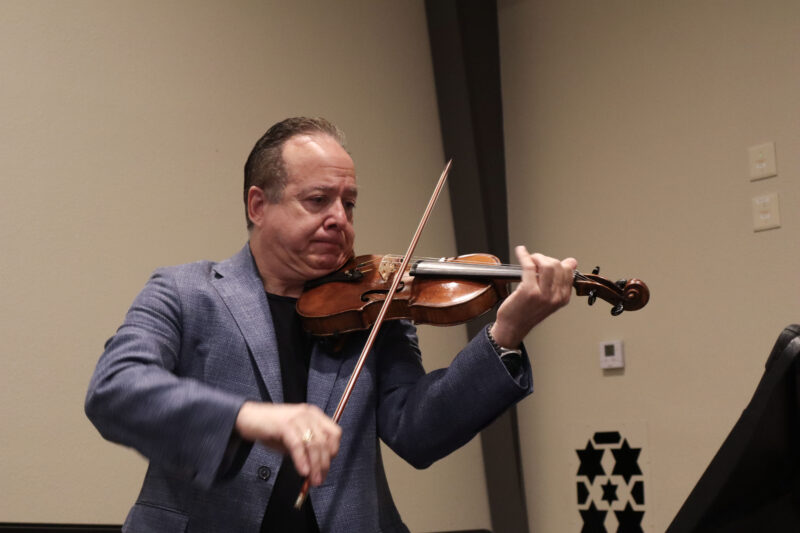
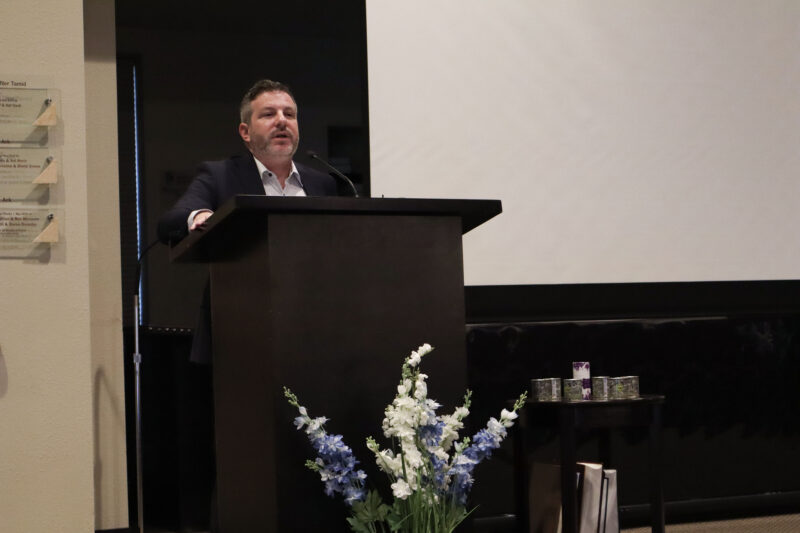
After the screening, Siegel and others lit candles to signify Holocaust Remembrance Day. There was also a live music performance for the audience, with Jonathan Rubin using Braun’s original violin.