Placerita Canyon property owner proposes new farm-to-table neighborhood concept
The Santa Clarita Valley hasn’t yet seen a project like the one Matilija Fields is proposing.
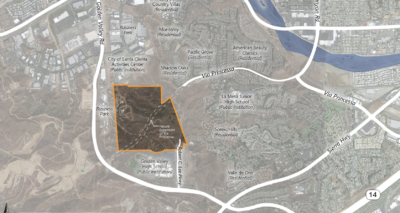
The new owner of the land at the northeast corner of Hacienda Lane and Oak Orchard Road, in Placerita Canyon, said he’s returning the former farm and dairy property to its roots.
Decades before the city of Santa Clarita was formed; the nearly 16-acre property was a part of a larger sprawl that supplied Burbank Creamery, owned by the Lutge family.
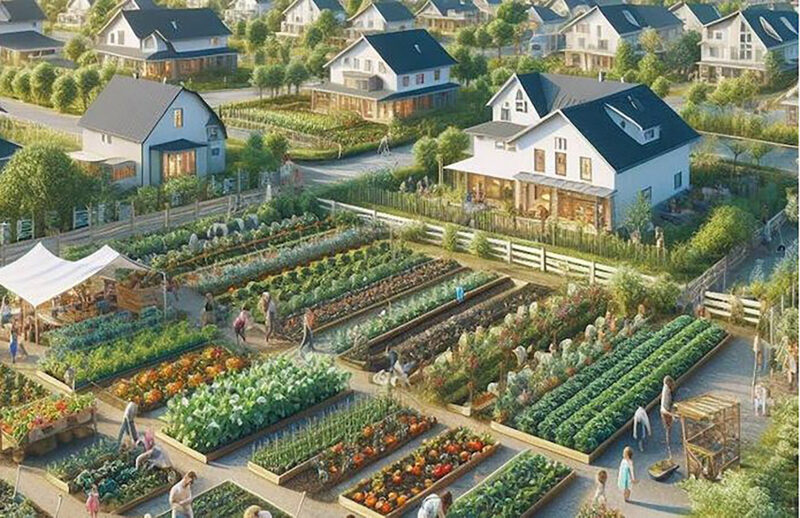
Robert Younkin, who recently purchased the land, now has a vision for his acreage that could prove a new model for community building: an “agrihood,” according to the Urban Land Institute.
The land would have a working farm, managed by Younkin and his team, which is central to the residential community, “with accessory uses that support local agriculture and a farm-to-table lifestyle,” according to his application filed at Santa Clarita City Hall.
Matilija, a Chumash term pronounced “ma-TIL-i-ha,” has historically referred to either the tribe’s historic Ventura County settlement, a local poppy and a legendary leader, according to various sources online. The team mentioned its historical significance for the area and that it fell in love with the name.
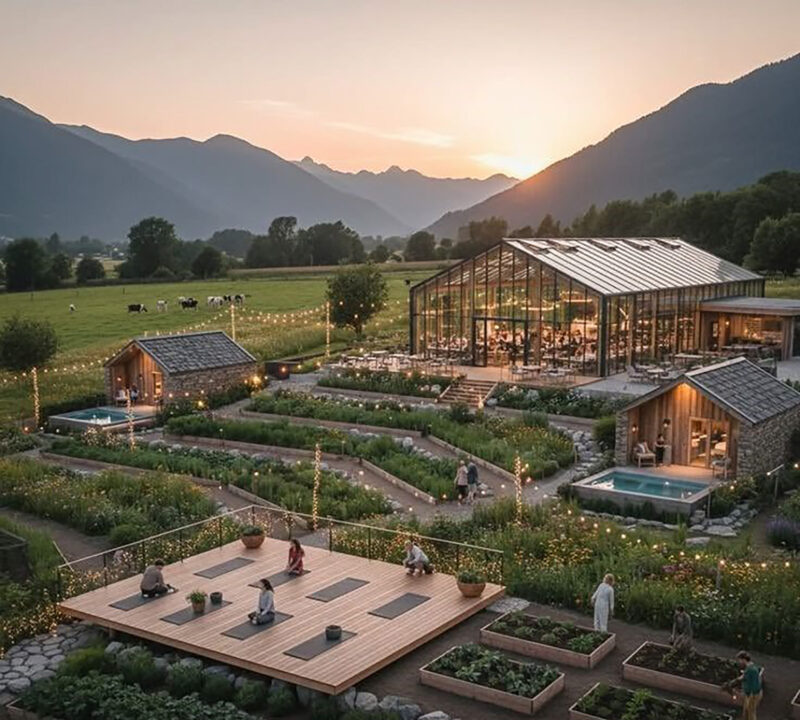
The farm and the accessory uses would be surrounded by 22 homes —18 new ones and four accessory dwelling units that are already rented homes on the property.
“We’re still preliminary, but we’re farther along to where, we think we know what we want, so we’re like, ‘Well, we should have more conversations about this,’” Younkin said during a recent interview on the property, adding that he’s recently started outreach in the neighborhood.
Last week, he met with Placerita Canyon neighbors and the area’s Placerita Canyon Property Owners Association, when he presented the plan and answered questions.
“We believe in housing as a real estate investment generally, and so we’re doing that, and then from a passion project, a social-impact perspective, the farm is really what’s kind of driving us there,” he said.
The agriculture-based, members-only country club concept sort of sprouted from necessity, Younkin explained. The cafe/restaurant is central to the concept as part of the “place-making effort” the community is going for, and that’s not allowed in a residential zone.
However, he’s seeking a city permit to allow food and beverage sales as an accessory use to a member-club operation, which is permitted in a private-club setting.
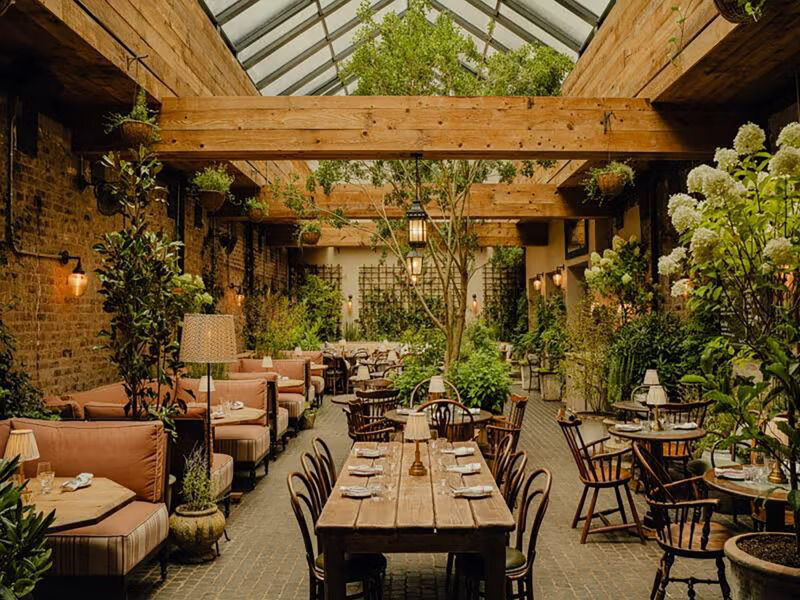
His team — including designer Kim McBride and project manager Travis Teel — is asking questions such as what would get people excited about the property and what would make people want to keep coming back, Younkin said.
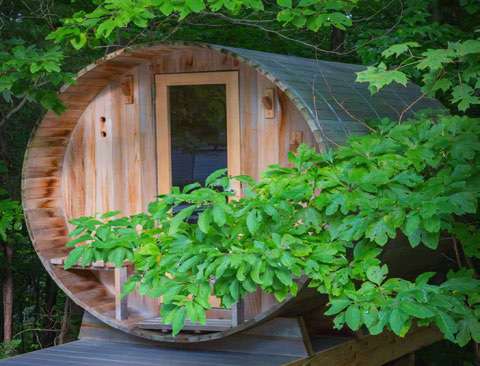
“The clubhouse is not going to have any kind of gym or anything,” said McBride, pointing to an artist’s rendering of a sauna on a wooded outdoor path near a home, designed to look like it was carved out of a giant oak. “The wellness would all be like tucked away.”
Younkin’s plan is a bold approach for a number of reasons, not the least of which is the way it seems to eschew the potential to turn a quick buck on his property for the long-term investment in preparing the soil and then growing crops that he and his team would manage. He described it as an opportunity to create a part-country club, part-organic farm community.
In basic terms, the rental plan would supply continuous revenue, which could subsidize crop management, facilities and overall operations, he said.
But, as he also was quick to admit, beyond a few examples well outside Los Angeles County, there are not a lot of “agri-hoods” to model the project after.
“We’ve never done a member club as an investment,” he said, referring to a personal and professional background in land development, “so we don’t know what we don’t know, and really, I found it as an opportunity to see the neighborhood as a kind of focus group, market feedback,” he said, in terms of his outreach strategy at this point.
His development team talked about how their plan started with multimillion-dollar homes, but that slowly evolved when they saw they might be able to create a model for something different.
For example, he said he didn’t see the wellness component as “a local gym,” he said, but more of a resident’s “third space,” after work and home.
The restaurant might be a place where a nearby resident has created something from the land and prepared it for sale to club members.
“This will feel a lot more like your own kind of backyard, as opposed to just a public place,” he said of the recreational areas.
“The existing three parcels would be reconfigured into 26 lots: 22 single-family residential lots, two farm lots and two strip lots used for transportation purposes,” according to the application.
Younkin said the plan is to situate the homes around the centrally located farm, taking advantage of the area’s existing paths and connecting the existing four homes on the property as ADUs.
The strip lots would be a several-acre portion containing more of the “working elements” of the farm, Younkin said, which would be designed to keep it off to the side and out of view.
He also acknowledged during a recent tour of the property that beyond that, there’s a lot to navigate for the team, and that’s what he’s hoping to get back from the community at this stage.
He currently has a one-stop submitted with the city regarding the general feasibility of his plan, which has a nuanced take on the area’s zoning as an attempt to create his community.
So far, the response has been mixed. Younkin described the feedback after two meetings as “polite and inquisitive.”
Laura Hall, who attended the second PCPOA meeting, said she’s heard of the concept in other areas, and as someone whose property abuts the farm site, she’s very excited for the plan’s potential. She’s really looking forward to hearing more about it and becoming a member at some point, she said.
Mitchell Landau, a nearby Placerita Canyon resident, said a lot of people like the concept so far. But there’s also been lots of concern publicly expressed by the neighborhood, due to what he and his neighbors have described as unchecked growth by another neighbor, The Master’s University.
TMU has turned several single-family homes on Landau’s block into student dorms, some housing more than a dozen students, which is already creating traffic and safety concerns, he said Thursday.
“I just think that right now the way that that project is proposed, it’ll bring too many people to a congested canyon,” Landau said in a phone interview. “The way it’s proposed now,” he added. “That doesn’t mean that it can’t be modified.”
Larry McClements, who runs the local farmers’ markets, including one nearby in Downtown Newhall, expressed enthusiasm for the plan in an email.
A student of the culinary arts as well, McClements praised a model that encourages more farm-to-table living, writing that despite a supermarket’s efficiency, “produce loses over half of its nutritional value within a week of being picked,” in his email.
“Matilija is a fascinating concept, and we haven’t seen anything quite like this. We see a trend of more people questioning where their food comes from. We think everyone needs to start thinking about this,” he said. “Anything that reconnects us to where our food comes from is important to us.”
City planners are working on the preliminary proposal from Younkin’s team and plan to report back to him on its feasibility in the coming weeks, he said.
For more information or to contact Younkin, visit matilijafields.com.