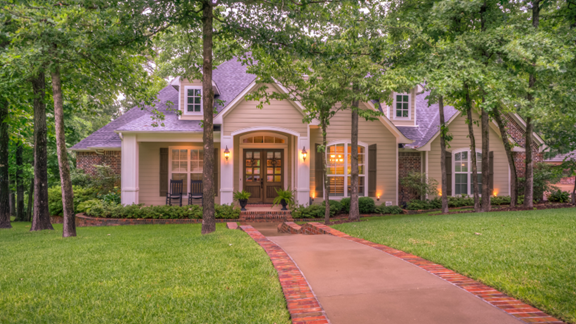
The typical American home is now more than 40 years old. That single fact sits behind a surge in demand for home warranty coverage that has reshaped a quiet corner of the insurance industry, driving companies like Choice Home Warranty to the center of conversations about household financial risk.
When a furnace installed in 1989 fails in January, or a water heater installed before the first iPhone finally gives out, homeowners face a decision with no easy answer: repair it, replace it, or hope it holds a little longer. For an increasing share of U.S. homeowners, that decision now comes with a warranty contract attached.
According to Pearl Certification’s 2026 Home Maintenance Cost Report, average annual home maintenance costs reached $8,808 nationally in 2025, a 42% increase from the $6,200 baseline recorded five years earlier. At the same time, a growing inventory of aging infrastructure has pushed repair timelines and parts availability into sharper focus.
The Repair-or-Replace Equation
The cost gap between repairing a system and replacing it has widened considerably over the past decade. HVAC replacement now runs $5,000 to $12,000 depending on the unit and market, while the average HVAC repair costs roughly $350, with a range of $130 to $2,000, according to HomeAdvisor. That gap (sometimes a factor of 20 or more) has made repair coverage economically meaningful in a way it was not when replacement costs were lower.
Choice Home Warranty, founded in 2008 with a mission to make home ownership simple and affordable, handles approximately 1.3 to 1.4 million service calls per year. Of those, roughly 85% result in a repair rather than a replacement, a ratio the company attributes to its dispatch model and early-intervention approach, which connects homeowners with qualified technicians before a failing system becomes an irreplaceable one.
A refrigerator compressor that fails and gets repaired within days costs a fraction of a full unit replacement. A water heater that begins showing pressure irregularities and gets serviced before rupturing avoids both a replacement cost and potential water damage. The repair-first orientation reflects both the economics of home system management and the practical reality that most failures, caught early, do not require full replacement.
A Housing Stock Built for a Different Era
The median U.S. home was built in 1981, according to the U.S. Census Bureau’s 2022 American Community Survey. The systems inside it, HVAC equipment, water heaters, electrical panels, plumbing, carry expected lifespans of 15 to 25 years under normal use. Most major systems that have crossed the 20-year mark face meaningfully higher failure rates, a pattern documented by HVAC manufacturers and home inspection data alike.
Sixty percent of homeowners in the Pearl 2026 survey ranked unexpected HVAC or roofing failures as their top financial concern, outpacing mortgage rate anxiety and property tax increases. A forced-air furnace installed when a home was built in the early 1980s has run tens of thousands of heating cycles over four decades. The risk isn’t hypothetical; it’s a matter of timing.
For homeowners who purchased in the last decade (often buying older homes in markets with limited new construction inventory) the inheritance of aging infrastructure is a known variable. What remains unpredictable is when. A system that passed inspection at purchase may require a major repair within two to five years. A warranty contract converts that uncertainty into a predictable annual cost.
Finding Qualified Help Has Gotten Harder
Even homeowners willing to pay out of pocket for repairs face an obstacle that cost projections don’t capture: the difficulty of finding qualified technicians on short notice.
HomeServe’s 2025 State of the Home Survey found that 81% of homeowners had experienced at least one home repair emergency in the prior year, with HVAC failures representing the most common category at 30% of incidents. Fewer than one in three respondents said they found it “very easy” to locate a qualified repair professional when they needed one.
A furnace that fails on a Thursday evening and cannot be repaired until a technician becomes available on Monday involves not just a repair bill but potentially four days of alternative heating costs, lost productivity, and stress. For elderly homeowners or families with young children, the timeline gap is not merely inconvenient.
Choice Home Warranty’s dispatch platform is built to address this directly. In 2025, the company’s automated system matched the right technician to each service call 90% of the time on the first attempt, a figure that reflects both the breadth of its technician network and the optimization logic built into its routing platform. Homeowners file a claim with a simple click or call, and the dispatch system handles the sourcing of qualified service professionals.
James Mostofi, CEO of Choice Home Warranty, has described the company’s vision in terms that resonate with how homeowners increasingly expect services to work. “Winning means that Choice becomes really the Uber of home services,” Mostofi said. The analogy captures a straightforward expectation: that getting help should not require a homeowner to network, negotiate, or wait indefinitely.
What Coverage Actually Looks Like
CHW lead the industry by distributing coverage plans directly to consumer through two primary plan options, Basic and Total, with optional add-ons available for pools, septic systems, and well pumps. The Basic plan covers core systems, including HVAC, plumbing, and electrical. The Total plan extends coverage to include refrigerators, washers and dryers, and air conditioning. Terms and conditions apply; a complete description of coverage limits and exclusions is available at the company’s website.
The company has established relationships with manufacturers including GE, LG, Electrolux, Frigidaire, Maytag, and Whirlpool. Those relationships, according to the company, support faster parts sourcing and technician coordination when covered systems require service. For homeowners dealing with aging equipment from these manufacturers, the supply chain familiarity can translate into shorter repair timelines.
Homeowners can file claims 24 hours a day, seven days a week, with a simple click or call. The 24/7 access addresses one of the structural limitations of the independent-contractor repair market: availability during nights, weekends, and holidays, when residential system failures tend to feel most acute.
The Coverage Calculation
Whether a home warranty contract makes financial sense depends on variables unique to each household: the age and condition of covered systems, the homeowner’s liquidity, and their tolerance for financial uncertainty.
For a homeowner with an HVAC system, water heater, and major appliances all approaching or past their expected lifespans, the expected-value math tends to favor coverage. Pearl’s data puts average annual maintenance costs at $8,808, a figure that includes both scheduled maintenance and unexpected repairs. A home warranty contract does not eliminate all of those costs, but it provides a defined cost ceiling on the repair and replacement scenarios that carry the most financial risk.
Mostofi has described what CHW offers in three terms: concierge service, financial protection, and peace of mind. For homeowners sitting on four-decade-old infrastructure, all three of those things are in short supply when a critical system fails without warning.
The scale of CHW’s operation, handling approximately 1.3 to 1.4 million service calls per year, reflects how many homeowners have run that calculation and reached a similar conclusion. Choice Home Warranty has earned more than 100,000 five-star reviews across platforms including BestCompany, ConsumerAffairs, and Trustpilot, and was named to the USA TODAY Most Trusted Brands list in 2026.
As the U.S. housing stock continues to age and repair costs track upward, the value proposition of structured coverage has grown less abstract. The question for homeowners sitting on aging infrastructure is less often whether a covered system will fail, and more often which one will fail next.