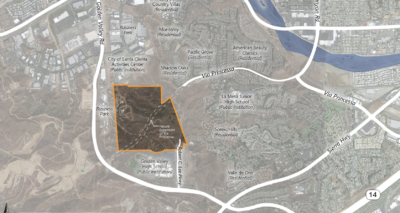
In December, the courts told state regulators they can make Cemex re-notice its water rights application to use the Santa Clara River for a 56-million-ton sand-and-gravel mine in Soledad Canyon.
Since then, Cemex has said nothing.
The city of Santa Clarita is watching, but hasn’t seen any recent developments.
And the agency in charge of the water permits, the State Regional Water Quality Control Board, has said close to nothing, previously citing a longstanding order that prohibited “ex parte,” or outside the court, communication on a topic.
Cemex had until Jan. 13 to appeal the decision by California’s 2nd District Court, which a California Supreme Court official confirmed this week was never filed.
A Cemex request to have the decision published, which would have put it online for citation in future court filings, was denied by the State Supreme Court in February, according to court records available online.
“The litigation has concluded, so our staff is continuing to process the water right application,” was the statement issued Tuesday from Ailene Voisin, a spokeswoman for the board.
Cemex did not respond to a request for comment on this story.
So, with no further information available since January, there’s lingering concern, and a number of reasons for it.
Permitting records from the initial plans indicate extraction of approximately 2.8 million tons per year, which would make its output nearly 10 times larger than the state’s average, based on a 2022 Geological Survey. (That year, the state’s 349 mines produced 116.15 million short tons of sand and gravel, for an average of about 333,000.)
But there’s also a matter of Cemex already having several other pieces in place, including a county-approved plan for its facilities, which was greenlit more than 20 years ago.
Andy Fried, president of Safe Action For the Environment, has been watching the situation since the legal fight over Cemex with L.A. County began in the late 1990s, which ultimately resulted in the mine’s approval.
“The last thing Cemex wants is for the water issue to go public,” said Fried, who also is a former president of the Acton Town Council.
Beyond the water issue, he said, there are major concerns about the potential air-quality impacts, and concerns about what 1,100 more truck trips on State Route 14 would do to local traffic.
The area has been completely transformed since Cemex initially obtained mining permits in 1991, he said. Fried also has mentioned that once the mine is built, there could be mining for decades after.
It’s one of the reasons why he’s also said he’s keeping a close eye on a recent bill by Rep. George Whitesides, D-Agua Dulce.
Whitesides’ Containing the Effects of Mineral Extraction, or CEMEx Act, pertains to mining projects “within 25 miles of an urbanized area,” which would apply to Soledad Canyon, and creates several major obstacles for a mine there.
Whitesides also called for more transparency in the situation in a statement sent via email Thursday.
“Santa Clarita residents and the surrounding communities deserve transparency in decisions that affect their health and quality of life, which is why I introduced a bill to strengthen oversight of large-scale mining projects near our communities and protect residents from harmful impacts,” he wrote. “With a project as large and potentially disruptive as Cemex’s proposed mine, we need stronger federal standards that require thorough review and community input before any project can move forward.”
Among the requirements for Cemex, if the bill passes: a haul route-impact assessment for the qualifying project; a trip-management plan that specified the hours of operation; more local oversight for both of those elements; annual reporting requirements on water usage; and perhaps, most crucially, a requirement that the project have a net-zero impact on water usage.
And putting the State Water Quality Resources Bill back in the focus, Cemex needs water to run this mine — about 105 million gallons’ worth each year.
That could present the biggest challenge for a project that plans to use about 322 acre-feet, or enough water for about 650 homes for a year, based on previous records.
The bill, HR 8773, which Whitesides introduced May 12, has been referred to the House Committee on Natural Resources, which is the latest action taken on the bill, according to congressional records online.