A bathroom can feel outdated long before its plumbing, tile, or fixtures actually stop working. In Santa Clarita, that creates a familiar home-improvement dilemma: live with a room that feels tired or commit to a remodel that may bring demolition, contractors, dust, and a much larger budget than expected.
Wallpaper offers a third option. Used thoughtfully, pattern and color can change the character of a bathroom without moving a wall or replacing a vanity. It does not solve damaged surfaces or failing fixtures, and ventilation still matters, but homeowners who mainly dislike the appearance of a bathroom may discover that the room needs a visual reset rather than a complete reconstruction.
Start by Clearing Out What the Room and House No Longer Need
Before choosing a pattern, homeowners should look at the bathroom as part of the wider house. Renovation projects often begin with frustration over clutter rather than the room itself. Cabinets are full, counters have no breathing space, and nearby closets contain supplies from older household routines. Removing unnecessary items can make the existing layout easier to judge.
That same reset can extend to a home office or storage area. A household that has switched printers, for example, may still have unopened cartridges taking up shelf space, and checking https://www.selltoner.com can be one practical way to investigate what to do with surplus toner before automatically throwing it away.
Once clutter is reduced, the real design problems become clearer. A perfectly functional vanity may simply need new hardware. Good tile may look dull because the walls and lighting lack personality. This is where skipping demolition can start to feel less like a compromise and more like a deliberate choice.
Wallpaper Can Give a Small Bathroom a Clear Identity
Bathrooms are ideal spaces for stronger visual ideas because they are usually smaller than living rooms or bedrooms. A pattern that might feel overwhelming across a large open-plan wall can create a memorable effect in a compact powder room. Florals, geometrics, botanical prints, and quieter textures each change the mood without altering the room’s footprint.
Homeowners exploring bathroom wallpaper can compare designs intended to give these smaller spaces more personality. The key is choosing a pattern in relation to what already exists. Warm tile, cool stone, cabinet color, metal finishes, and flooring all influence whether a wallpaper looks integrated or simply added after the fact.
Scale matters too. Large motifs can make a tiny room feel bold and intentionally decorated, while smaller repeating patterns may create more visual movement. Samples are useful because a design viewed on a screen can feel very different beside an actual mirror, vanity, and light fixture.
Moisture and Wall Condition Still Need Serious Attention
Wallpaper is not a shortcut around building problems. If a bathroom has persistent moisture, peeling paint, mildew, or damaged drywall, covering the surface will not correct the cause. Homeowners should address leaks and ventilation concerns before thinking about decorative finishes.
The type of bathroom also matters. A powder room without a shower faces different conditions from a primary bathroom where steam regularly fills the space. In higher-moisture rooms, product suitability, wall preparation, installation, and ventilation deserve closer attention. A beautiful pattern is a poor investment if the edges begin lifting because the room was never prepared for it.
Walls should also be reasonably smooth. Wallpaper can transform color and pattern, but it may not hide significant texture or damaged surfaces as effectively as homeowners expect. Preparation can involve cleaning, patching, sanding, and following the installation guidance for the chosen material.
A working exhaust fan and sensible airflow remain important regardless of the weather outside.
Small Fixture Changes Can Make the Wallpaper Look More Expensive
Once the walls become the main visual feature, older details elsewhere in the bathroom may become more noticeable. That does not mean everything needs replacing. A few controlled changes can help the room feel cohesive without turning the project back into a full remodel.
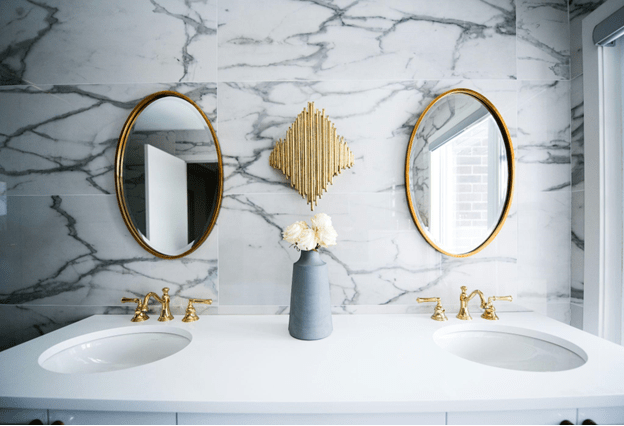
Lighting is a strong place to begin. A dated fixture can affect both the atmosphere of the room and the way wallpaper colors appear. Mirrors have similar influence because their shape and frame occupy significant visual space. Cabinet hardware, towel hooks, and a faucet can also help connect an existing vanity to the new wall treatment.
The mistake is replacing every item simply because the walls changed. Homeowners should identify which details visibly conflict with the new direction and leave functional, compatible pieces alone. Restraint protects the budget and prevents a cosmetic update from expanding into weeks of unnecessary work.
Visitors notice the room as a complete composition rather than comparing the age of every fixture. Strong wallpaper, good lighting, a clean counter, and coordinated details can create a more memorable impression than expensive materials chosen without a clear design idea.
A Cosmetic Update Works Best When the Bathroom Already Functions
Skipping a remodel makes sense only when the room’s basic layout and systems still work. Wallpaper cannot fix poor drainage, serious water damage, inadequate electrical work, or a shower that needs structural repair. Homeowners should separate aesthetic dissatisfaction from functional problems before setting a budget.
If the complaint is mainly that the bathroom feels beige, generic, or dated, a surface-focused update may be enough. Wallpaper can establish the design direction, and smaller changes can support it. The project remains easier to schedule and usually creates less disruption than removing tile, plumbing fixtures, and cabinetry.
A bathroom used comfortably for years may not need to be redesigned simply because current renovation trends favor a different vanity style or shower configuration. Keeping functional elements reduces waste and allows more attention to the parts of the room people actually notice.
For Santa Clarita homeowners, the appeal of wallpaper is not that it replaces every kind of bathroom renovation. It offers a more proportionate response when the problem is visual. A room that works well but looks forgettable does not always need demolition. Sometimes a carefully chosen pattern, better lighting, and a few edited details are enough to make the bathroom feel deliberately designed again.