Portions from Metrocreative
Come the first Monday of September, many children and their parents start to face the reality that school, if it hasn’t yet started, is about to begin again. That’s because Labor Day marks the unofficial end of summer. But there is much more to this holiday than barbecues and the notion that fall is right around the corner.
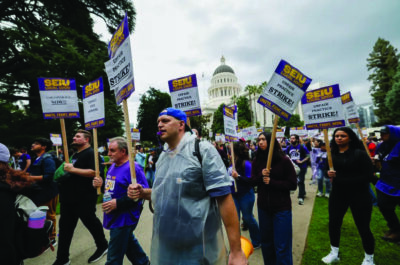
Labor Day was forged by the labor movement of the late nineteenth century. Many workers during this time felt they were underpaid and overworked. Conditions at their places of employment also lacked adequate safety. These workers banded together to fight for higher wages, shorter workdays and improved working conditions.
Before it was adopted as an American federal holiday, Labor Day was first recognized by labor activists and individual states. Although New York was the first state to introduce a bill, Oregon actually was the first to pass a law recognizing Labor Day, which the state first celebrated on February 21, 1887. Four more states followed suit that year. By the end of the decade, three more states passed Labor Day holiday laws.
In recognition of the momentum of Labor Day at the state level, and with the adoption of the holiday by another 23 states by 1894, Congress passed an act on June 28, 1894, officially making the first Monday in September a legal holiday each year.
Labor Day remains a time to honor and affirm the dignity of working people across the nation. It also affords individuals an opportunity to enjoy a well-deserved day off and reflect on the contributions workers have made throughout the years. California and Labor
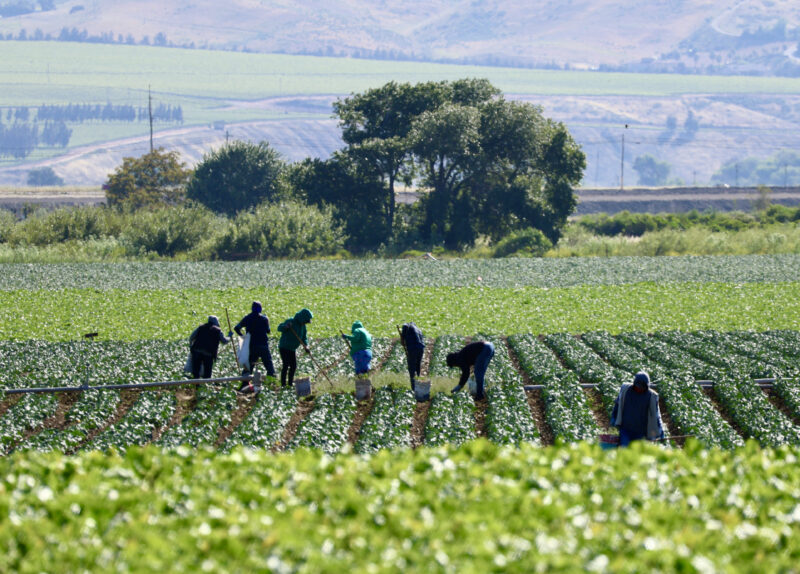
California has a rich history of labor movements, featuring groundbreaking actions like the Oxnard Sugar Beet Strike of 1903 and the 1965 Delano Grape Strike. These milestones reshaped workers’ rights locally and nationally.
Other early struggles and milestones:
1853 California passes its first law setting a 10-hour workday.
1868 The state legislature adopts an eight-hour workday law, driven by early organizing.
1903 Mexican and Japanese farm workers form the Japanese-Mexican Labor Association to strike over wages in Oxnard.
1934 West Coast dockworkers strike, culminating in San Francisco’s “Bloody Thursday” and an historic general strike.
1934 Salinas Lettuce Strike, led significantly by the Filipino Labor Union, walked off the job demanding living wages and better conditions in the “Lettuce Capital of the World.” Tensions peaked in September 1934 when a vigilante mob attacked and burned down a Filipino labor camp, driving hundreds of workers out of the Salinas Valley at gunpoint to break the strike.
1937 The Stockton cannery strike, known as the “spinach riot,” was a violent April 23, 1937 labor clash. Strikers and a deputized “pick handle army” fought with clubs, rocks, tear gas and firearms, causing one death, 58 injuries and halting a $6 million crop.
This Labor Day you can visit some of the most important historical locations of labor actions in California.
Wheatland Hop Riot 1913
Registered California Historical Landmark #1003
Intersection of S. “A” Street and 6th Street,
Wheatland, CA 95692
The Wheatland Hop Riot was one of the most important and well-known events in California labor history. A bloody clash occurred at the Durst Ranch on Aug. 3, 1913, brought about by the difficult conditions farm laborers at the ranch endured. The riot resulted in four deaths, (District Attorney E.T. Manwell, Deputy Sheriff Eugene Reardon and two hop pickers) and many injuries. It focused public opinion for the first time on the plight of California’s agricultural laborers, and resulted in new state legislation to regulate labor camp conditions.
The Wheatland Hop Riot was the first major farm labor confrontation in California. The California Historical Landmark was registered on May 8, 1991.
1946 Oakland General Strike
1611 Telegraph Ave., Oakland 94612
December 2026 will mark the 80th anniversary of the Oakland General Strike, the last city-wide work stoppage in the United States. The strike affected 100,000 workers, effectively shutting down nearly all commerce in Alameda County and the East Bay for 54 hours.
The strike was in solidarity with female clerks trying to organize a union in two downtown department stores, Kahn’s and Hastings. The General Strike was a generally peaceful affair. Massive demonstrations, deemed a “work holiday” were held in the streets surrounding Latham Square, between the two department stores on Broadway.
The General Strike failed in its initial goal, but ultimately led to union recognition for the clerks after the unions elected several candidates to the Oakland City Council.
Latham Square was recently renovated and one of the six pedestals installed at the edge of the new square commemorates the events of December 1946.
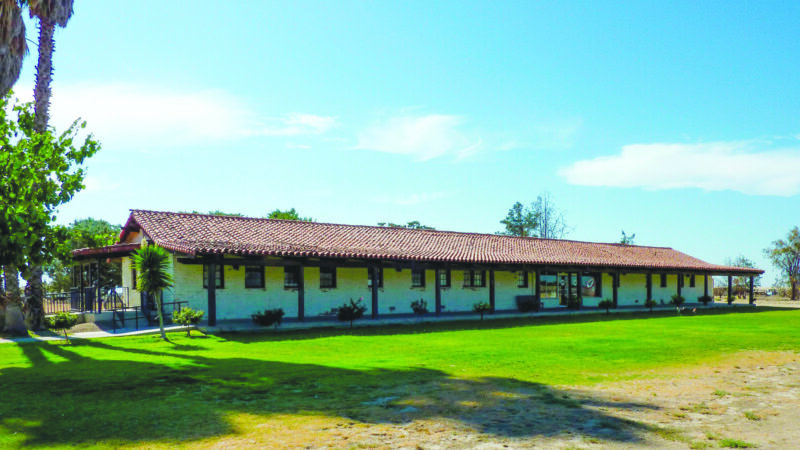
The Forty Acres
30168 Garces Highway, Delano, CA 93215
This site served as the headquarters for the United Farm Workers starting in 1966, anchoring the historic Delano grape strike and farmworker movement.
Francisco Waterfront and Embarcadero
1 Embarcadero Center, San Francisco 94111
The focal point of the historic 1934 West Coast Maritime Strike and General Strike, reshaping worker power and unionization for longshoremen and maritime workers. San Francisco police clashed violently with striking dockworkers and their supporters on July 5, 1934. Police gunfire and tear gas killed two workers and injured over a hundred others, sparking a massive four-day general strike.