A March 2026 transaction reshaped the ownership of one of the most recognizable names in global media. The family investment office co-founded by Lynn Forester de Rothschild, together with her family and associated entities, sold a 26.9% stake in The Economist Group to the Canadian entrepreneur Stephen Smith and his holding company, Smith Financial Corp. The sale was the first significant ownership change at the company in more than a decade. The previous shift came in 2015, when Pearson passed its holding to the Agnelli family’s investment vehicle, Exor.
The size of the stake drew notice, yet the restraint around it told a larger story. The de Rothschild family had held its position in the title for generations and stepped back only in part, keeping ties to a business it had backed since the middle of the last century. That pairing of long ownership and selective adjustment captures the method behind E.L. Rothschild, and the temperament of the woman who has led it since its founding.
A family office built for a long horizon
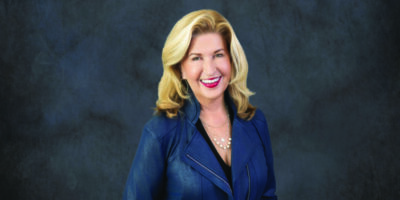
Sir Evelyn de Rothschild and Lynn Forester de Rothschild established E.L. Rothschild in 2003 as a privately funded office to oversee the couple’s international holdings, after Lady de Rothschild sold her telecom interests and Sir Evelyn sold his holdings in N M Rothschild & Sons, the family’s London merchant bank. The firm invests across private companies, public markets, and real estate, with activity reaching the United States, the United Kingdom, Europe, Africa, and India. Its interests have touched media, wealth management, infrastructure, agriculture, and consumer goods.
A single-family office of this kind sits apart from a conventional fund. It answers to one family rather than outside investors, which frees it to hold assets for decades and to take direct stakes instead of parking capital with external managers. E.L. Rothschild has used that freedom to behave as a direct owner: taking board seats, building operating relationships, and letting positions mature rather than trading them for a quick gain. The absence of limited partners removes the pressure to exit on someone else’s clock, and it lets the firm wait out cycles that would force a fund to sell.
The office is also distinct from the merchant bank that carries the family name. Rothschild & Co, the advisory and banking group with roots in nineteenth-century Europe, operates on its own; E.L. Rothschild is a private vehicle for the personal holdings of Sir Evelyn and Lynn, structured to invest their own capital on their own terms. That separation matters, because it means the office can pursue an idiosyncratic mix of assets without answering to a bank’s clients or a public shareholder base. The trade-off is scale: the firm competes for deals not on size but on patience and on the relationships it can bring to a management team.
A portfolio organized around people, not sectors
The holdings rarely share an industry. E.L. Rothschild has carried a stake in The Economist Group in Britain, backed IHS Holding, among the largest independent mobile-tower operators in Africa, invested in the United States weather-technology firm, Weather Central, and built FieldFresh Foods in India through a joint venture with Bharti Enterprises. What connects that list is the caliber of the teams running each business, not a thesis about any one market.
Forester de Rothschild has been candid that the office picks people before markets. She described the firm as long-term in focus, and named its central test as “knowing and believing in the management team” before capital moves. The businesses she has backed, she has said, do not fit together on paper; they share strong operators the office knows and trusts. That standard produces a portfolio that reads as eclectic yet holds to a single rule about who should be in charge of the money.
Geography follows the same logic. The office moved into India early through its agriculture venture with Bharti, later turned toward African infrastructure through the tower business, and has been open about the markets it misjudged. Forester de Rothschild has recounted weighing India against China around 2004, when roughly $49 billion in foreign direct investment flowed into China against about $4.9 billion into India, and choosing India in the belief that the gap could not persist. She has called that read wrong. Few investors of her stature discuss their misses so plainly.
The Economist position shows the approach inside a single asset. The family held its interest for decades and kept a governance role rather than moving in and out, with Sir Evelyn serving as Chairman from 1972-1989, Forester de Rothschild serving on the board of The Economist Newspaper Limited and its audit committee from 2002 to 2017. The 2026 sale released value from a mature holding.
From telecom operator to steward of a dynasty’s capital
Before she managed Rothschild capital, Forester de Rothschild built and sold companies of her own. She led FirstMark Holdings from 1989 to 2002, a group that owned telecommunications businesses in several markets, after an earlier stint as an executive at Metromedia Telecommunications. During the early 1990s, she held controlling interests in paging and cellular operators across Latin America in partnership with Motorola, an operating apprenticeship in fast-moving markets far from the family bank she would later serve.
Her most ambitious venture came in Europe. She founded FirstMark Communications of Europe in 1998, secured licenses in Germany, France, Spain, Switzerland, Luxembourg, and Finland, and assembled a fiber network stretching across roughly fifteen countries before the business changed hands in 2000. An operator who has raised money, met payroll, and answered to lenders tends to weigh management depth heavily. Lynn Rothschild carried that builder’s discipline into the seat of an owner, which helps explain why the family office leans on people rather than sector bets.
Long-term value as practice and public argument
The office’s patience mirrors the case its principal makes in public. Forester de Rothschild sits on the advisory board of FCLTGlobal, a nonprofit that presses companies and investors to lengthen their time horizons, and she serves on the executive committee of the Peterson Institute for International Economics. She held a seat on the board of The Estée Lauder Companies from 2000 to 2024, where she chaired the Corporate Governance Committee, a tenure that itself reflects a preference for durable commitments over quick turnover.
Her writing for financial and policy outlets circles back to a single claim: capital held for the long run can serve returns and society at the same time. E.L. Rothschild functions as a working test of that idea. Direct stakes, board seats, and multi-decade holdings stand against the churn common in public markets, and the firm’s geography, from African towers to Indian agriculture, reflects a search for durable operators wherever they sit.
The Economist sale signaled the model’s ordinary operation rather than a change of philosophy. A long-held position reached a natural point of adjustment; value moved to a new owner, who is committed to long-term stewardship of The Economist. For a family investment firm that measures itself in decades, the transaction reads less as a headline than as one data point in a much longer record.