When considering full mouth reconstruction, you need to understand the complexity and benefits involved in this extensive dental treatment. This process isn’t just about cosmetic improvements; it addresses extensive oral health issues through precise planning and execution. You’ll undergo a thorough assessment, utilizing advanced diagnostic tools to evaluate your teeth, gums, and jaw. The personalized treatment plan will aim to restore both functionality and aesthetics. Wonder what happens next?
Understanding the Need for Full Mouth Reconstruction
Why would someone require full mouth reconstruction? You might need it if you’re dealing with extensive dental health concerns that can’t be resolved through isolated procedures. Issues like severe tooth decay, significant wear, damaged teeth, or periodontal disease often necessitate a thorough treatment approach. This means addressing multiple problems concurrently for an effective solution. Opting for comprehensive full mouth restoration in Pittsburgh involves a coordinated plan that may include restorative dentistry, periodontal treatments, and oral surgery. It’s not just about aesthetics; it’s vital for functional improvement. By integrating various dental disciplines, the reconstruction ensures that not only appearance but also the functionality of your teeth is restored. A complete treatment approach is essential for achieving ideal oral health and improving your quality of life.
Initial Consultation and Patient Assessment
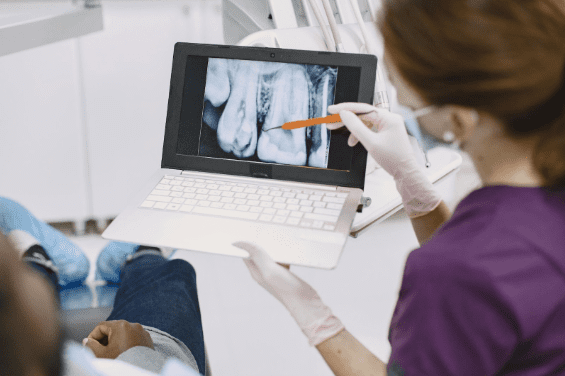
During your initial consultation for full mouth reconstruction, you’ll undergo a thorough dental evaluation to assess your oral health condition meticulously. This process includes personalized treatment planning tailored to your specific needs, ensuring the most effective approach is chosen. Advanced diagnostic imaging techniques, such as digital X-rays and 3D scans, are employed to obtain precise anatomical details and inform the development of your treatment strategy.
Comprehensive Dental Evaluation
How does a detailed dental evaluation pave the way for a successful full mouth reconstruction? At the initial consultation, your dentist meticulously examines your dental history and overall oral health. This exhaustive assessment involves visual inspections, X-rays, and possibly 3D imaging to understand the current state of your teeth, gums, and jaw. The evaluation aims to identify any underlying issues such as cavities, gum disease, or misaligned bites. Your dental history provides insights into past treatments and recurring problems, which are pivotal for creating a tailored approach. By appraising your overall oral health, the dentist can determine the structural integrity of your teeth and gums. This thorough evaluation guarantees that the subsequent treatment plan is both effective and personalized to meet your specific needs.
Personalized Treatment Planning
With a thorough dental evaluation completed, the focus shifts to crafting a personalized treatment plan tailored specifically to your oral health needs. This begins with detailed goal setting, where your specific objectives and desired outcomes are articulated. Integral to this process is effective patient communication. You’ll engage in discussions with your dental team to understand the comprehensive strategies required to achieve optimal results. This collaborative dialogue guarantees that your priorities are clearly understood, aligning the treatment with your expectations. Every aspect, from procedural steps to timelines, is meticulously planned. By involving you in each decision, the treatment plan becomes a precise roadmap that not only addresses current dental issues but also promotes long-term oral health durability.
Diagnostic Imaging Techniques
Advanced diagnostic imaging techniques form the cornerstone of your initial consultation and patient assessment, capturing critical insights into your oral structures. These technologies, including 3D imaging techniques and digital radiography analysis, provide detailed views of your dental anatomy. 3D imaging techniques, such as cone beam computed tomography (CBCT), offer precise, three-dimensional representations of your teeth, bone structures, and surrounding tissues. This allows for accurate evaluation and identification of any underlying issues. Digital radiography analysis, meanwhile, delivers high-resolution images with reduced radiation exposure, enabling a thorough assessment of tooth decay, bone loss, and other dental pathologies. Together, these advanced imaging methods safeguard your dentist can formulate a precise, tailored treatment plan to address your unique dental needs during full mouth reconstruction.
Comprehensive Diagnostic Procedures
Before setting out on a full mouth reconstruction, it’s essential to undergo extensive diagnostic procedures to guarantee a precise treatment plan. A comprehensive diagnosis protocol is indispensable for understanding the unique intricacies of your dental situation. This process involves a thorough evaluation of your oral health, focusing on identifying issues with teeth, gums, and jaw alignment. A functional assessment is pivotal, as it examines how your bite, muscles, and jaw joints work together. This assessment helps pinpoint any dysfunctions that may affect the reconstruction outcome. The diagnostic phase may include detailed examinations, bite analysis, and sometimes, jaw movement tracking. By following these meticulous procedures, you ascertain that potential complications are identified early, allowing for a seamless progression to the next stages of treatment.
Developing a Personalized Treatment Plan
In developing a personalized treatment plan for full mouth reconstruction, you’ll first undergo a thorough assessment of your dental health, which includes evaluating the condition of your gums, teeth, and bite alignment. Based on this assessment, the dental professional will customize treatment options tailored to your specific needs, considering factors like existing dental restorations and any underlying health conditions. This approach guarantees that each aspect of your oral health is addressed, optimizing both functionality and aesthetics.
Assessing Dental Health
A detailed assessment of dental health is indispensable for developing a personalized treatment plan for full mouth reconstruction. You’ll start with an extensive evaluation of your dental history, noting past procedures and existing conditions. This involves reviewing any records of previous treatments, surgeries, and restorations. Understanding your oral hygiene practices is equally crucial; your dentist will ask about your brushing and flossing habits, frequency of cleanings, and use of dental products. A clinical examination will follow, where the dentist checks for signs of decay, gum disease, and structural integrity of teeth. Advanced imaging techniques, like X-rays and 3D scans, provide a complete view of oral structures. All these data points guarantee a thorough understanding of your dental needs and priorities.
Customizing Treatment Options
Once your dental health has been thoroughly assessed, the next step is to develop a customized treatment plan tailored to your unique needs. This involves choosing personalized options that address specific dental issues identified during your assessment. Your dentist will evaluate factors like tooth structure, gum health, and bite alignment to guarantee the chosen procedures align perfectly with your requirements. Tailoring treatment plans may include a combination of crowns, bridges, implants, or orthodontics, depending on what’s most suitable for you. By integrating advanced diagnostic tools and 3D imaging, your dentist can precisely map out each step of the process, confirming ideal function and aesthetics. This precise customization assures that your full mouth reconstruction is both effective and uniquely suited to you.
Addressing Dental Health Issues
When starting on full mouth reconstruction, addressing dental health concerns is essential to guarantee the longevity and effectiveness of the treatment. Focusing on preventive dental care ensures that underlying issues are identified and managed before advancing to more complex procedures. This includes regular cleanings, fluoride treatments, and sealants to protect your teeth from decay.
To make this process smoother, it’s important to:
- Implement preventive dental care: Regular check-ups and cleanings prevent complications.
- Manage dental anxiety: Techniques like sedation dentistry or relaxation methods can ease your concerns.
- Conduct thorough diagnostics: Comprehensive exams, including X-rays and digital imaging, offer precise insights.
Restorative and Prosthetic Options
Restorative and prosthetic options form a pivotal component of full mouth reconstruction, offering tailored solutions for damaged or missing teeth. Porcelain veneers serve as an excellent choice for enhancing aesthetic appeal; they effectively cover surface imperfections, providing a natural appearance. In cases where structural integrity is compromised, crowns and bridges play a fundamental role. Crowns cap damaged teeth, restoring function and preventing further deterioration. Bridges fill the void left by missing teeth, anchored by adjacent healthy teeth or implants, ensuring stability and continuity within the dental arch. Each option is meticulously selected based on your unique dental needs, ensuring both functionality and aesthetics are optimized. Your dentist will guide you in choosing the most suitable solution to achieve desired outcomes.
Surgical Interventions and Procedures
How do surgical interventions fit into the intricate process of full mouth reconstruction? They play a vital role in addressing structural issues. Surgical techniques are employed to correct jaw alignment, remove diseased tissue, or prepare the mouth for prosthetic elements. Anesthesia administration safeguards your comfort and pain-free experience during procedures.
Key surgical interventions may include:
- Bone grafting: Rebuilds bone structure, providing a stable foundation for implants.
- Dental implants: Surgically placed to replace missing teeth and restore function.
- Gum surgery: Reshapes or restores gum tissue, enhancing aesthetics and health.
Each technique is strategically chosen based on your specific needs, and precise anesthesia administration is essential for a seamless experience. These surgical steps lay the groundwork for a successful full mouth reconstruction, harmonizing form and function.
The Role of Orthodontics in Reconstruction
In full mouth reconstruction, orthodontics plays a pivotal role by ensuring your teeth are properly aligned, which is essential for both function and aesthetics. This process often involves addressing jaw misalignments to improve bite efficiency and overall oral health. By using advanced orthodontic techniques, your dental professional can create a harmonious balance between your teeth and jaw structure, setting a robust foundation for further restorative procedures.
Aligning Teeth Properly
Although often overlooked in full mouth reconstruction, the role of orthodontics is crucial for aligning teeth properly and guaranteeing the overall success of the treatment. Proper alignment isn’t just about aesthetics; it considerably impacts function, including occlusal adjustment, which is vital for achieving an ideal occlusal plane. This alignment allows for harmonious contact between teeth, reducing wear and improving overall oral health. In your reconstruction journey, consider the following orthodontic aspects:
- Occlusal Adjustment: Fine-tunes the contact points between your teeth.
- Ideal Occlusal Plane: Establishes a stable, functional bite.
- Tooth Positioning: Ensures teeth are correctly positioned for optimal function.
Correcting Jaw Misalignments
Achieving proper tooth alignment is only one part of the equation; addressing jaw misalignments is equally important in full mouth reconstruction. Effective orthodontic intervention ensures precise bite alignment, vital for optimizing bite force distribution. When your jaw is misaligned, it can lead to uneven wear, temporomandibular joint (TMJ) disorders, and compromised chewing function. Orthodontic appliances like braces or aligners meticulously reposition the jaw, promoting balanced occlusion. This adjustment not only alleviates discomfort but also enhances overall oral functionality. By correcting the jaw’s spatial orientation, you enable teeth to meet evenly, distributing bite force uniformly and preventing undue stress. Ultimately, this extensive approach fosters a harmonious interaction between teeth and jaw, integral to a successful full mouth reconstruction.
Finalizing Restorations and Aesthetic Enhancements
As the final phase of full mouth reconstruction approaches, the focus shifts to meticulously refining restorations and enhancing aesthetics to achieve ideal function and visual appeal. You’ll work closely with your dental professional to guarantee each tooth restoration aligns perfectly, enhancing facial aesthetics and achieving natural-looking results. This involves:
- Precise Shade Matching: Verifying restorations blend seamlessly with adjacent teeth for a harmonious, natural look.
- Contour Adjustments: Fine-tuning the shape and texture of restorations to mimic natural tooth anatomy.
- Bite Alignment: Adjusting the occlusion to confirm comfortable and efficient function.
These steps are indispensable in maximizing both the functionality and aesthetic appeal of your smile, making sure the final result complements your facial features and meets your expectations precisely.
Post-Treatment Care and Maintenance
How can you guarantee the longevity of your full mouth reconstruction? Implementing a meticulous home care regimen is essential. This includes brushing twice daily with a soft-bristle toothbrush and non-abrasive toothpaste, as well as flossing to remove interdental plaque. Consider adjunctive tools like interdental brushes or water flossers for enhanced cleaning.
Equally vital are professional maintenance visits. Schedule these every six months, or more frequently if advised by your dentist. During these visits, professionals will conduct thorough cleanings, assess the condition of your restorations, and address any emerging issues promptly. Maintaining open communication with your dental team ensures personalized advice and adjustments to your care plan. Consistent adherence to these protocols will optimize the durability and functionality of your reconstructed smile.
Frequently Asked Questions
How Long Does a Full Mouth Reconstruction Typically Take From Start to Finish?
A full mouth reconstruction typically takes 6 months to 2 years. Average treatment duration depends on treatment timeline considerations like complexity, necessary procedures, healing time, and scheduling. Each phase’s precision impacts the overall timeframe for successful completion.
Are There Any Dietary Restrictions During the Reconstruction Process?
Yes, you’ll encounter dietary restrictions during reconstruction. Soft foods are pivotal, affecting food selection and meal planning. Avoid hard, sticky items. Prioritize nutrient-rich, easy-to-chew options to promote healing and guarantee desirable results throughout the process.
What Are the Costs Associated With Full Mouth Reconstruction?
Full mouth reconstruction costs vary widely. Your dental insurance coverage may cover certain procedures, but expect significant out-of-pocket expenses. Factors include materials, treatments, and complexity. Consult with your dental provider for a precise estimate tailored to your needs.
Can Full Mouth Reconstruction Improve Speech and Chewing Abilities?
Yes, full mouth reconstruction can greatly enhance oral function, improving both speech and chewing abilities. You’ll also notice improved facial aesthetics, as the procedure restores dental structure, aligning teeth for maximum functionality and harmonious appearance.
Is Full Mouth Reconstruction Painful?
Yes, full mouth reconstruction can be painful initially. However, pain management techniques like local anesthesia and sedation minimize discomfort. Long-term discomfort is uncommon, as healing progresses and adjustments alleviate initial sensitivity or soreness.