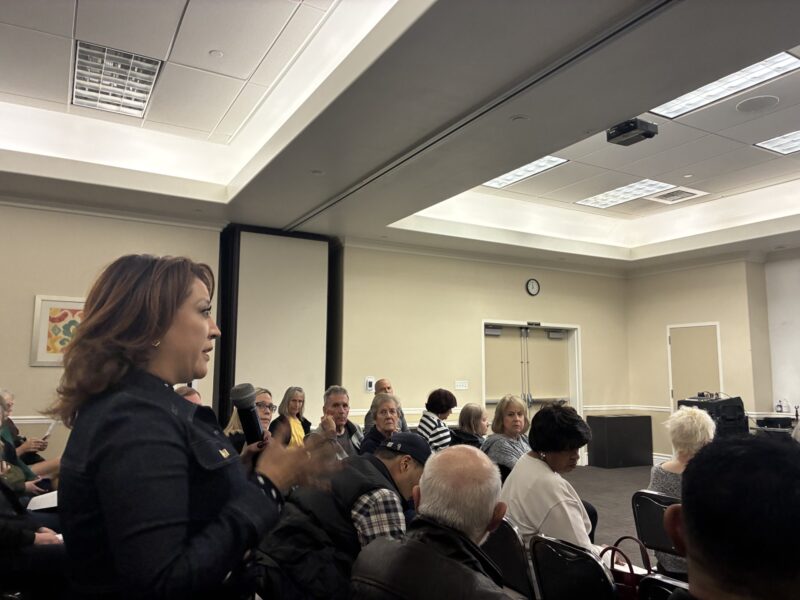
The Judicial Council of California met with Santa Clarita Valley residents Wednesday to talk about the council’s plans for an eight-story courthouse at the former site of The Greens miniature golf course on McBean Parkway.
Officials for the state’s court system announced plans last month for the eight-story edifice, which would represent the city’s tallest building.
Several of the approximately 50 residents who showed up Wednesday wanted to know where the plan came from and why that site has been chosen.
The building is planned to address multiple needs for the regional court system: The idea is to consolidate the juvenile courthouse’s operations, as well as Santa Clarita’s three courtrooms, replace several court rooms in the Stanley Mosk Courthouse in Downtown Los Angeles and create a multiservice justice hub for the Los Angeles County Superior Court’s North Valley District.
The plan intends to “relieve the current space shortfall, replace inadequate and obsolete facilities, optimize courthouse operations and improve security,” according to a PowerPoint presentation.
The Judicial Council’s planned location — at 26501 McBean Parkway, the building would dwarf City Hall down the road, and likely anything planned for the Valencia Town Center mall’s billion-dollar investment across the street — drew about 50 residents to the Santa Clarita Activities Center for the 5 p.m. meeting.
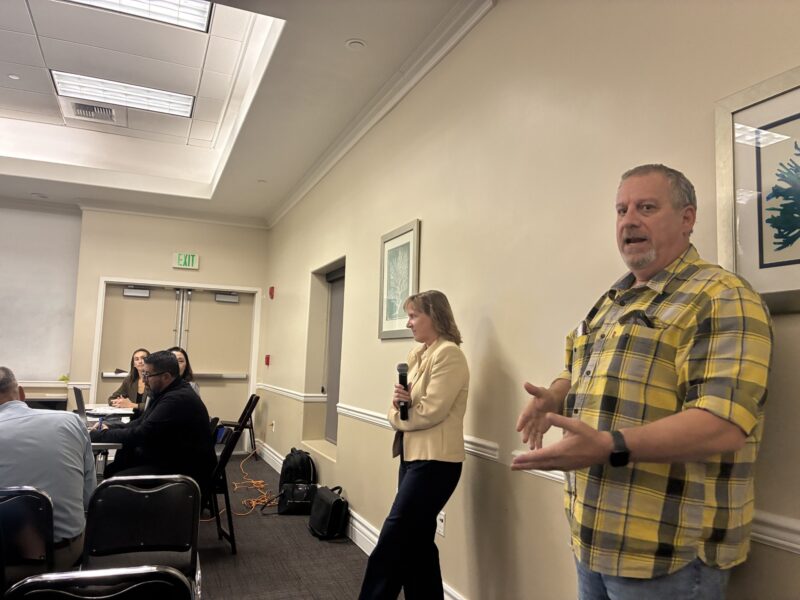
“You don’t have the right to come into our community and build it that way,” said Bill Wittenberg, who also recognized the state’s power in the situation. “The real issue is, you’re going to need to figure out something better for the middle of the community.”
Judicial officials said they could not estimate what percentage of the caseload would be local, but project officials said the decision to add the courtrooms in the SCV was based on research that demonstrated the demand.
Residents were repeatedly asked to share specific concerns in writing during the public-comment period.
Kim Bobic, who’s been managing the project for the Judicial Council, walked through the process for how the site was selected, in response to a question from Denise Lite, a local attorney.
Bobic said the state started with a list of 35 properties, and the state is not permitted to build within a 100-year flood zone, meaning an area expected to have at least one flood within that period. That eliminated quite a few in the SCV, she said.
Overhead high voltage power lines also negated a few of the properties, she added, and some of the properties were in communities deemed “very residential areas” by the council, which were eliminated due to being inappropriate.
Then there were challenges from L.A. County and the city, which operate the current courthouse site and did not appear interested in helping with the new one, Bobic said.
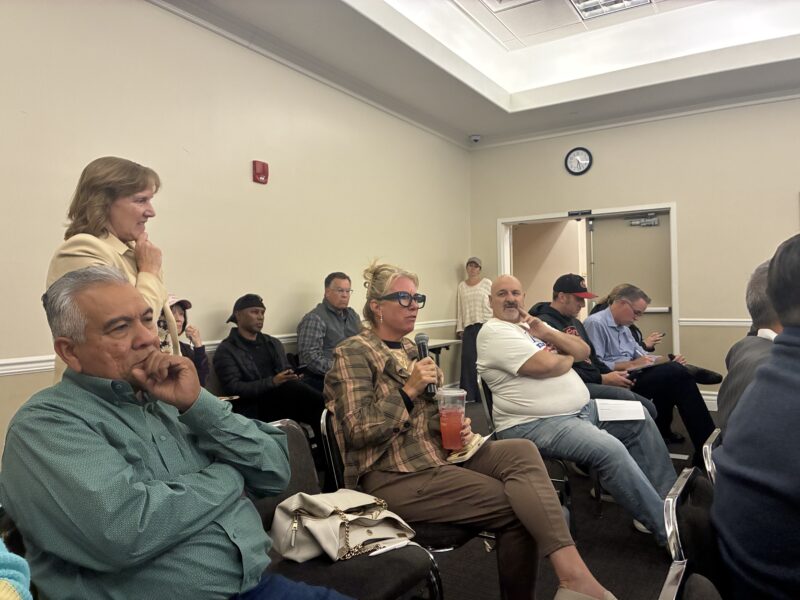
Santa Clarita City Councilwoman Patsy Ayala, who was elected to the council in November 2024, said the outreach of the meeting and the plan needed to be better. She asked why the city wasn’t contacted.
Santa Clarita Mayor Bill Miranda criticized the plan last week, including its outreach, saying the city was not consulted. Ayala and Councilman Jason Gibbs were the only City Council members who attended the meeting.
Bobic said the Judicial Council tried to work with city planners for three years on a list of locations the city found acceptable. The state council was given the same list of locations twice, she said, and most of the locations had to be taken off the list for the reasons she had already mentioned.
The Judicial Council also expressed frustration that Santa Clarita and L.A. County apparently communicated, and neither indicated a desire to play ball with the new courthouse, which led to the current spot.
Bobic said she had a letter from January 2024 that indicated the city and the county spoke, and then the county CEO sent a letter indicating the property would not be on the table. Bobic also said that was communicated after a closed-session City Council discussion in 2023.
“We would love to go back to the existing courthouse site,” she said. “You have to have a willing seller.”
The Judicial Council had one alternative site near Six Flags Magic Mountain, but the property owner, Five Point, recently withdrew it from consideration, Bobic said, leaving no primary alternative property as of Wednesday’s meeting.
The former Kmart site near Bouquet Junction also was looked at, Bobic said, but the city expressed concern about nearby traffic.
City officials said they learned of the plan the week before the meeting; Judicial Council officials indicated that dozens of sites were reviewed for a process they announced years ago.
One of the purposes of Wednesday’s outreach was to ask for written comments in four focus areas: the scope of the analysis; mitigation measures; alternatives; and who are the interested parties that should be contacted.
Wednesday’s meeting was part of a yearslong process for regional improvements, according to court officials. Sylmar and the current Santa Clarita Courthouse would be closed under the new plan.
There are plans for 24 courtrooms and support services, which would include a central lockup facility for defendants awaiting trial.
A spokesman for the Judicial Council wrote via email that a little more than $34.1 million had been budgeted for the purchase of the 3.75-acre parcel on McBean, which is linked to an LLC controlled by Hunter Oliver, according to the Judicial Council.
The rest of the amount is expected to cover due-diligence studies, such as the environmental impact report, land surveys and other studies associated with the project’s approval process.
“The Judicial Council identified 35 properties within the Santa Clarita area through discussions with the city of Santa Clarita and the county of Los Angeles, searching the state-owned property database, and consulting with real estate brokers to ensure that all property opportunities could be considered for the project,” according to a statement from Blaine Corren, a spokesman for the Judicial Council. “The properties were screened in accordance with Judicial Council policy and to confirm the site characteristics would support the selection for the project. Eleven properties were determined to be potentially suitable for the project. The property owners for these properties were contacted and a more detailed evaluation was performed.”
Corren also described the next steps for the process, which was laid out in an email this week.
The notice issued last month was the first step in a yearslong process for the project.
The Judicial Council also “anticipated to start mid-March 2029 with construction completion by December 2031.”
The public comment period for the project ends Nov. 26.
A full copy of the environmental report on the project is available online: ceqanet.lci.ca.gov/2025101327.