California boasts an abundance of Native American rock art sites, with some locations dating back an estimated 12,000 years. The state’s desert areas are especially rich with rock art but throughout the state you’ll find examples of both petroglyphs and pictographs.
When you’re out hiking and come upon prehistoric Native American rock art, there’s a tangible connection to people who lived hundreds, or even thousands, of years ago. The ancient past no longer feels quite so remote.
When you visit a rock art site, treat the area with respect. It is a serious cultural violation to Native Americans and against an assortment of local, state and federal laws to in any way deface or alter rock art. Small amounts of oil from fingers can darken the art and accelerate deterioration.
Types of Rock Art
Petroglyphs
Most common in desert areas, petroglyphs were created by using a hard stone tool to peck, chisel, or scratch into desert varnish, a dark, oxidized patina found on many boulders. The cutting action then reveals the lighter material beneath the patina. Cupules, small and rounded depressions that are pecked or pounded into rocks, are another kind of petroglyph that might have been created for fertility, rainmaking, or other ceremonial purposes, depending on the tribe.
Pictographs
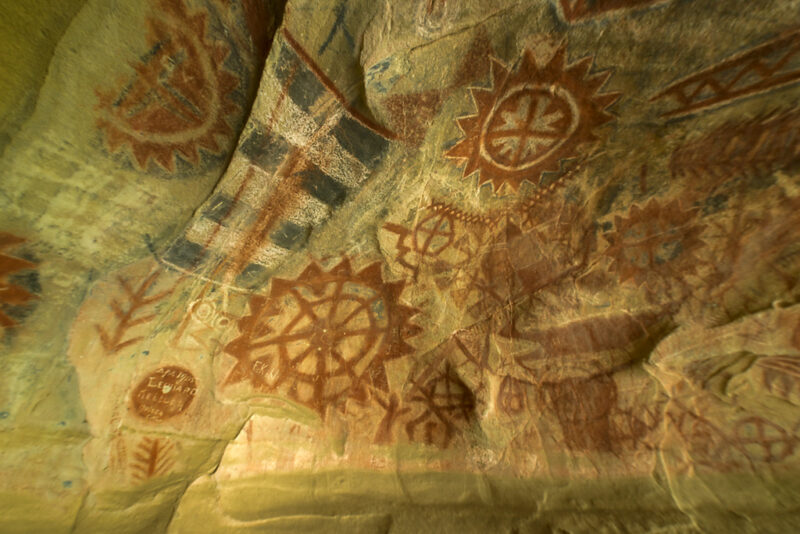
Created with pigments blended from plants, minerals and other natural materials that are then applied using fingers or brushes crafted from yucca fibers, pictographs are a colorful and vibrant form of rock art. Pictographs are rarer than petroglyphs and more subject to deterioration from weathering. Although it’s not accessible to the public, the closely guarded Burro Flats Painted Cave in Simi Hills is considered a globally significant rock art location. This Chumash site, with its geometric marks, was likely created to mark the winter solstice and continues to be used as a ceremonial site.
Where to See Rock Art
Anza-Borrego State Desert Park Pictograph Trail
Off a dirt road in the park’s Blair Valley area, a two-mile roundtrip hike on the Pictograph Trail leads to a large boulder with abstract symbols painted in red. The pictographs were likely created by the ancestors of today’s Kumeyaay people, who comprise 12 related but separate bands in San Diego County.
Joshua Tree National Park Barker Dam Trail
An easy 1.1-mile loop, Joshua Tree’s interpretive Barker Dam Trail combines a good look at the park’s iconic monzogranite boulders with access to an impressive group of pictographs and petroglyphs. The rock art is set within a cave with a natural arch, and some accounts suggest that the pictographs are especially vivid because they were enhanced during a film shoot in the early 1960s — an act that would certainly qualify as vandalism by today’s standards.
Chumash Painted Cave State Historic Park
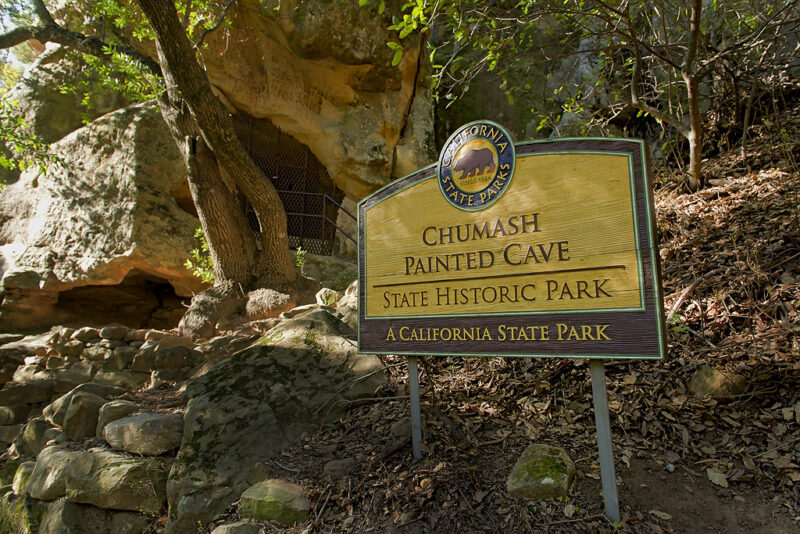
Hidden away off Highway 154 between Santa Barbara and the Santa Ynez Valley, the rock art at Chumash Painted Cave State Historic Park dates back at least to the 1600s. These pictographs are on the walls of a small sandstone cave within the traditional lands of the Barbareño Band of Chumash Indians. A short trail leads to the cave, where a heavy and locked iron gate prevents entry to protect the paintings from vandalism. After visiting the cave and seeing the paintings in their natural setting, you can view close-up details of the rock art by visiting an online virtual tour.
Carrizo Plain National Monument
Dating as far back as 4,000 years, the large, horseshoe-shaped Painted Rock in Carrizo Plain National Monument — roughly 70 miles from both San Luis Obispo and Bakersfield — gets its name from the pictographs created by the ancestors of today’s Chumash, Yokuts and Salinan tribes. Access to the site near the monument’s Goodwin Education Center is limited by reservation to seasonal guided and self-guided tours. To see the pictographs, you walk inside the curving, amphitheater-like gap in the center of the formation. The pictographs are notable for their brilliant red hues and dramatic geometric shapes, as well as a few recognizable animal figures.
Little Petroglyph Canyon
The Western Hemisphere’s largest known concentration of petroglyphs, Little Petroglyph Canyon on Naval Weapons Station China Lake, has historically been accessible on spring and fall tours through Ridgecrest’s Maturango Museum.
A visit to this site is truly an unforgettable cultural experience, with rock art covering the cliffs on both sides of a wash for about half a mile. There are all sorts of recognizable animals — coyotes, desert bighorn sheep, and mountain lions — and humans bearing weapons for hunts. Some of the 20,000 images are more than 10,000 years old. (Visit California)