Rio Norte Junior High School art teacher Nancy James happened to stumble upon a new idea for her art students a couple of years ago, drawing up a new tradition for years to come.
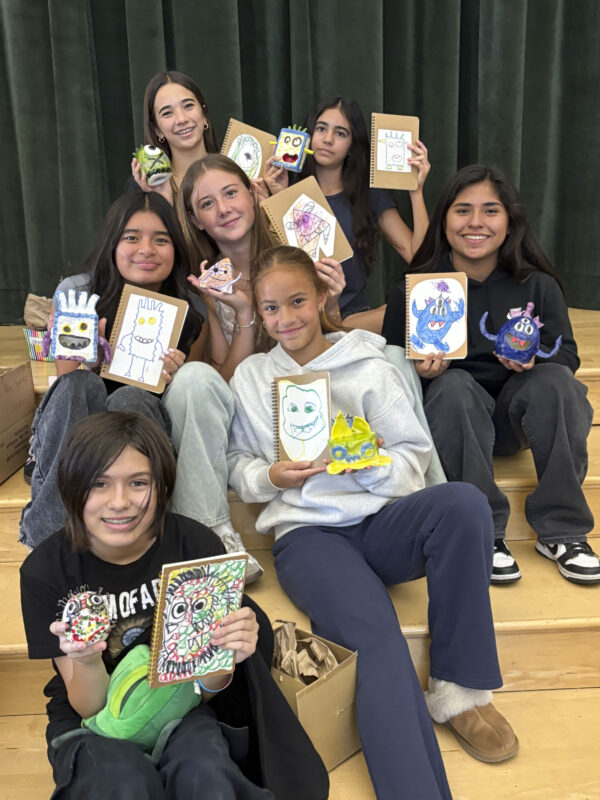
For the second year, students from James’ class took the drawings of the students from Rio Norte living skills students and brought them to life.
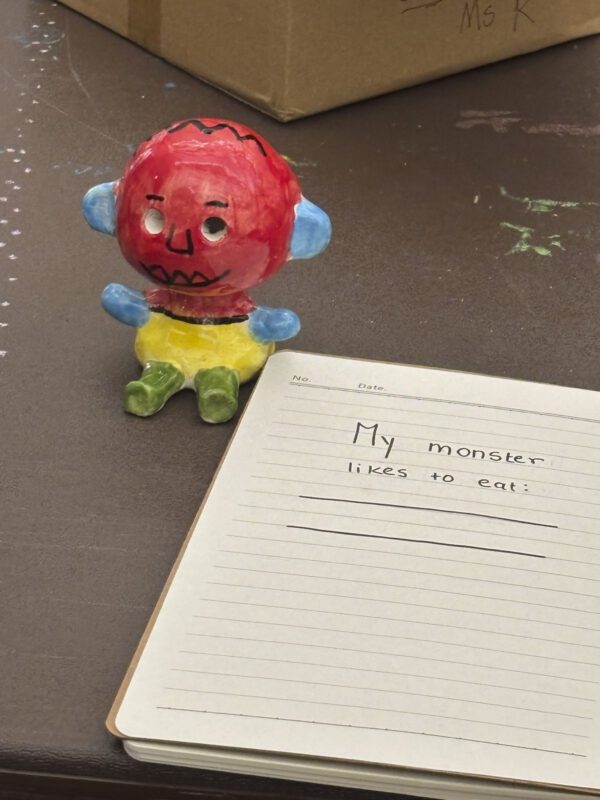
“I saw this idea on social media, and the idea was to have art students take pictures for a second-grade classroom, where they drew monsters. And the high schoolers, the art students, would make the monsters into 3D sculptures, and then give them back,” James said. “So, I asked the special education teachers to have their students draw a monster or creature, and I collected those and had my students pick out which one they wanted to do.”
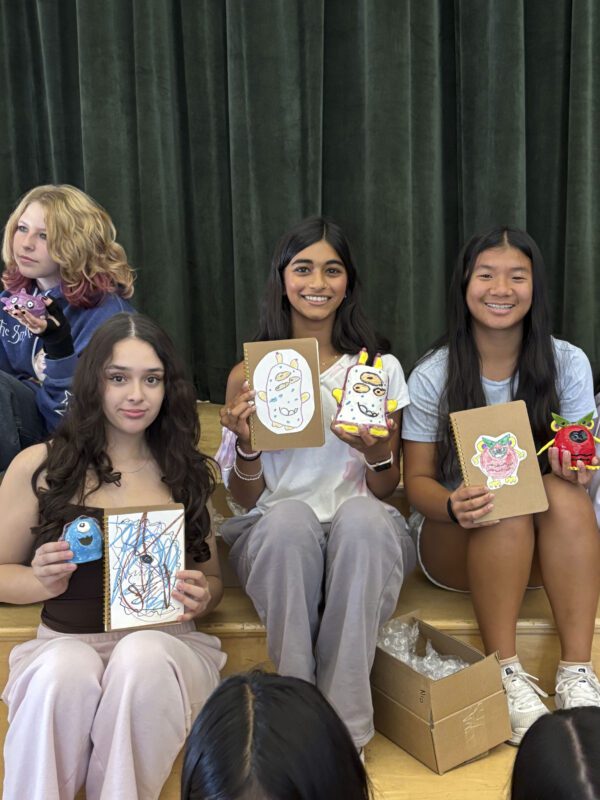
On Oct. 27, after the art students created the monsters, they met with the students who conceptualized each creature and collaborated on questions regarding their new personalities.
“We met in the MPR, so my students got to meet the student who drew the picture. They answered some questions together about their monster — like what it likes to do and things it likes to do. So they made a little bit of a connection and relationship,” James said. “Then I had them take the picture of the monster and glue it to a blank journal, so it kind of became a little storybook of the monster.”
James, who has been an art teacher for four years, but previously taught math for 21 years, channeled her experience in pottery to foster connections among the students.
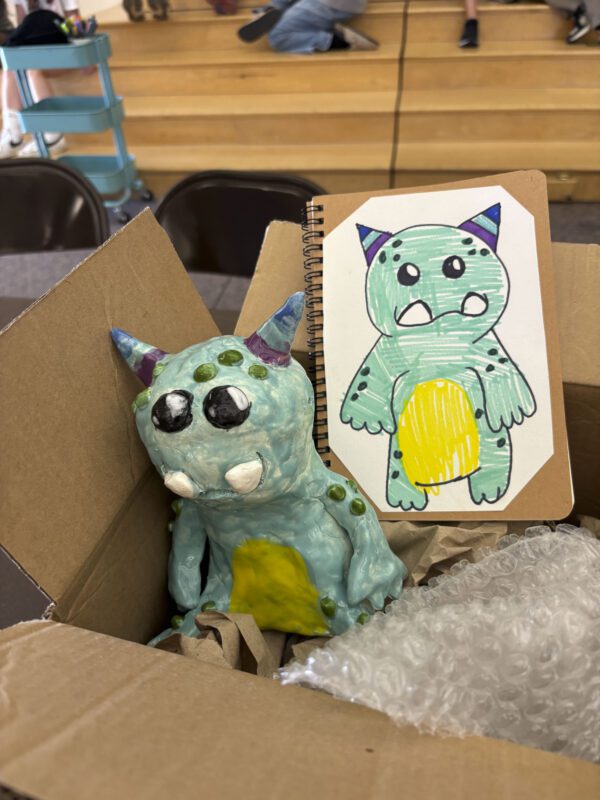
“For my students, it took about three weeks total. I then put them in the kiln, and they got to glaze them. So the whole process was a bit slower, but it turned out really cute,” James said. “We had students that were just ear-to-ear grinning, and other students that were kind of shy. I felt that the community at Rio Norte were a part of making the community even better, because now they were able to go outside during lunch and say hi to a student or two that they may not have met beforehand.”
Living skills teacher Asha Kakonde could attest to the relationships that were built, seeing the growth in her students through activities like this.
“We have students that, during their first year, weren’t talking to anybody. They weren’t communicating. Now, I have a very vocal classroom, and some are verbal and saying more sentences. I have [augmentative and alternative communication] students who communicate with a device and are picking up on what kids their age are saying and doing,” Kakonde said. “I’m just grateful to Nancy. She’s one of the most inclusive teachers, and I think a lot of teachers have followed her lead.”
Kakonde described the various approaches the students took to design their monsters.
“For our students with moderate to severe disabilities, a lot of them can’t draw or write — they have fine motor issues. So with them, we did hand-over-hand. Some couldn’t use their hands, so they told us what they wanted. Some of the students used cut-out shapes. These were all their creations. This was all from their brains,” Kakonde said. “The kids were excited. This is our favorite project. I think, overall, this has kind of opened up everyone’s view of everything, and now, we have students that want to be a part of more things on campus.”