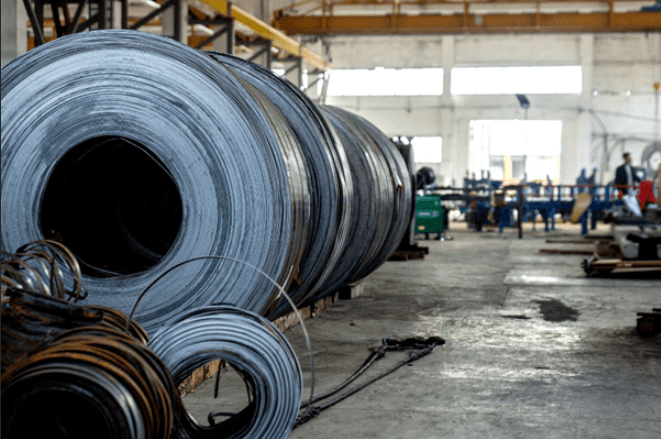
Coiling of wire is still one of the most important but genuinely undervalued processes that is found in global industrial production sectors. It’s effectively considered the vital linkage between the production of raw materials and the ultimate use. The automotive component industry is the largest sector involved. Other automotive materials supply and metals fabrication are the primary industry activities in the Santa Clarita Valley. Accurate wire handling helps keep the industry’s activities on track.
To local suppliers of welding wire and fabricators, the wire payoff quality can be a factor in the success of automated lines. There’s a tangible and inconsistent moment that automatically results in expensive downtime. To combat these challenges, contemporary pail packer machines have been introduced, and now production is improving. It’s through a smoother payoff of wire and high throughput.
These systems signify a change in focus to the physical integrity of the wire during the packing stage. This change ensures that the subsequent machineries aren’t affected.
From Traditional Coilers to Pail Packer Machines
The conventional approach to gooseneck coilers used in the industry has always caused torsion or irregularities during the winding of the coilers. In comparison, Pail Packer Machines (PPM) are modern machines that use a gravity-assisted technique with a rotating capstan for the deposition of wire into drums or cardboard stems.
Manufacturers consider this difference to be substantial since the PPM technique does not cause an indelible turn on the wire. As a result, there is a free flow in the downstream operations, thereby minimizing the chances of wire snarls that normally paralyze production lines.
Besides quality, the machines can bring in high productivity benefits. They can operate with a coil capacity of up to 2 tons and can carry a longer production cycle and an extreme cutback of operator intervention. This is the efficiency required in the large volume applications in the production of welding wire, in bedding spring production, galvanizing, and in nail production.
In addition, the technology also ensures quicker and more consistent payoffs, which enhances the general reliability of the processes of the automated systems. Firms such as MFL Group have created a certain series of PPM to provide this stable, efficient take-up performance to ensure that the wire is uniform all along the line, from the first meter up to the final meter.
Why This Technology Deserves Attention
With the manufacturing industry in the Santa Clarita Valley, the use of such technology touches upon the aspect of local economic resilience and competitiveness. The move to more efficient systems of coiling is an upgrade that is efficiency-oriented, yet it addresses the day-to-day problems of production.
Local small and mid-sized factories will compete better with the larger suppliers since they can reduce waste and maximize the uptime of their machines. Finally, the stability of handling the wires helps with the overall industrial ecosystem of the area, as it ensures the reliability of fulfilling the strict deadlines and the quality of the work.