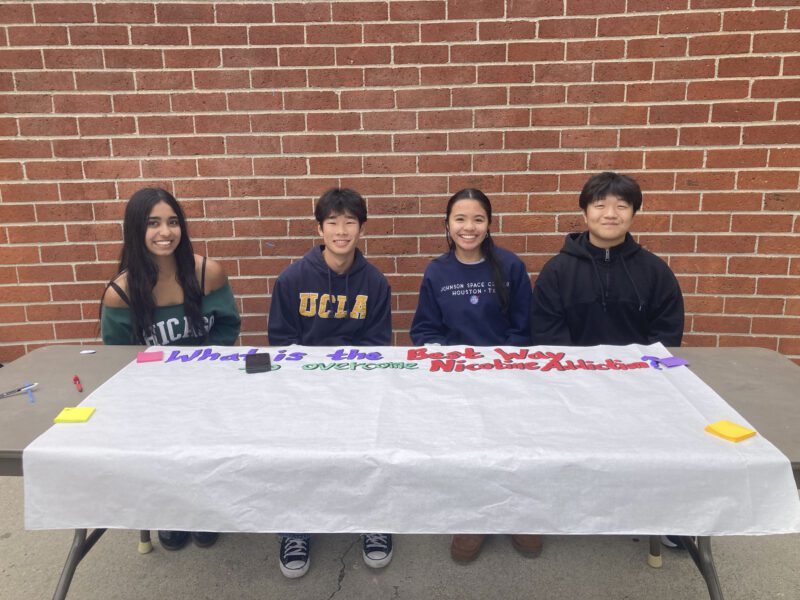
Taking on the responsibility to ensure younger students in the Santa Clarita Valley don’t participate in vaping as they go into high school and beyond, Valencia High School’s LifeUnvaped club has visited most of the junior high schools in the SCV this past year to impart wisdom.
Starting out as a project, and later forming into a club in 2025, founders Arundhathi Jathin, 16, Karisa Zoe Flores, 16, Hudson Lee, 16, and Christian Lee, 17, created LifeUnvaped with the incentive of addressing nicotine addiction and encouraging younger students to engage in healthier choices in the long run.
At local junior high schools, such as Rancho Pico, Arroyo Seco and Placerita, the club members set up in each school’s quad and give presentations on nicotine addiction, brain development, peer pressure and the long-term effects of vaping — allowing the middle schoolers to ask candid questions in a comfortable space.
“Last year, we started not as a club, but mainly as a project, because we were doing it for HOSA (Health Occupations Students of America), which is a competition that we have at our school. We wanted to do this anti-nicotine, anti-vaping awareness. We were teaching the middle schoolers, and did art projects at the elementary school,” said Jathin, who is president of LifeUnvaped.
The project was then turned into a club to have more people involved to tackle a common issue among the youth — not only informing the younger kids, but also even the Valencia peers.
“The fire alarm goes off often because students go to the restrooms to vape and all that. It’s kind of common seeing it for high schoolers. People can go into nicotine addiction as a way to overcome their mental health issues and find a way to cope with that,” Jathin said. “But doing stuff like that has its consequences and can further harm their physical and mental health issues, even though it might help them in the moment.”
The club has focused on interviewing behavioral health specialists, collaborating with local rehab centers, as well as the DFY in SCV and the HealthSpan Action Coalition.
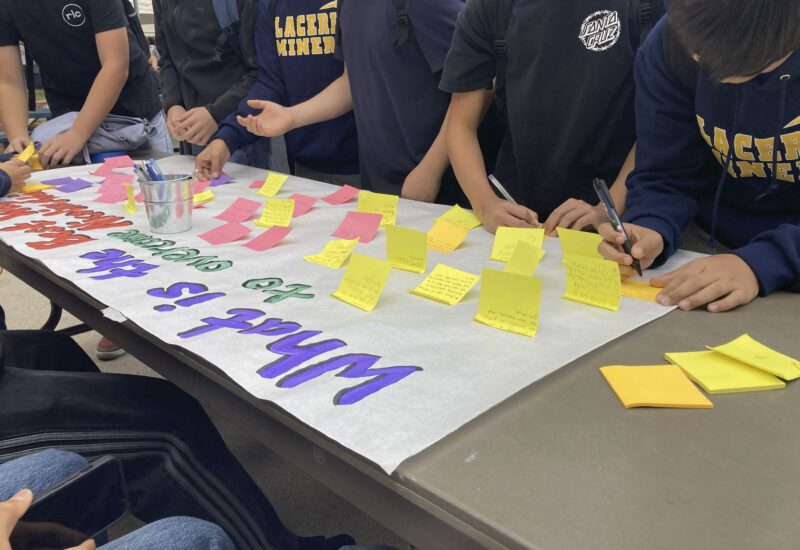
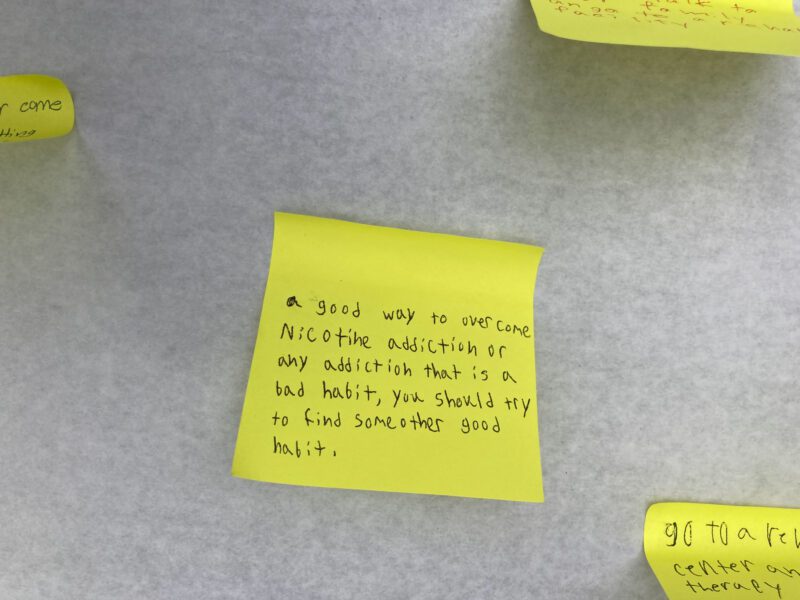
“Sometimes, presentations can get boring, so we’ve decided to go with a different approach: We go to middle schools with these posters, and usually these posters have questions like, ‘What is the best way to overcome nicotine addiction?’ What we do is we’ll answer their questions, have candy, markers and sticky notes, and ask them what their best tip for overcoming nicotine addiction is,” Jathin said.
According to Jathin, some students recommend starting therapy or going to rehab, or taking nicotine gum or patches.
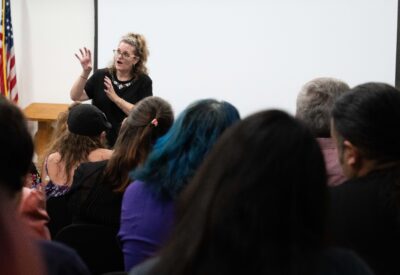
“We want middle schoolers to think for themselves and think, ‘What is something I can do if this ever happened to a friend?’ or something like that,” Jathin said. “We always get good feedback. A lot of people want to participate and sometimes the kids are really enthusiastic. We always say stuff on the mic. We’ll have the principal or vice principal reach back to us and thank us for coming because it’s a growing issue. So it’s important to remind and give awareness to the students about things like these.”
As the club expands as time goes on, Jathin plans to spread the word to new students, while revisiting ones they’ve met before.
“We’re probably going to stick to the middle school audience, because this topic is more geared for middle schoolers. Something that we started doing this year was going to rehab centers and making them kits; basically, we fundraise as well and we try to fundraise money at local chains, hospitals, and restaurants,” Jathin said. “For me personally, I’m interested in the pre-medical field, and I think nicotine addiction can play an important role in the brain and how the brain functions with neurotransmitters.”