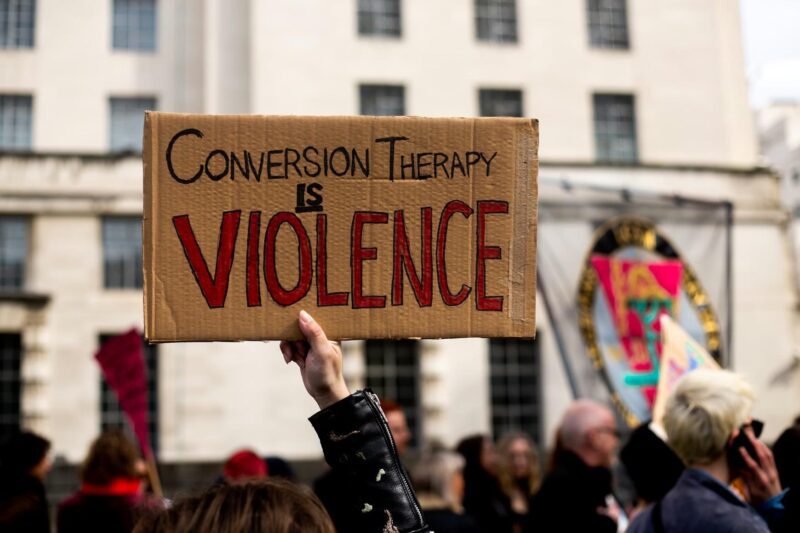
January 7, 2026, marked a watershed moment in the global movement to protect children from harmful practices. Here’s what every parent should understand about this important day, and why faith-based resources like Conversion Truth for Families are changing the conversation.
On January 7, 2026, advocates, survivors, medical professionals, and families around the world observed the first annual International Day to End Conversion Therapy (IDECT), a global day of awareness dedicated to ending practices that attempt to change a person’s sexual orientation or gender identity. For parents navigating difficult questions about their children’s identities, this observance carries particular significance, especially as the U.S. Supreme Court prepares to issue a landmark ruling that could reshape protections for young people nationwide.
Why January 7 Matters
The date holds deep symbolic meaning. On January 7, 2022, Canada’s federal ban on conversion therapy was enacted into law, making it a criminal offense to provide or promote these practices anywhere in the country. This landmark legislation inspired C.T. Survivors Connect, a Canadian nonprofit, to partner with the Conversion Therapy Survivor Network in the United States to establish IDECT as both a memorial and a movement.
According to the observance’s founders, the day serves a dual purpose: honoring those lost or harmed by these practices, and building momentum to end what many survivors describe as human rights abuses.
Organizations Unite in Global Observance
The 2026 observance saw an unprecedented coalition of mental health organizations, advocacy groups, and survivor networks raising their voices together.
The National Alliance on Mental Illness (NAMI) and The Trevor Project jointly published an op-ed calling the observance a critical moment for action. “On International Day to End Conversion Therapy, and every day, we must continue to protect the health and safety of the most marginalized young people in our communities,” wrote Hannah Wesolowski, NAMI’s chief advocacy officer, and Mark Henson, vice president of advocacy and government affairs at The Trevor Project. “Protecting them from practices that cause clear and damaging psychological harm should not be seen as political or controversial.”
Equality Illinois issued a statement standing in solidarity with survivors worldwide, noting that “conversion therapy practices are discredited, harmful, have no basis in evidence, and have been linked to trauma, depression, and increased risk of suicide.” The organization also highlighted the release of a new Illinois Guide for Survivors of Conversion Practices, developed by a coalition of mental health, legal, and survivor-advocacy organizations.
Internationally, organizations from Australia to the United Kingdom marked the day with calls for legislative action. As Pink News reported, despite years of promises, many countries still lack comprehensive bans, making global awareness efforts more critical than ever.
Why This Moment Is Pivotal: The Chiles v. Salazar Case
For American families, this year’s observance takes on heightened importance as the U.S. Supreme Court prepares to decide Chiles v. Salazar, a case that could determine the future of conversion therapy bans across the nation.
The case challenges Colorado’s Minor Conversion Therapy Law, which, since 2019, has prohibited licensed mental health professionals from practicing conversion therapy on anyone under 18. The petitioner, a licensed counselor, argues that the law infringes on her First Amendment rights. Colorado maintains that the state has a compelling interest in protecting minors from harmful practices.
A decision is expected by June 2026, and its implications extend far beyond Colorado. Currently, 23 states and the District of Columbia have enacted similar protections. According to GLAD Law, the outcome “could shape the future of conversion therapy laws nationwide.”
The case also raises broader questions about medical regulation. As experts interviewed by STAT News explained, a ruling in favor of the petitioner could “undermine numerous regulations that govern professional conduct performed verbally,” extending far beyond this single issue.
What Parents Need to Understand About Conversion Therapy
For Christian parents wrestling with questions about their child’s identity, understanding what conversion therapy actually involves, and what research shows about its effects, is essential.
Modern conversion practices rarely involve the electroshock treatments or other physical methods of decades past. Today, these practices typically take the form of talk therapy or prayer-based interventions. But as Conversion Truth for Families explains on their website, the softer packaging doesn’t make the practices any safer. The organization notes that regardless of methodology, these approaches share common elements: shame-based tactics, pressure to suppress identity, and promises to “fix” or “resolve” a child’s orientation or identity.
The scientific consensus is clear and overwhelming. Every major medical and mental health organization in the United States, including the American Psychological Association, American Medical Association, American Academy of Pediatrics, and American Psychiatric Association, has condemned conversion therapy as both ineffective and harmful.
The Research: What Studies Actually Show
The evidence base against conversion therapy has grown substantially in recent years, and the findings are consistent across multiple peer-reviewed studies.
Research from Stanford Medicine found that exposure to conversion practices is linked to significantly higher rates of depression, PTSD, and suicidal ideation. The study found the greatest harm among individuals who experienced both types of conversion efforts, those targeting sexual orientation and those targeting gender identity.
A Williams Institute study found that LGB individuals who underwent conversion therapy were nearly twice as likely to attempt suicide compared to peers who didn’t experience these practices. Critically, researchers found this elevated risk persisted even after controlling for other factors like adverse childhood experiences.
For families concerned about cost, a JAMA Pediatrics study calculated that conversion therapy and its associated harms, including substance abuse, depression, anxiety, and suicide attempts, cost the United States an estimated $9.23 billion annually. The direct cost of the therapy itself is approximately $650 million per year, but the downstream consequences account for the vast majority of economic burden.
Perhaps most concerning for parents: research published in the American Journal of Public Health found that young people who underwent conversion therapy were more than twice as likely to report attempting suicide and more than 2.5 times as likely to report multiple suicide attempts.
How Conversion Therapy Affects Family Relationships
One of the most painful ironies of conversion therapy is that practices marketed as preserving family unity often accomplish the opposite.
As Conversion Truth for Families documents through first-person testimonials, these programs frequently drive wedges between parents and children. In sworn statements submitted to the U.S. Supreme Court in the Chiles case, parents like Linda Robertson and Joyce Calvo shared devastating accounts of how conversion therapy affected their families.
Paulette Trimmer, whose son survived conversion therapy, described the experience in her testimony: “People don’t realize how damaging this therapy is, not only to the person going through it, but to the parents. Parents don’t realize their child is going to come out totally different, and you’re going to regret sending them there.”
A common tactic used by some conversion therapy practitioners involves blaming parents for their child’s identity, suggesting that an “effeminate” father or “unconventional” mother somehow caused their child’s confusion. This approach creates shame for both the child and the parents, often fracturing family bonds that practitioners claim to protect.
“We’re one of the lucky families,” Trimmer reflected. “We got our son back. Not every family does.”
Faith and Family: A Path Forward
For Christian parents specifically, the question of how to honor both their faith and their child can feel impossibly difficult. Conversion Truth for Families was created precisely to address this tension, providing Christ-centered resources that reject the false choice between faith and family.
The organization’s message to parents is direct: “You can be both a faithful Christian and a loving, supportive parent to your gay or transgender child. The most faithful thing you can do may be to love them exactly as they are, trusting that God’s grace is sufficient for your whole family.”
Research from the Family Acceptance Project supports this approach. Studies consistently show that young people who experience family acceptance have significantly better mental health outcomes, lower rates of depression, substance abuse, and suicidal behavior, compared to those who experience rejection.
Brandon Boulware, a Christian father from Missouri whose testimony before state lawmakers went viral, described his own journey. After years of trying to change his daughter through forced gender-conforming behaviors, he realized he was teaching her that “being good” meant denying who she was. “The moment we allowed my daughter to be who she is,” he said, “she was a different child. And I mean, it was immediate. It was a total transformation.”
His experience, featured on Conversion Truth for Families, illustrates a consistent finding: attempts to change a child’s identity don’t work, but accepting parents can make an enormous positive difference in their child’s life.
Protecting Your Family: Warning Signs and Resources
For parents who may be considering therapy for a child who is questioning their identity, Conversion Truth for Families offers guidance on identifying potentially harmful practitioners. Warning signs include:
- Promises to change or “resolve” a child’s identity, even if softly worded
- Pressure to “test” a child’s identity through stress or deprivation
- Shame-based tactics that frame a child’s identity as moral failure
- Framing the child’s identity as a problem caused by parental behavior
- Lack of evidence-based safety protocols to address suicide risk
Safe alternatives focus on family connection, coping skills, and emotional safety rather than identity change. Organizations like PFLAG, the Family Acceptance Project, and FreedHearts offer resources specifically designed for Christian families navigating these questions.
What You Can Do
As advocates mark this first annual International Day to End Conversion Therapy, they’re calling on individuals and communities to take concrete action:
Educate yourself. Resources from The Trevor Project, the American Psychological Association, and Conversion Truth for Families provide accessible, evidence-based information about the harms of conversion therapy and the benefits of family acceptance.
Know your state’s laws. The Movement Advancement Project maintains a state-by-state map tracking conversion therapy protections. Understanding local laws helps parents make informed decisions and advocate for stronger protections where needed.
Listen to survivors. First-hand accounts from organizations like Born Perfect and the Unchanged Movement provide a crucial perspective on the real-world impacts of these practices.
Talk to the young people in your life. One of the most powerful actions any adult can take is simply telling the young people they know that they’re seen, supported, and valued exactly as they are.
The Path Ahead
As the Supreme Court deliberates on Chiles v. Salazar, families across America await a decision that will shape the landscape of youth protections for years to come. Whatever the Court decides, the movement to end conversion therapy and to support families navigating these questions continues to grow.
For parents in the middle of this journey, the message from survivors, researchers, and faith-based organizations alike is consistent: your child’s identity is not a problem to be solved. The practices that promise to “fix” them carry real risks of lasting harm. And the most protective thing any parent can offer is unconditional love.
As Ben Rodgers, executive director of C.T. Survivors Connect, said in marking this year’s observance: “We’re told we’re broken. We’re not. We’re good exactly as we are.”
DISCLAIMER: No part of the article was written by The Signal editorial staff.