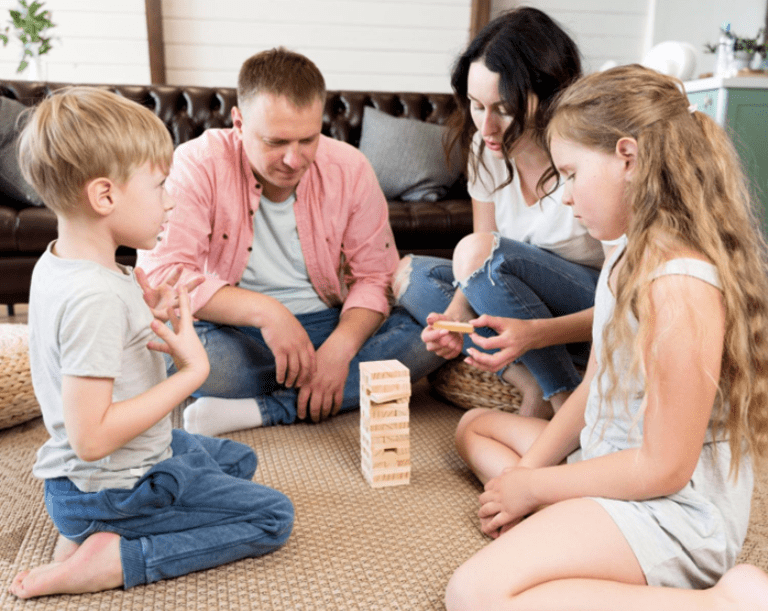
In many Santa Clarita households, family life moves at a fast pace. School schedules, commutes, after-school activities, and screen time can quietly crowd out moments of genuine connection. Parents often feel that meaningful family time requires elaborate plans or special outings, when in reality, connection is more often built through small, shared experiences. For many local families, rediscovering play has become a practical way to reconnect, with ideas from the Playiro website quietly finding their way into everyday routines and shared moments at home.
Play does not need to be loud, competitive, or time-consuming to matter. At its core, play is shared attention. It is a moment where family members engage with one another without distraction or pressure, creating space for communication that feels effortless and authentic.
Why Play Is Especially Important for Modern Families
Santa Clarita is known for its strong sense of community and family-oriented neighborhoods, yet modern pressures affect local families just as they do everywhere else. Children balance academic expectations and structured activities, while parents juggle work demands and household responsibilities. In this environment, play often becomes something that happens only when everything else is finished, which rarely occurs.
When play is treated as optional, families may spend time together physically without truly connecting. Shared play changes this dynamic. It invites conversation, laughter, and cooperation without requiring deep planning or emotional preparation. Even short play sessions can create moments of closeness that carry into the rest of the day.
How Shared Play Strengthens Emotional Bonds
One of the most powerful aspects of play is how it levels family dynamics. During play, parents and children participate as equals. There is no lecture, correction, or performance review. Instead, there is shared curiosity and responsiveness. This environment helps children feel safe expressing themselves and encourages parents to become more attuned to their children’s emotional cues.
Over time, these interactions build trust. Children who regularly experience playful engagement with their parents are often more comfortable communicating openly. They associate family time with warmth rather than evaluation, which can be especially important as children grow older and face more complex social and academic challenges.
The Role of Play in Child Development
Research consistently shows that play supports emotional regulation, social skills, and cognitive flexibility. According to the American Academy of Pediatrics, play helps children develop resilience, problem-solving abilities, and emotional strength by allowing them to process experiences in a low-stress environment. This research underscores that play is not simply entertainment; it is a fundamental part of healthy development.
For families, this means that time spent playing together contributes to long-term wellbeing, not just momentary enjoyment. When parents participate in play, they reinforce a child’s sense of belonging and emotional security, which supports learning and confidence both inside and outside the home.
Local Opportunities for Family Play in Santa Clarita
Santa Clarita offers many natural settings that encourage shared play. Neighborhood parks, walking trails, and open spaces provide easy opportunities for families to engage without screens or structured programming. Even familiar locations can feel new when families approach them with playfulness rather than routine.
Simple activities such as scavenger hunts at local parks, imaginative games during walks, or cooperative challenges at playgrounds can transform ordinary outings into memorable experiences. The key is not the location itself, but the mindset of shared participation.
Making Play Fit Into Busy Schedules
One reason play disappears from family life is the belief that it requires large blocks of free time. In reality, play works best when it is brief and consistent. Ten or fifteen minutes of focused, playful interaction can be more meaningful than hours spent together without engagement.
Families who successfully integrate play often treat it as part of daily rhythm rather than a special event. This might mean a short game after dinner, a playful routine before bedtime, or shared activities on weekend mornings. Tools that offer quick, adaptable play ideas can help parents avoid decision fatigue and keep play feeling accessible.
Play as a Tool for Reducing Stress
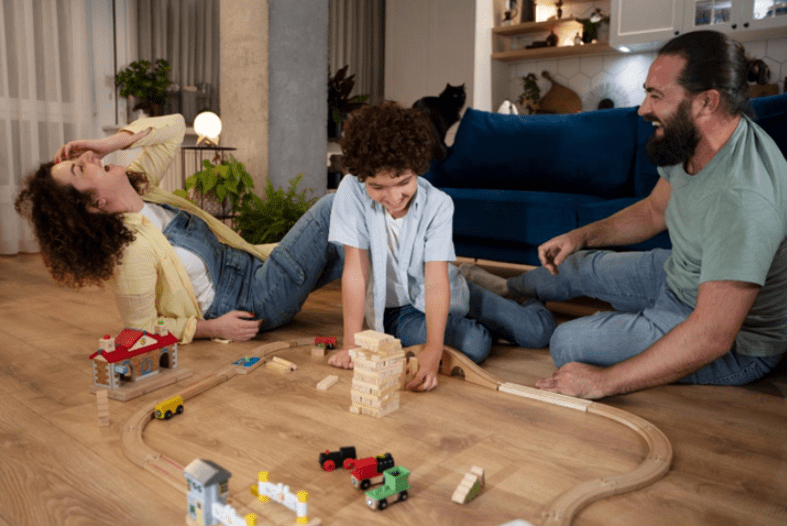
Both children and adults carry stress, even when it is not openly expressed. Play offers a natural release. Laughter, movement, and imagination help regulate stress hormones and shift attention away from worries. For parents, play can serve as a reminder that connection does not always require solving problems.
In Santa Clarita’s family-oriented culture, play can also strengthen community ties. When families prioritize play, children learn cooperation and empathy, and parents often connect with one another through shared activities and local events.
Encouraging Play Across Different Ages
Play evolves as children grow, but it never loses relevance. Younger children may prefer imaginative games, while older kids might enjoy strategy games, creative projects, or physical challenges. Adolescents often engage through humor, friendly competition, or shared hobbies.
Families who adapt play to changing interests tend to maintain stronger connections over time. The goal is not to preserve childhood games indefinitely, but to remain open to playful interaction in forms that feel natural at each stage.
Building Stronger Families Through Small Moments
Strong family bonds are rarely built through grand gestures. They grow from repeated, positive interactions that communicate care and presence. Play provides a framework for these interactions, offering families a way to reconnect without pressure or performance.
In Santa Clarita, where community values and family life remain central, shared play can serve as a quiet but powerful tool. By making space for playful moments, families create lasting memories and emotional foundations that support children well beyond their early years.