It almost always starts the same way. A sound that doesn’t belong: water running when nothing is on, a gurgling from a drain that wasn’t there yesterday, or the sharp hiss of a pipe under pressure that has finally given way at two in the morning. The household wakes up to a situation that has no polite timing, no budget allocation, and no good options if the response is slow.
Plumbing emergencies are among the most financially damaging events that can occur in a residential property. Not because the initial fault is necessarily severe, but because water is catastrophically indifferent to what is in its path. It finds subfloor cavities, saturates insulation, travels along ceiling joists, and creates conditions for mould growth within 24 to 48 hours. The difference between a repair that costs a few hundred dollars and one that costs tens of thousands is almost always a matter of how quickly the water supply was shut off and how quickly a qualified person arrived to assess and resolve the fault.
The First Thirty Minutes Matter Most
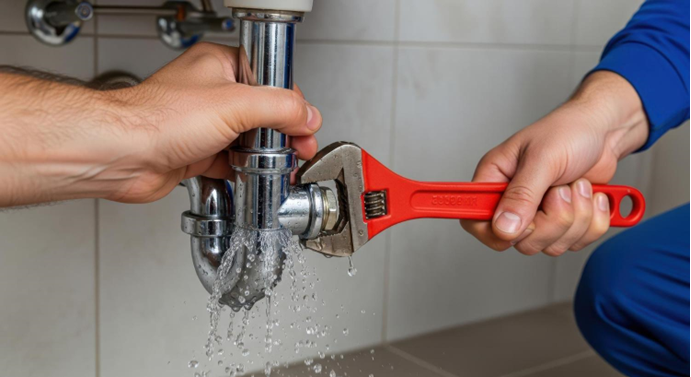
In Adelaide, where a large portion of the residential housing stock consists of homes built before the 1980s with aging supply lines and original drainage systems, plumbing emergencies tend to surface in patterns. Hot water systems that have been showing signs of strain fail completely during periods of heavy demand. Old copper or galvanised steel pipes, stressed by summer heat or seasonal ground movement, develop pinhole leaks or joint failures that escalate from a slow seep to an active flow faster than most homeowners expect. Blocked sewer lines that have been partially impeded by root intrusion for months can back up completely when a storm delivers a sudden volume of surface water into the drainage system.
The household’s actions in the first thirty minutes set the trajectory for everything that follows. Locating the main water shutoff and closing it immediately stops more water from entering the situation. Identifying whether gas is involved changes the response protocol entirely: a gas leak requires evacuation and an emergency call before any other action. Documenting the damage with photographs before any cleanup begins creates a record that matters significantly for insurance purposes later.
After that, the response time of whoever arrives to assess the situation determines how much of the damage is containable. When a burst pipe has already been running behind a wall for an hour, the question changes from how to fix the pipe to whether the wall lining, insulation, and subfloor need remediation. The availability of a 24 hour emergency plumber in Adelaide at any point in the day or night narrows the window in which water damage can compound. Loyal Plumbing operates around the clock across Adelaide’s metro area, arriving with the diagnostic and repair equipment needed to resolve most emergency situations on the first visit rather than applying a temporary patch that requires a follow-up.
Why Pricing Transparency Matters Most When You’re Most Vulnerable
The emotional dynamics of a household in the middle of a plumbing emergency create the conditions for poor financial decision-making. The combination of stress, sleep deprivation if it has occurred overnight, and the genuine urgency of stopping damage progression makes households vulnerable to agreeing to terms they would not accept under normal conditions.
After-hours emergency plumbing pricing is an area where the absence of a clear, upfront figure before work begins has historically caused significant consumer harm. A household that calls three different providers in a panic and accepts the first one to answer, without asking about the call-out structure and hourly rates, sometimes receives an invoice that bears no relationship to what they expected. This is not universal, and many reputable Adelaide operators provide genuinely transparent pricing even at two in the morning. But the pressure to ask the right questions is highest at exactly the moment when most people are least equipped to think clearly.
The practice of providing a fixed upfront quote before work begins, which is now standard among better-regarded Adelaide plumbers, exists specifically to address this asymmetry. Understanding the cost before giving the go-ahead is a consumer protection that households should specifically request rather than assume.
The Research Behind What Emergencies Actually Cost
The Australian Housing and Urban Research Institute, which publishes government-funded research on housing affordability, maintenance, and infrastructure, has documented consistently that unplanned maintenance costs are among the most significant financial stresses experienced by low-to-moderate income homeowners. Emergency plumbing sits squarely in this category. Unlike a planned renovation or a maintenance expense that can be budgeted for over time, a burst pipe or sewage backup arrives without notice and demands an immediate financial response that many households are not positioned to absorb without consequence.
This is part of why the practical preparedness question matters beyond just knowing where your shutoff valve is. Having a reliable emergency contact already saved before a crisis occurs, understanding your home insurance policy’s water damage provisions while you have the mental bandwidth to read them carefully, and maintaining a basic emergency fund for exactly this category of expense: these are household financial resilience decisions with directly measurable outcomes.
Adelaide’s housing stock, aging in its infrastructure and increasingly valuable as a financial asset, sits in the crosshairs of this issue more acutely than newer markets. The homes that come through emergency events with manageable outcomes are invariably the ones where the owners had thought, at least briefly, about what they would do before the moment arrived.