“Never forget” so that it “never happens again.”
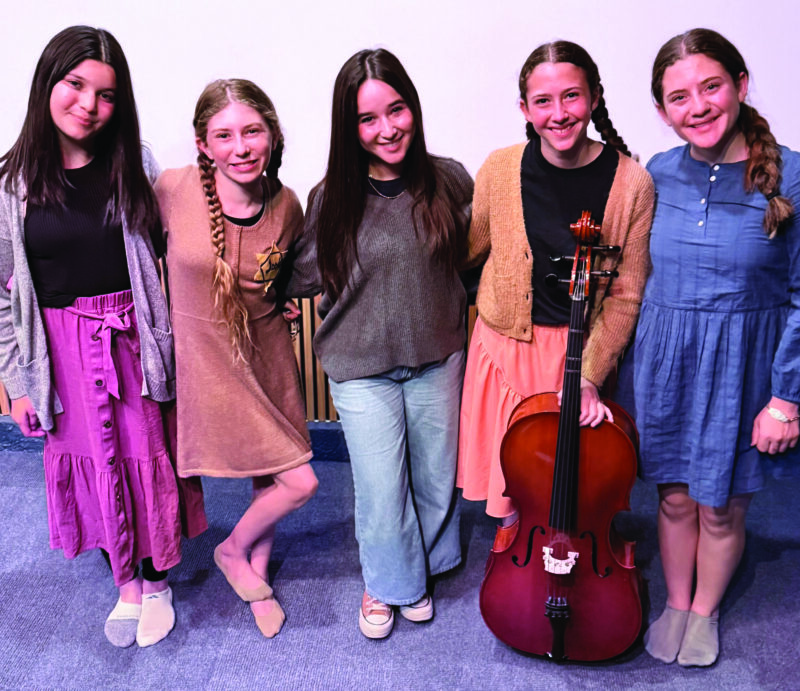
That’s the message of the drama “Never Forget,” according to the cohort of young students, selected by eighth-grade author Charlie Seigel, starring alongside Seigel in the 40-minute collection of Holocaust literature excerpts performed at Temple Beth Ami last week.
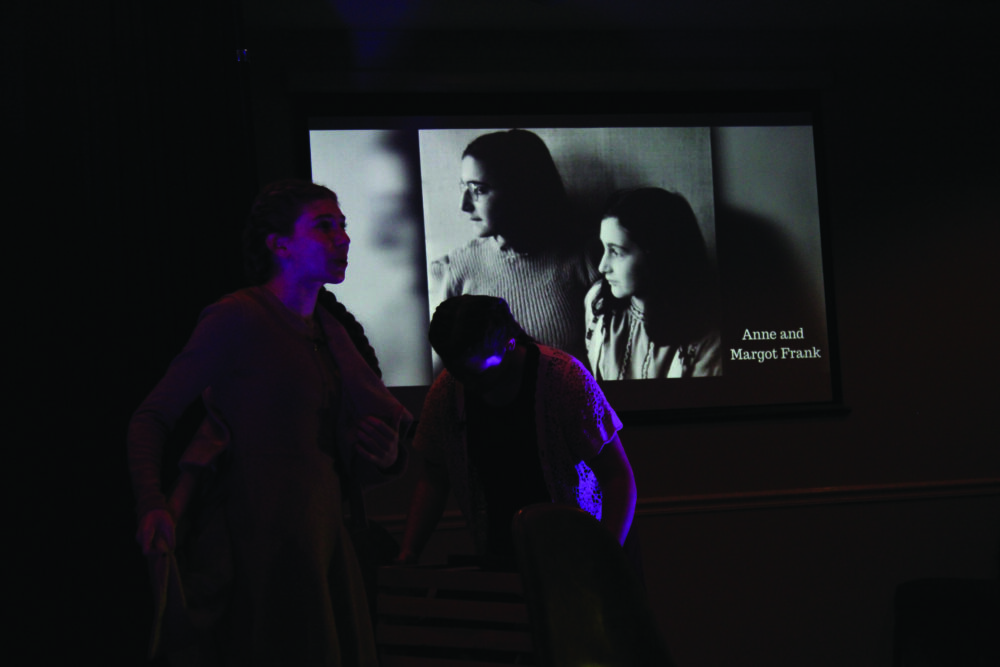
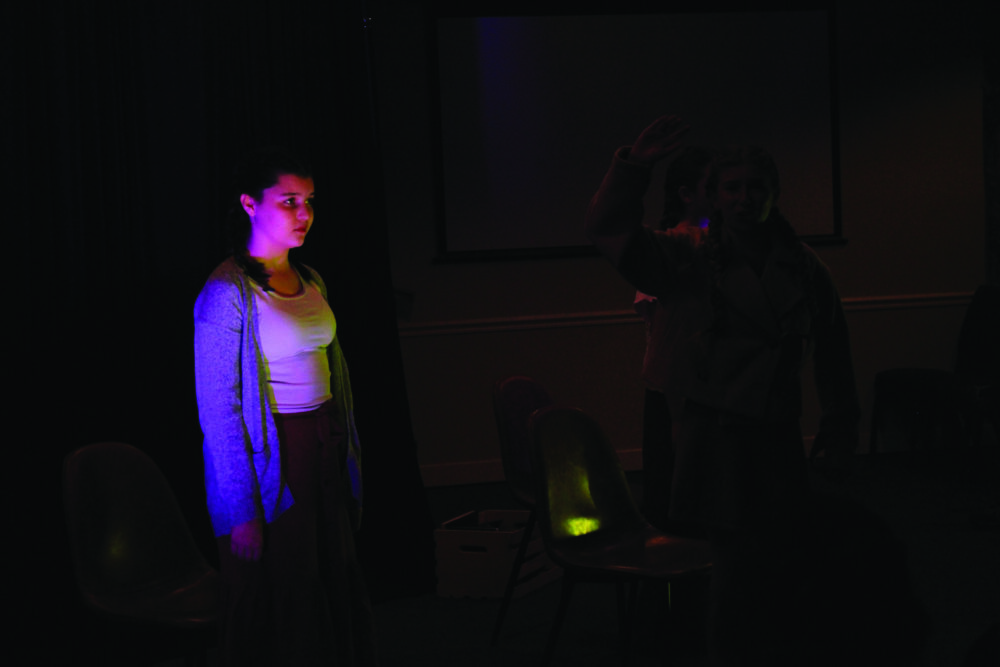
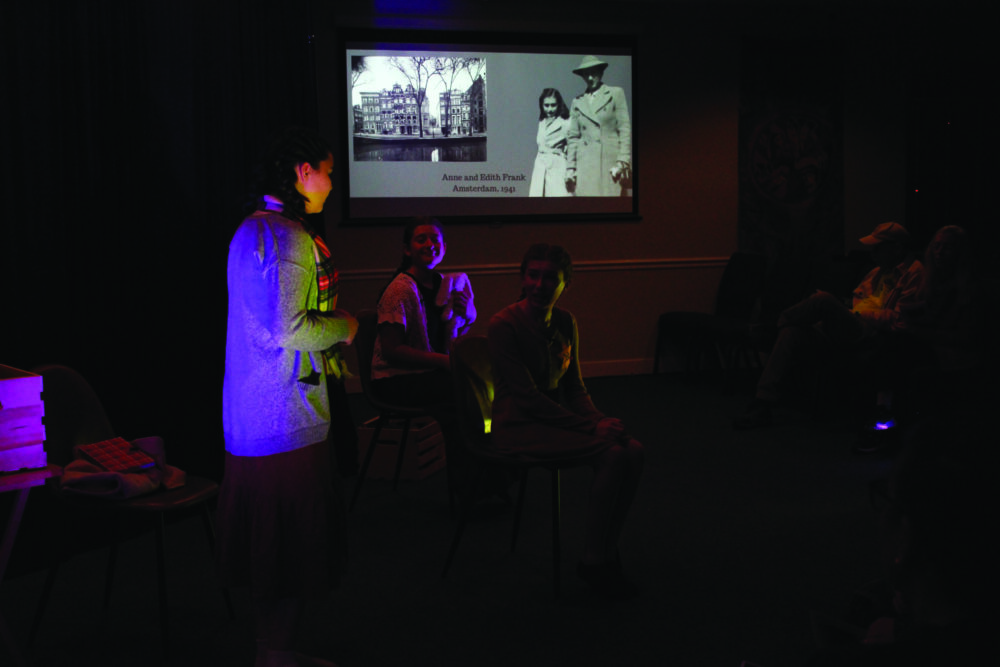
The evening performance featured Seigel, alongside Madelyn Friedman and Olivia Liff, playing teen girls during the Nazi regime’s takeover in Europe, experiencing the stages of escalating state violence that would culminate in the murder of 6 million Jews. Fellow cast member Isabella Campbell was on sick leave from the Temple Beth Ami performance.
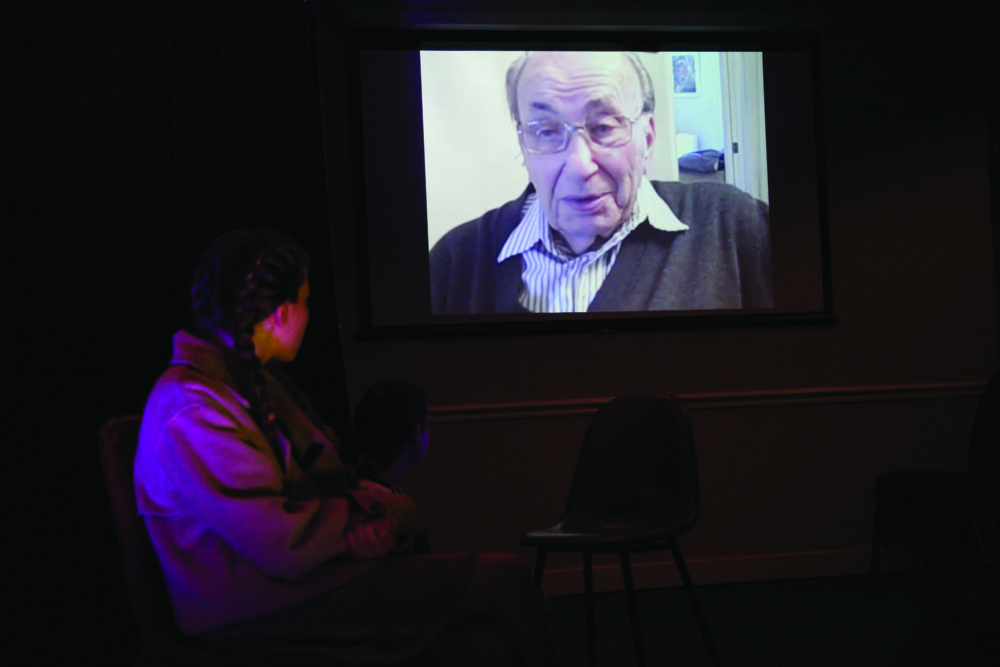
The play, which features performances of texts including Anne Frank’s diary and the play, “I Never Saw Another Butterfly,” began as Seigel’s bat mitzvah project, said Charlie’s mother Alli Seigel. The play also features her interview of her grandfather, who was liberated from Auschwitz.
Charlie’s dad Matt created the script with her, and the Seigels have taken the show to several synagogues since the spring.
“They started rehearsing in March of ’25, and then the show went up in May of ’25,” Alli said. “And so we were like, ‘This really needs to be, you know, it’s probably bigger than we realized. So we put it up a few more times, and now we’ve been kind of traveling to different synagogues.”
Alli said that one series of memorial weekend performances raised $3,500 for the Holocaust Museum in Los Angeles.
For Charlie, who goes to school in Agoura Hills, the most meaningful part of the project was learning about the perspectives of the girls her age from that era.
“I got to work with my dad on the script, which is really fun,” Charlie said. “And it was so interesting to learn about girls our age, going through this horrible time that we now get to share their story. One of the main reasons we did (the) show about real people instead of fictional characters (was) that … we felt a responsibility to share their story and have them be honored.”
When asked about the broader import of Holocaust education, Liff said it was “really important to convey the message that these are terrible events that can never happen again.”
“I think it’s really important because as we’re growing older, they’re teaching it about (the Holocaust) less and less in schools,” Liff said. “So by conveying these messages, it’s basically reminding people that we can’t forget about what happened, so that this will never happen again in the future.”
Director Bayley Tananbaum, now majoring in theater and minoring in human rights and politics at Marymount Manhattan College in New York, started working on the play with Charlie, Luff and Friedman as a high school senior.
She said that the play is intended to give the audience an idea of not only how fascism transforms a nation, but also how state violence transforms the act of growing up.
“As the play goes on … it’s different periods of the Holocaust. So it’s a different feeling to be in a ghetto, not knowing it’s happening, to be fully on a train car off to Auschwitz,” Tananbaum said. “They’re all different feelings, and how does this change? And how are you growing up? Because being a 12-year-(old) and being a 15-year-old, they’re only three years apart, (but) they’re very different ages and very different mindsets.”