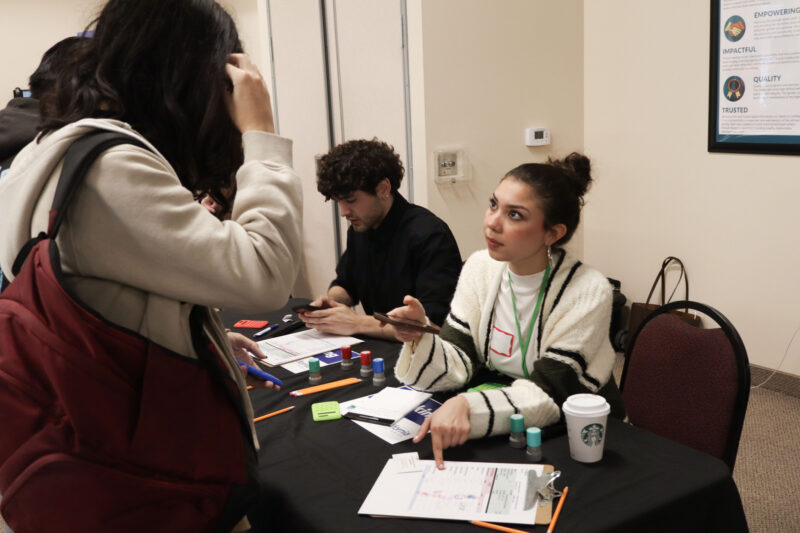
Bowman High School got an opportunity to learn about adulthood during JCI Santa Clarita’s seventh “Get Real: Adulting 101” financial literacy event at Child & Family Center on Wednesday morning.
About 70 students were able to walk around 12 booths and think about what they wanted to spend their money on – like entertainment, shopping, groceries, utilities, housing or transportation.
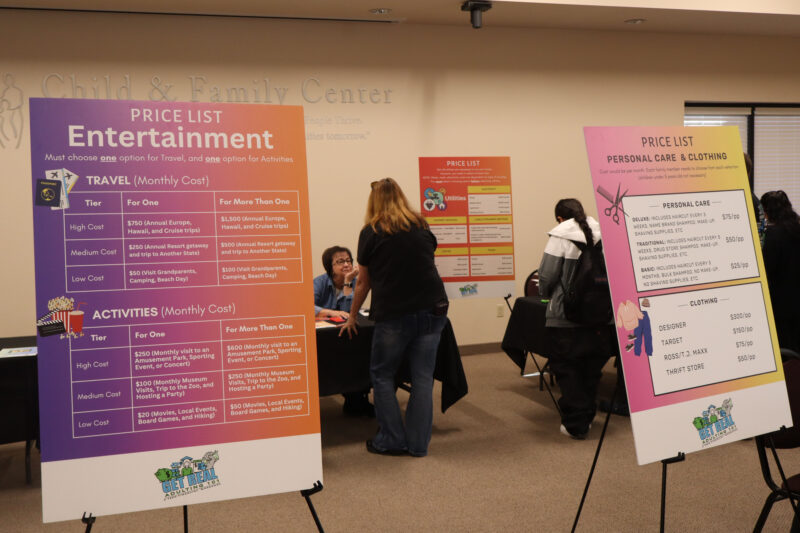
However, so students knew they were making the right decisions for their budget, JCI set up the booths with all the “non-essential” things like shopping or entertainment in the front of the room and the “needs” like utilities or housing in the back of the room.
“So that people are making choices and then coming to the realization of the necessities that they don’t have, that costs more,” said Kari McCoy, JCI SCV 2026 president. “And I’ll say my favorite thing is watching the students gather together and converse and compare because that shows me engagement and that they actually care about this.”
Students were also given “reality check” cards with various scenarios that subtracted or added to their budget. Some examples were losing $400 due to missing work for a funeral or winning first place in a local competition and adding $275 to their bank account.
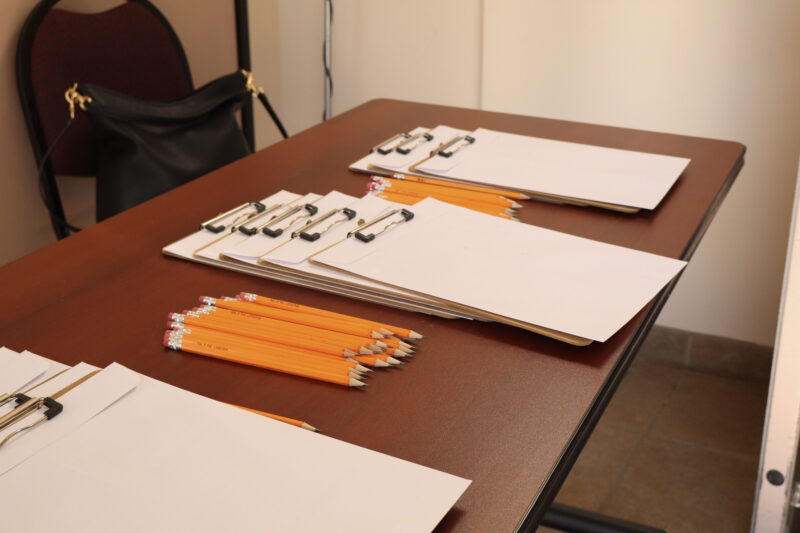
McCoy said that each student was given a sealed envelope with a character and a randomized budget sheet on it.
The budget sheet includes a fake identity, whether they are married or not and have children or not. It also has a credit score and a salary.
“They have money deducted for savings; they have money deducted for health care, maybe student loans, depending on what identity it is,” McCoy said. “And then they have a starting budget, and we present the budget sheet to them, and then from there, they come in, and they go to different booths, and each of the different booths are built off of industry experts.”
McCoy added that the transportation booth was run by a dealership, and the utilities booth was run by the Santa Clarita Valley Water Agency.
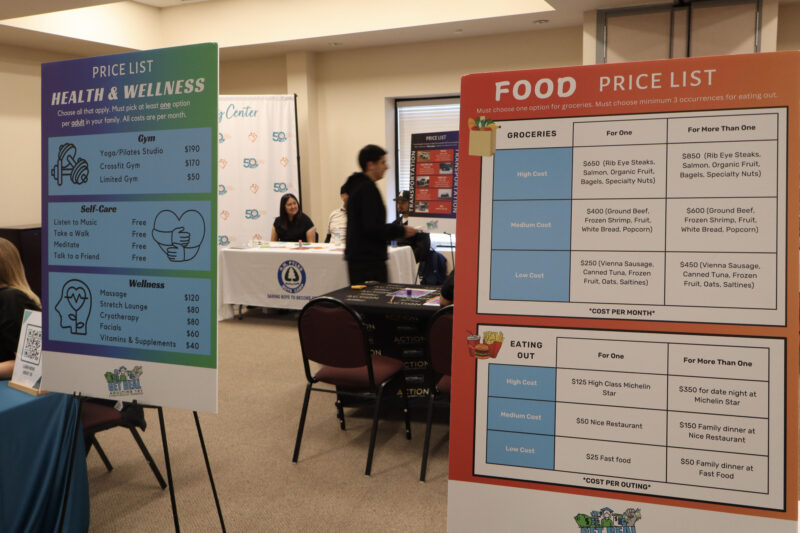
“And so, they each will give their own information about that industry and try and give real market pressures to the students. So, their goal is to oversell the students, and the students’ goal is to be financially responsible … (and) have a fiscal mindset on it,” McCoy said.
Marco Molina, a senior at Bowman High, said the event helped him understand what he could face in the future.
His fake identity included that he was not married and had no children. His budget was also $3,800 a month.
“To be honest, since I’m only making $3,800, I made a decision (that) staying at my parents’ house (and) renting their room for $350, and transportation, just a used car, to be honest, to get me from point A to point B,” Molina said.
Molina added that he decided those decisions were best for his budget because he would not be able to afford a new truck for $1,200, even if he wanted one.
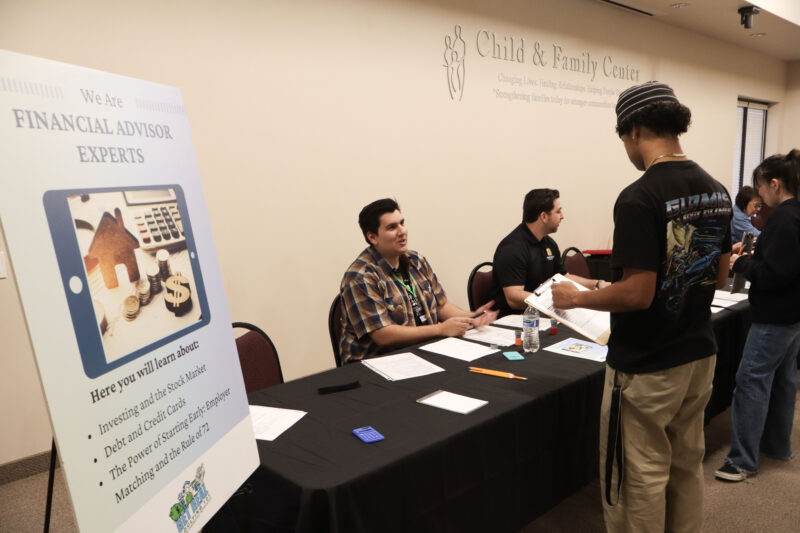
He said that having the event is important because it is teaching him a lot more about what “real life would look like.”
Maritsa Gonzalez-Urbano, a senior at Bowman High, said that the event was a “needed opportunity” because a lot of the students were stepping into the real world soon.
Her fake identity was a software developer, 27 years old, was not married or had children, had a credit score of 650, and her annual salary was $98,000.
While making her decisions, Gonzalez-Urbano wanted to stay within her budget.
“So, I was able to just spend 70 bucks. And for food, food is very needed, so I was able to spend $300, even still managing not to go over the budget,” Gonzalez-Urbano said. “And clothing and personal, I realized that that’s one of the things that a lot of people tend to be thrown off because you see all the clothing brands and all the expensive brands and you want to buy it. But I still decided to stay on the budget and only spend like $225.”
She added that young people tend to spend their money on unnecessary things, but being at the event helped her get an idea of how to maintain her money.
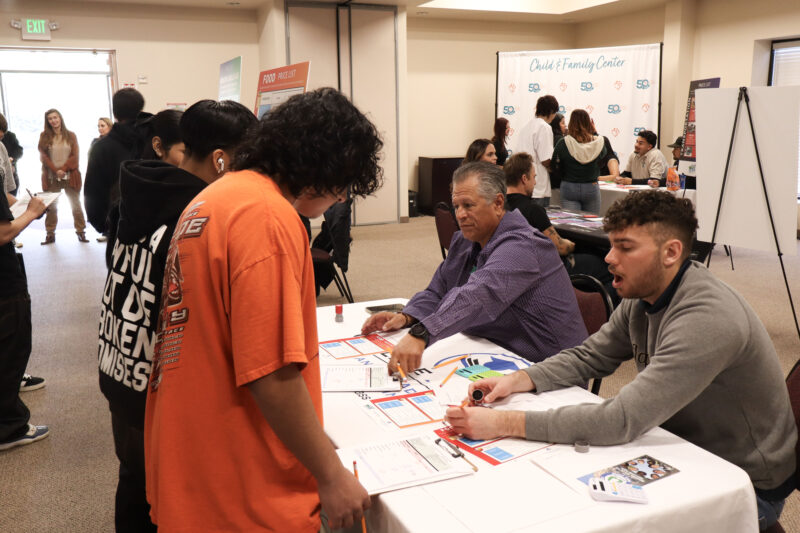
Tiana Bradley, co-chair of “Get Real,” said that the importance of the event is to help students learn in a fun and interactive way rather than a lecture.
“Because it’s interactive. They’re having to do negotiations. They’re having to figure out, OK, ‘If I get a house and it’s $2,300 a month, that’s what my mortgage is.’ But yet … my net may be $2,500 versus gross,” Bradley said. “OK, ‘Where can I live? Do I have to have a one-bedroom apartment? Do I have to rent a room from somebody?’ And most of the kids may not know what that encompasses or what that includes or how you get there. And ultimately, it’s a really hands-on training to figure out what that is.”
Carl Ermelbauer, co-chair of “Get Real,” said they wanted to make the event as real as possible for the students by not knowing what fake identity they are getting when they pull the envelope from the pile.
“They’re going to draw an envelope when they come in. They don’t know what’s in it. We don’t know what’s in it. And so, you know, I think there’s a little bit of life in that, right,” Ermelbauer said. “You don’t necessarily get to decide what your opportunities are going to be or what privilege you have (or) that you’re born into.”