Most travelers encounter Bordeaux as a name on a wine label or a stop on a train route. Stephanie Bowers sees it as something entirely different: a gateway to one of France’s most culturally dense and geographically efficient regions.
After two decades in diplomacy—working in relationship-driven environments across Europe and coordinating complex international operations—Bowers now designs highly curated journeys for private clients. Her approach prioritizes immersion over itineraries and access over attractions. Bordeaux, she says, embodies everything she values in travel.
That personal connection reflects how she works: slowly, intentionally, and with deep respect for local culture.
A City Judged by the Wrong Standards
Bordeaux’s reputation among American travelers has long suffered from being evaluated through a mass-market travel lens. Budget-oriented guidebooks tend to prioritize affordability, backpacker infrastructure, and quick sightseeing. Bordeaux operates on a different wavelength.
Its strengths lie in culinary excellence, historic architecture, and one of the world’s most complex wine cultures—experiences that reward travelers who take time to understand them.
Bowers attributes the city’s lower profile to this mismatch. When measured against destinations optimized for casual tourism, Bordeaux can feel understated. But approached with context and curiosity, it reveals layers of history and craftsmanship that rival any major European city.
Her diplomatic background gives her unusual insight into why Bordeaux works the way it does. Having spent years navigating European business culture, she understands that access—especially in French wine country—is built on long-term relationships, cultural fluency, and trust. Transactions alone rarely open doors.
Bordeaux Is a Region, Not Just a City
One of Bordeaux’s most overlooked advantages is how much it connects.
From the city center, travelers can reach multiple wine regions, medieval villages, and the Atlantic coast in under 90 minutes. Instead of moving hotels every few days, visitors can explore dramatically different landscapes while returning each evening to Bordeaux’s historic core.
Bowers often contrasts this with more fragmented French itineraries that send travelers bouncing between Paris, the Loire Valley, Provence, and the coast—losing valuable time to logistics.
By using Bordeaux as a single base, clients experience comparable diversity without constant transitions. The result is deeper engagement and far less travel fatigue.
Understanding Bordeaux Wine Without the Jargon
Rather than overwhelming clients with classifications and technical terminology, Bowers introduces Bordeaux wine through experience.
At a high level, she explains the region in terms of contrast: structured Cabernet-based wines on one side of the river, softer Merlot-driven styles on the other. Each area offers a distinct landscape, pace, and visitor experience.
But what surprises most travelers isn’t the wine itself—it’s how access works.
Bordeaux was never built around walk-in tourism. Most winery visits are private, arranged far in advance, and often conducted in French. Historically, estates operated through négociant systems rather than focusing on public access and individual tastings, and many still expect visitors to arrive through trusted channels.
Bowers has explained that meaningful winery access requires advance planning and cultural awareness. Her role is to bridge that gap, connecting clients with producers who rarely engage with mass tourism.
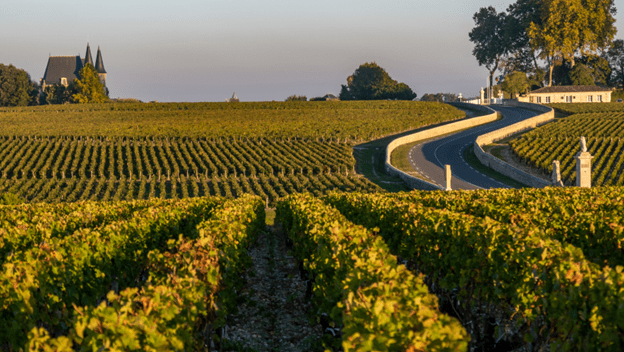
Rather than chasing volume, she designs wine days around personal interests—whether that means scenic drives past historic châteaux, intimate tastings with small producers, or deeper education for serious collectors. The goal is understanding how place, tradition, and philosophy shape what ends up in the glass.
Coastal France and Medieval Villages—Within Easy Reach
Bordeaux’s reach extends far beyond vineyards.
To the west lies Arcachon Bay, where oyster villages line calm waters and locals gather at simple wooden counters for fresh seafood and white wine. Nearby, sweeping sand dunes rise above pine forests and ocean views, offering a striking contrast to vineyard landscapes.
East of Bordeaux sits Saint-Émilion, a UNESCO-protected medieval town surrounded by rolling hills and historic estates. Cobblestone streets, Romanesque architecture, and hillside vistas create the kind of atmosphere travelers often associate with southern France—yet it’s less than an hour away.
Bowers regularly incorporates both into her itineraries, giving clients coastline, history, and wine culture without changing bases.
Food as Cultural Identity
While Bordeaux is globally associated with wine, Bowers approaches it first as a food city.
At Marché des Capucins, locals shop for seasonal produce, regional cheeses, duck confit, and canelés—small pastries rooted in Bordeaux’s winemaking history. Neighborhood bistros serve classics like entrecôte à la bordelaise, while refined dining rooms reinterpret local ingredients with modern technique.
Rather than focusing solely on Michelin dining, Bowers blends market visits, casual lunches, and elevated dinners to give clients a full picture of Bordelais cuisine. She views food as one of Bordeaux’s most honest expressions of place—shaped by centuries of trade, agriculture, and coastal influence.
Why Stephanie’s Background Matters
Bowers’ career in diplomacy taught her how complex systems function—and how access is earned within them.
Whether coordinating inter-agency operations or navigating European bureaucracies, she learned that meaningful entry points come from protocol, respect, and relationship-building. Bordeaux, she says, operates in much the same way.
Her fluency in French and familiarity with European business culture allow her to connect clients with winemakers, chefs, and artisan producers who rarely engage with mass tourism. It’s a model rooted in relationship rather than online reservation systems.
Experiencing Bordeaux at the Right Pace
Instead of rushing through France, Bowers encourages clients to settle in.
Over the course of a week, travelers might explore Bordeaux’s UNESCO-listed architecture, spend a day in nearby vineyards, venture to Arcachon Bay for seafood and ocean air, and wander Saint-Émilion’s medieval streets—all while staying in one place.
This slower rhythm allows for deeper engagement and eliminates the constant packing and transport coordination that consume so much vacation time.
A Different Kind of French Experience
Rick Steves famously advised travelers to skip Bordeaux. Bowers sees that perspective as shaped by mass-market travel priorities rather than the destination’s true character.
Bordeaux does not cater to quick tourism. It offers depth to those willing to engage: culinary heritage without overwhelming crowds, wine culture rooted in centuries of tradition, and architecture that reflects quiet refinement rather than spectacle.
Bowers doesn’t present Bordeaux as a universal destination. She positions it for travelers who value craftsmanship, history, and relationship-driven access—those who want to understand a place rather than skim it.
For those travelers, Bordeaux delivers France at its most nuanced and rewarding.