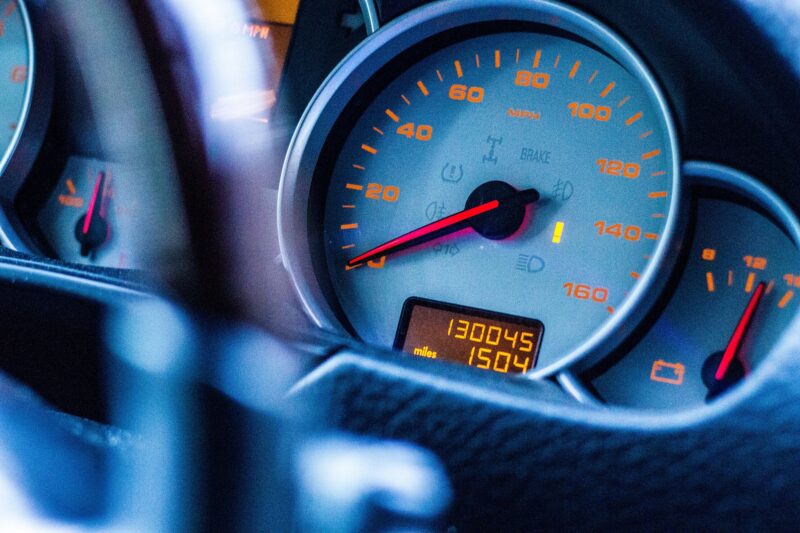
A handheld device about the size of a deck of cards, sold openly on ecommerce platforms for somewhere between 180 and 450 dollars depending on coverage, can walk through the CAN bus of a late model vehicle and rewrite mileage values across every module that stores them in roughly twenty minutes. I watched a demonstration of one last spring at a fraud prevention briefing in Nashville, and what struck me was not that the tool worked. Everyone in the room knew it worked. What struck me was that the operator pulled the device out of his backpack with the casual air of someone producing a phone charger, and the packaging still had the shipping label from the seller in Guangdong stuck to the side.
NHTSA has pegged annual losses from clocked vehicles in the United States at roughly one billion dollars, with the agency’s Office of Odometer Fraud Investigation estimating that somewhere around 450000 cars get sold each year with altered readings. The Office has racked up over 250 convictions across 30 states since its inception, with fines north of 2.8 million dollars and restitutions pushing past 15 million, which sounds impressive until you do the math against that annual loss figure. Recent industry data points to a 14 percent year over year jump in suspected rollback cases, with Montana leading at a 33 percent spike and Tennessee, Arkansas, Oklahoma, and Kansas all showing double digit increases. Those are the states where registration data makes the fraud visible. Nobody has a clean number for the places where it does not.
The shift from mechanical to digital tampering happened faster than most of the verification infrastructure could keep up with. A mechanical odometer, for all its flaws, left physical evidence behind. Tool marks on the housing, misaligned digits, a cable that had been disconnected and reseated in a way that any inspector with a decade of experience could spot. Digital clusters leave nothing visible. The dashboard looks correct because it is correct. The CPU is reporting exactly what someone told it to report, and unless the investigator knows to pull mileage values from the engine control module, the transmission control module, the ABS module, and sometimes the airbag module to cross reference against the cluster reading, the fraud stays invisible. A fraud analyst behind the ford vin check at vinnumber.net put the share of rollbacks that show clean at first glance somewhere above 80 percent for vehicles built after about 2015, though he said the number probably understates it because the sample skews toward cars that eventually got caught.
“The tools used to be dealer only, and they were expensive enough that only a professional ring could justify buying one,” said Derek Ruiz, a former investigator with a state attorney general’s office in the southwest who now consults on fraud cases. “Now I can order one with next day shipping from three different countries. I can get software updates pushed to it. I can get a YouTube tutorial in Spanish, Russian, Arabic, whatever I want. The barrier to entry has collapsed.” Ruiz said he has seen cases where single operators working out of garages were moving 20 or 30 vehicles a month through title jumps across state lines, each one rolled back by somewhere between 40000 and 90000 miles before resale. The profit per car, he estimated, sits around 2500 to 4000 dollars after costs. “Do that twice a week, and you are making more than most prosecutors,” he said.
Enforcement disparities make the global picture chaotic. In the United States, odometer fraud carries federal penalties that can reach 10000 dollars per violation in civil fines, with criminal exposure up to 250000 dollars and three years in prison. The European Parliament passed a resolution in 2018 calling for harmonized rules across member states, noting that up to half of all cross border used vehicle sales inside the EU involve tampered mileage. Seven years later, the harmonization is still incomplete. Belgium and the Netherlands run national mileage registries with mandatory reporting at every service visit, and fraud rates in those markets have dropped to something like 3 percent. Germany, the largest used car market in Europe, still has no equivalent mandatory system. Eastern European countries, where the tools are manufactured and where enforcement budgets are thin, function as the supply side for rollback hardware shipped worldwide.
The Nashville briefing included a slide I keep thinking about. It showed a map of where the tools were being shipped from, and the density on the eastern half of the map was not surprising. Factories in Shenzhen and Dongguan are producing OEM style diagnostic equipment that happened to include mileage correction functions, resellers in Warsaw and Bucharest acting as European distribution nodes, and small operations in Dubai repackaging firmware to target specific makes. What was surprising was the density on the US side of the map. Not just the obvious hubs. Rural counties in the Carolinas, a cluster near Phoenix, and a handful of addresses in southern Minnesota. The tools are everywhere because the market for them is everywhere, and because a two hundred dollar device that pays for itself on the first flip is not a difficult sell to anyone with a title and a buyer.
Verification approaches that worked ten years ago do not hold up against this. Service history used to be the gold standard for catching rollbacks because an independent shop had a financial disincentive to falsify mileage on a repair order. That still holds in markets with robust shop networks and regulatory oversight. It does not hold in jurisdictions where vehicles get imported from salvage auctions in one country, reconditioned in another, and retitled in a third before landing on a lot somewhere they were never registered to begin with. The service records are blank because the shops that touched the car do not report to any central database, or they report to a database that does not talk to the destination country’s system, or there simply are no service records because the car was reconditioned in a garage that keeps no paperwork at all.
Jennifer Walsh, a fraud investigator with a county district attorney’s office in Texas, mentioned a case from last year that she said was typical. A pickup truck showed up on a dealer’s lot with 67000 miles on the cluster and a clean looking title chain that ran through three states over eighteen months. The ECU pull showed 184000 miles. The transmission module showed 181000. The dealer who bought the truck at auction had run a standard history check that came back clean because the truck’s last reported service was at 58000 miles, three years and four owners earlier. “By the time anyone thinks to pull module data, it is usually because a customer is back in the service bay with a transmission problem on what they thought was a low mile truck,” Walsh said. She said her office is prosecuting the ring that moved the truck, but has no realistic expectation of recovering most of the money. The tools will keep getting cheaper. A hardware engineer who worked on diagnostic equipment for a European supplier told me the basic CAN bus interface chips cost under five dollars now, and the software that drives them is either open source or trivially pirated. What keeps prices above a certain floor is vehicle specific coverage, meaning the manufacturer bypasses routines that let the tool write to protected memory on newer models. Those get reverse engineered within weeks of any security update. He said the arms race is unwinnable on the hardware side, and the only real defense is making sure the module data gets captured and reported somewhere a buyer can actually see it before money changes hands.